
Security
Cutting-edge Optical Technology: What Buyers Should Check
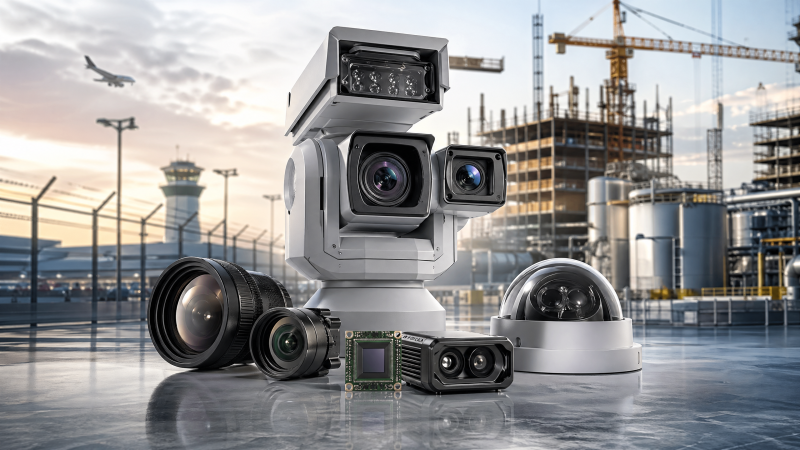
As cutting-edge optical technology reshapes urban security solutions and public safety projects, buyers need more than product specs—they need optical intelligence, risk foresight, and clear security forecasting. This guide highlights what to verify before purchasing, helping evaluators, operators, and decision-makers align protection demands with global security trends and a transparent knowledge system.
In 2026, optical procurement is no longer limited to choosing a camera, lens, illuminator, or sensor with the highest headline performance. Buyers across security infrastructure, smart construction, transport hubs, industrial sites, campuses, utilities, and public facilities are expected to assess compliance exposure, interoperability, life-cycle cost, and environmental suitability before signing a contract.
For research teams, operators, technical evaluators, procurement managers, quality controllers, and executive decision-makers, the practical question is simple: what should be checked before purchasing cutting-edge optical technology? The answer lies in a structured review of optical performance, deployment fit, legal constraints, integration readiness, and supplier support maturity.
Define the Use Case Before Comparing Technology
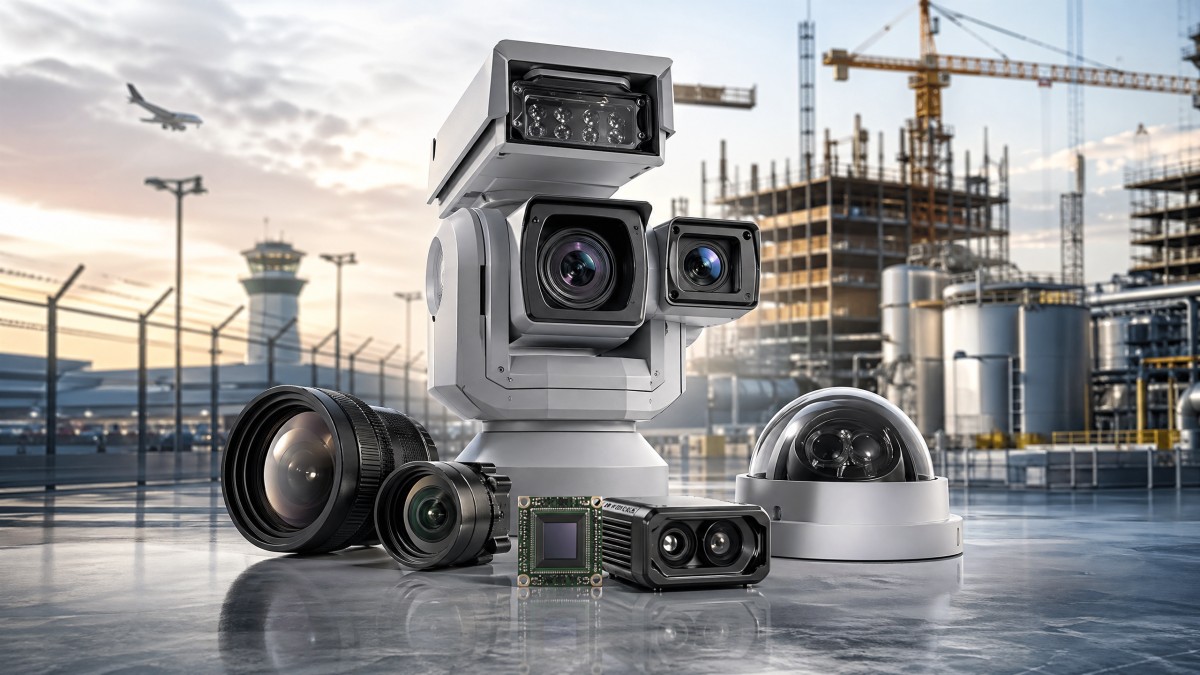
The first buying mistake is comparing advanced optical products without defining the operational scene. A city surveillance corridor, a railway platform, a perimeter fence, a logistics yard, and a smart construction site may all require imaging and illumination, but their optical priorities differ sharply. In practice, at least 4 dimensions should be clarified first: distance, lighting variation, object speed, and decision purpose.
For example, a project that needs facial or plate recognition at 15–40 meters should not be assessed by the same criteria as a wide-area monitoring project covering 120–300 meters. Likewise, a public safety installation exposed to fog, backlight, headlights, and low-lux conditions requires stronger image stability than an indoor inspection system operating in controlled illumination between 300 and 800 lux.
Buyers should also separate detection from identification. Detection answers whether something is present. Identification answers who or what it is. These are not interchangeable. Many procurement issues arise because a system is purchased for general monitoring, then later expected to support evidence capture, incident review, or AI-based classification without sufficient pixel density or optical control.
Four baseline questions every buyer should ask
A practical pre-procurement review should document operational conditions in measurable terms. This reduces mismatch risk during tendering, technical review, and commissioning. Teams that define these variables early usually cut rework during pilot testing by 1–2 rounds.
- What target must be seen clearly: person, vehicle, tool, hazard zone, crowd flow, or surface defect?
- At what range will the task happen: under 10 meters, 10–50 meters, or above 100 meters?
- What light conditions will occur daily: daylight, dusk, low-lux, glare, shadow, dust, rain, or mixed lighting?
- What action depends on the image: operator monitoring, AI alerting, compliance evidence, or forensic review within 7–30 days?
GSIM’s intelligence-oriented approach is especially relevant here because optical choices increasingly depend on both technology evolution and policy context. A system specified only on megapixels may fail where exposure control, dynamic range, infrared behavior, or optical filtering matter more than nominal resolution.
Typical scenario differences
The table below outlines how different projects translate into different evaluation priorities. It can help mixed teams align technical and commercial expectations before shortlisting suppliers.
The key takeaway is that “cutting-edge” does not automatically mean “best fit.” In B2B procurement, the right optical technology is the one that meets the scene, the risk profile, and the operational target with minimal compromise over a 3–5 year service window.
Check Optical Performance Beyond Resolution Claims
Resolution is often the first number buyers see, but it should never be the only performance metric. A high-resolution sensor may still underperform if the lens quality is weak, the sensor struggles in low light, the frame rate drops under analytics load, or the illumination design creates overexposure. Optical technology must be judged as a system, not as a single specification.
A balanced evaluation should review at least 6 technical checkpoints: sensor size, lens aperture, dynamic range behavior, low-light threshold, image noise control, and optical alignment stability. In outdoor security, another 2 checks become important: anti-glare handling and environmental sealing consistency. These factors directly affect recognition accuracy and operator confidence during incident review.
When projects include AI vision, image consistency matters as much as visual sharpness. Models trained under stable lighting can degrade when real-world conditions shift. If brightness fluctuates too widely, or if infrared performance differs from visible-light performance, false alerts and missed events may rise during night hours or weather transitions.
Performance indicators that deserve buyer attention
The following indicators help translate marketing claims into operational reality. Procurement teams should request test footage, not just datasheets, and should compare output across 3 states: daylight, low-lux evening, and active night illumination.
- Low-light usability: verify whether the image remains usable at 0.01–0.1 lux rather than merely visible.
- Frame stability: confirm whether target motion remains analyzable at 25–30 fps in the intended mode.
- Dynamic range behavior: check whether backlit entries, tunnels, or headlights wash out critical details.
- Lens-to-sensor match: ensure field of view and focal length support the required identification distance.
What to validate in sample tests
A robust validation process usually includes 3 rounds: lab review, site pilot, and post-adjustment verification. The pilot should run for at least 48–72 hours to capture daylight shifts, night cycles, and weather changes. A 15-minute demo is not enough to judge optical stability for public safety projects.
Teams should ask for original files rather than compressed clips from a sales presentation. Compression can hide motion blur, noise, edge artifacts, and color distortion. For long-range or evidence-oriented systems, request still captures from multiple distances, such as 10 meters, 30 meters, and 80 meters, depending on the scene.
The table below can be used as a practical technical review sheet during supplier comparison.
This kind of structured testing helps buyers avoid overpaying for headline specifications that do not deliver measurable field performance. It also improves communication between engineers, operators, and procurement teams during approval cycles.
Review Compliance, Cybersecurity, and Data Handling Early
Optical technology is increasingly tied to regulation. In security and public safety deployments, buyers should not wait until contract review to consider surveillance laws, retention obligations, cross-border data handling, or cybersecurity requirements. A technically strong solution can still become commercially risky if it creates legal exposure or fails internal governance review.
This is where an intelligence-led perspective matters. GSIM’s role as a decision-support provider reflects a real market shift: optical procurement now intersects with global policy monitoring, smart infrastructure standards, and electronic surveillance compliance. Buyers should examine whether the proposed solution can support retention periods of 7, 30, or 90 days, depending on operational policy, without degrading access or auditability.
Cybersecurity is equally important because networked optical devices are part of the digital infrastructure surface. At minimum, buyers should review firmware update procedures, access control roles, encryption support, and log traceability. If the system connects with AI analytics, cloud storage, or VLC-enabled networks, the security review should extend to interface exposure and software dependency management.
A practical compliance screening list
Before issuing a purchase order, teams should confirm that technical design, policy alignment, and governance responsibilities are documented. This protects both the buying organization and downstream operators.
- Confirm what data is captured: image only, video, metadata, facial features, plate data, or event analytics.
- Define retention and deletion logic in measurable terms, such as 30-day standard storage and 72-hour temporary caches.
- Review user privilege levels, especially for export, playback, and administrative change functions.
- Check update policy, patch frequency, and whether security fixes can be applied without major downtime.
- Verify whether local deployment, regional storage, or hybrid architecture is required by internal or public rules.
A common buyer misconception is that compliance is a legal department issue only. In reality, compliance readiness influences system architecture, storage sizing, vendor choice, and even illumination placement in privacy-sensitive zones. Addressing it late can extend project schedules by 2–6 weeks.
For distributors, integrators, and project managers, early compliance review also reduces tender risk. It prevents situations where a selected product must be replaced after site approval because audit logging, role segregation, or retention control does not match the project specification.
Assess Integration, Maintenance, and Life-Cycle Cost
Advanced optical equipment rarely works in isolation. In most B2B environments, it must integrate with video management systems, AI engines, access control, alarms, edge processors, lighting control, or building platforms. Buyers should therefore check not only whether a device works, but how well it fits an existing or planned ecosystem over a 36–60 month period.
Total cost of ownership is often shaped by maintenance more than by purchase price. A lower-cost unit may require more frequent cleaning, recalibration, or field replacement in dusty, wet, or vibration-heavy environments. For operators and quality managers, routine service intervals such as every 3 months versus every 12 months can materially change labor planning and uptime performance.
Integration quality also affects response speed during incidents. If optical devices cannot send structured alerts, support synchronized time stamps, or maintain stable streams under load, the operational value of the entire security stack decreases. This is especially important in urban safety projects where video review, event reconstruction, and remote command coordination depend on reliable interoperability.
What buyers should price beyond the hardware
A thorough commercial evaluation should separate capital cost from operating cost. This helps procurement and business assessment teams compare offers on a like-for-like basis rather than on hardware price alone.
The most resilient purchasing decisions usually come from a 5-part review: hardware fit, software compatibility, network demand, maintenance burden, and support responsiveness. If one of these areas is not documented, the buyer does not yet have a full picture of life-cycle value.
Maintenance questions operators should not skip
Operators and project owners should ask who performs cleaning, firmware updates, angle correction, illumination checks, and post-incident diagnostics. They should also ask how long replacement components typically take to arrive. In many international projects, standard lead time may range from 7–15 days, while specialized optical parts can take 3–6 weeks.
If the deployment includes harsh environments, request a preventive maintenance plan with a realistic schedule. A site exposed to salt air, heavy dust, or vibration may require quarterly inspections, while a controlled indoor deployment may be stable with semiannual review. These differences should be reflected in the procurement decision, not discovered after acceptance.
Build a Safer Procurement Process With Structured Validation
The final safeguard is process discipline. Even strong technical products can fail procurement objectives if the buyer relies on informal demos, incomplete documentation, or rushed approvals. A structured validation process creates a clear path from requirement definition to post-installation acceptance, reducing conflict between technical, commercial, and operational stakeholders.
For multi-party projects involving consultants, integrators, distributors, and end users, the review workflow should include at least 5 stages: requirement mapping, supplier pre-screening, controlled pilot, contract clarification, and acceptance verification. Each stage should have an owner, a timeline, and measurable outputs. For most medium-scale projects, this process can be completed in 2–8 weeks depending on site access and approval complexity.
Buyers should also insist on written acceptance criteria before shipment or installation. Without these criteria, disputes often emerge around image quality, night performance, analytics behavior, or integration expectations. Acceptance should be linked to scene-based performance, not only to factory specifications.
Recommended validation workflow
- Document the use case with measurable ranges, lighting conditions, and operational outcomes.
- Shortlist suppliers using technical checklists, compliance screening, and reference architecture review.
- Run a pilot for 48–72 hours, including day, dusk, and night performance observation.
- Confirm integration, maintenance scope, and storage impact before final commercial approval.
- Conduct acceptance against scene-specific targets, not just catalog claims.
This workflow is especially useful for enterprise decision-makers and project leaders who need to balance security performance with procurement governance. It also supports quality and safety managers who need defensible records of why a certain optical solution was chosen over alternatives.
Common procurement mistakes
Three mistakes appear repeatedly across industries. First, selecting by resolution alone. Second, treating night performance as an add-on rather than a core requirement. Third, failing to test compliance and integration readiness before commercial commitment. Any one of these issues can reduce project value and extend deployment time.
A better approach is to combine optical verification with strategic intelligence. That means linking the product to the site, the policy environment, the future operating model, and the broader trend line of AI vision, connected lighting, and VLC-enabled infrastructure. Buyers who do this are better prepared for both immediate deployment and future expansion.
Cutting-edge optical technology should be purchased with discipline, not excitement alone. The best buyers check scene fit, measurable optical performance, policy alignment, cybersecurity posture, integration readiness, maintenance burden, and total life-cycle value before approving an order. That approach reduces risk, improves deployment outcomes, and supports long-term security assurance across public and commercial environments.
For organizations navigating urban safety upgrades, smart infrastructure planning, or cross-border procurement decisions, GSIM offers a practical framework for aligning protection needs with evolving optical solutions and market intelligence. To discuss your project requirements, compare solution paths, or obtain a tailored evaluation framework, contact us today to get a customized plan and explore more security and illumination solutions.
- digital infrastructure
- urban safety upgrades
- decision-support provider
- optical technology
- electronic surveillance
- AI vision
- public safety projects
- knowledge system
- security solutions
- urban security
- optical solutions
- cutting-edge optical technology
- global security trends
- risk foresight
- urban security solutions
- transparent knowledge system
- protection demands
- global security
- security trends
- security forecasting
- optical intelligence
The VitalSync Intelligence Brief
Receive daily deep-dives into MedTech innovations and regulatory shifts.