
Security
EU EPBD Revision Mandates Smart Lighting Integration as of May 29, 2026
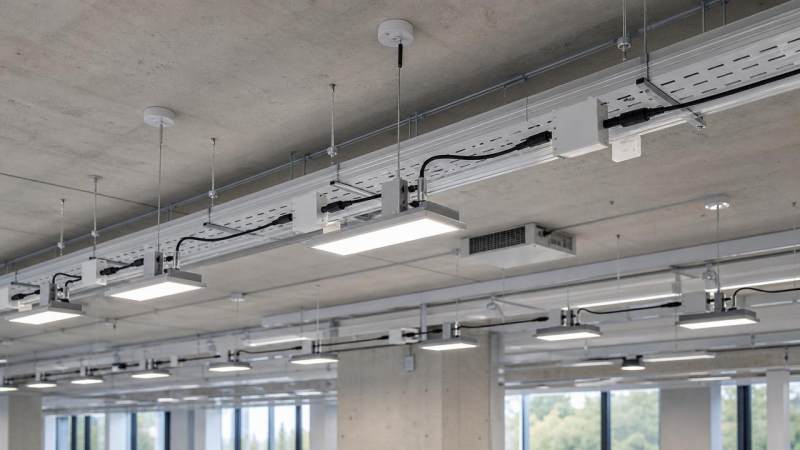
The revised Energy Performance of Buildings Directive (EPBD) enters into force across the European Union on May 29, 2026, requiring all new commercial buildings to deploy networked, integrable automatic lighting control systems compliant with SRI metrics and DALI Parts 250–253 energy metering standards. Exporters of lighting equipment from China—and other third countries—must meet specific technical prerequisites, including independent driver installation, D4i Gen 2 compatibility, and Matter protocol support, to remain eligible for inclusion in major EU public procurement lists.
Event Overview
The revised Energy Performance of Buildings Directive (EPBD) becomes fully applicable in all EU Member States on May 29, 2026. As confirmed in the official consolidated text published by the European Commission, newly constructed commercial buildings must be equipped with intelligent lighting systems that are both internet-connected and interoperable with broader building automation systems. These systems must adhere to the Specific Regulation Index (SRI) and conform to DALI Part 250–253 for real-time energy consumption measurement. For non-EU manufacturers—particularly those based in China—compliance requires demonstrable implementation of three technical capabilities: independent installation of LED drivers; adaptation to D4i Gen 2 certification requirements; and integration with the Matter connectivity standard. Failure to satisfy these conditions will result in exclusion from EU public sector tenders.
Industries Affected by This Regulation
Lighting Equipment Exporters (Direct Trade Enterprises)
These companies face direct market access implications. Eligibility for EU public procurement—especially for large-scale infrastructure, office, and institutional projects—now hinges on verifiable compliance with the EPBD’s technical annexes. Non-compliant products risk being disqualified at tender evaluation stage, irrespective of price or performance claims.
LED Driver and Control Gear Manufacturers (Component-Level Producers)
Manufacturers supplying drivers, controllers, or interface modules must ensure their components support independent mounting (per EPBD Annex I), enable DALI-2 Part 250–253 data reporting, and align with D4i Gen 2 firmware and diagnostic requirements. Legacy designs lacking embedded metering or Matter-compatible radio stacks may require redesign or requalification.
System Integrators and Building Automation Providers
Integrators deploying lighting subsystems within larger BMS environments must verify bidirectional interoperability between lighting devices and central platforms. The regulation implicitly raises expectations for standardized data exchange—not only for control but also for continuous energy verification aligned with SRI calculations.
Testing, Certification, and Compliance Support Services
Third-party labs and conformity assessment bodies are likely to see increased demand for DALI-2 Part 250–253 validation, D4i Gen 2 functional testing, and Matter over Thread/Wi-Fi interoperability verification. Certification timelines and documentation rigor may tighten ahead of the May 2026 deadline.
Key Focus Areas and Practical Responses for Stakeholders
Monitor official guidance from EU national transposition authorities
While the EPBD is an EU directive, its implementation depends on national laws enacted by each Member State. Some countries may issue transitional provisions, technical interpretations, or enforcement timelines differing from the May 29, 2026 date. Stakeholders should track national building codes and procurement regulations—especially in high-volume markets such as Germany, France, and the Netherlands.
Prioritize product lines bound for public-sector commercial construction
The mandate applies explicitly to new commercial buildings. Residential retrofits, industrial facilities, and private non-commercial developments are not covered under this specific requirement. Companies should therefore segment inventory and R&D efforts—focusing first on luminaires, drivers, and controls intended for offices, schools, hospitals, and government buildings.
Distinguish between regulatory signal and enforceable obligation
As of now, the EPBD revision establishes a legal framework—but does not specify enforcement mechanisms (e.g., mandatory pre-market certification, on-site audit protocols, or penalties for non-compliance). Analysis shows that market exclusion via procurement rules is the primary enforcement channel, rather than product bans at borders. This means readiness must be demonstrated at the tender submission level, not necessarily at customs clearance.
Align supply chain and documentation ahead of Q1 2026
Manufacturers should confirm with suppliers whether driver modules, DALI gateways, and wireless SoCs support D4i Gen 2 diagnostics and Matter 1.3+ application layer features. Technical documentation—including test reports, firmware version logs, and SRI calculation methodology statements—must be prepared and translated into English and relevant national languages well before the deadline.
Editorial Perspective / Industry Observation
Observably, this EPBD revision functions less as an immediate technical barrier and more as a structural signal: it codifies interoperability and granular energy accountability as non-negotiable attributes for smart lighting in the EU built environment. From an industry perspective, the emphasis on DALI Part 250–253 and Matter—not just basic DALI-2 or proprietary protocols—marks a deliberate pivot toward vendor-agnostic, data-rich building systems. Current evidence suggests that while full enforcement will depend on national implementation, procurement authorities are already incorporating these criteria into draft tender specifications. Therefore, this is better understood as a maturing phase in EU building digitalization—not a sudden regulatory shock.
Conclusion
This regulation formalizes the convergence of lighting control, energy metering, and building-wide automation in EU commercial construction. Its significance lies not in introducing entirely new technologies, but in mandating their integrated deployment and standardized verification. For stakeholders, the most rational interpretation is that compliance is now a prerequisite for market participation—not an optional differentiator. Preparation should focus on verifiable technical alignment, not broad strategic pivots.
Information Sources
Main source: Consolidated text of Directive (EU) 2018/844 as amended by Directive (EU) 2023/XXX (OJ L, 2023/XXX, p. Y), published by the Publications Office of the European Union. Additional reference: European Commission Guidance Note on EPBD Implementation, Version 2.1 (2025).
Note: National transposition measures and enforcement details remain subject to ongoing updates and require continued monitoring beyond May 2026.
The VitalSync Intelligence Brief
Receive daily deep-dives into MedTech innovations and regulatory shifts.