
Security
Guangzhou Huadu 100MW/200MWh BESS Tender Launched
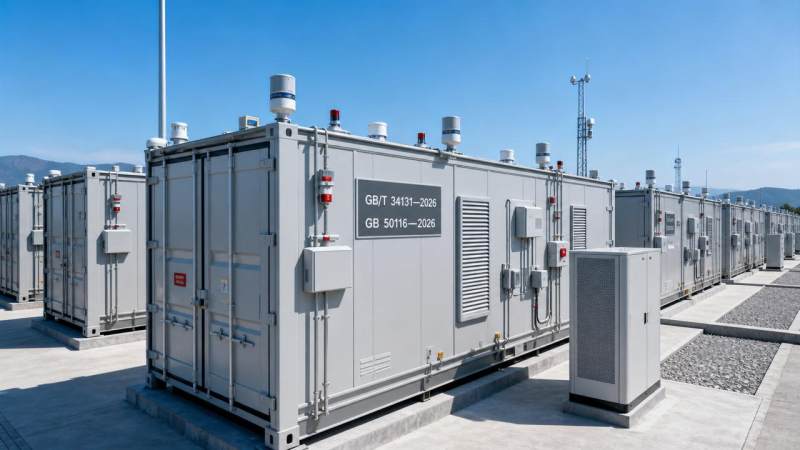
Guangzhou Sueneng New Energy Storage Co., Ltd. has launched the EPC tender for the Jinghu Station grid-side energy storage project — a 100 MW / 200 MWh lithium iron phosphate (LFP) battery energy storage system in Huadu District, Guangzhou. Though the exact issuance date is not publicly disclosed, the tender specifications signal a tightening of technical and safety requirements for utility-scale BESS deployments in China. Stakeholders in battery system integration, fire safety module manufacturing, and international project contracting should take note — this tender reflects an accelerating alignment between domestic procurement standards and global export-oriented compliance benchmarks.
Event Overview
Guangzhou Sueneng New Energy Storage Co., Ltd. issued the EPC tender for the Jinghu Station grid-side energy storage project. The tender mandates that the energy storage system must integrate a Battery Management System (BMS) compliant with GB/T 34131—2026 and a three-level fire suppression联动 system conforming to GB 50116—2026. Fire suppression media must be environmentally benign, ozone depletion potential (ODP)-free, and low-global warming potential (GWP). The tender explicitly references export-grade fire safety modules — including aerosol + thermally activated aerosol composite suppressors and distributed smoke-temperature composite detectors — as de facto technical entry requirements.
Impact on Specific Industry Segments
Direct Export-Oriented Fire Safety Module Manufacturers
These manufacturers are directly affected because the tender codifies previously optional or project-specific fire safety features as mandatory technical criteria. Impact manifests in heightened demand for certified, modular, and interoperable fire suppression subsystems — especially those pre-validated against both Chinese national standards (GB series) and international environmental thresholds (ODP/GWP).
Lithium Iron Phosphate (LFP) Battery System Integrators
Integrators must now embed certified BMS and fire suppression systems as inseparable subsystems — not add-ons. This increases design complexity, validation timelines, and third-party certification dependencies. Compliance verification across BMS–fire control communication protocols becomes a critical path item in project delivery.
Supply Chain Service Providers (Certification & Testing)
Providers offering GB/T 34131—2026 and GB 50116—2026 conformity testing, particularly for integrated BMS–fire suppression functionality, face rising inquiry volume. Demand is shifting from standalone component testing toward full-system interoperability validation under simulated fault conditions.
International EPC Contractors Targeting Chinese-Backed Projects Abroad
Contractors bidding on overseas projects financed or technically influenced by Chinese entities may encounter similar fire safety clauses. The Jinghu tender serves as an early indicator that such requirements — once confined to domestic grid-side tenders — are being institutionalized as baseline expectations for cross-border BESS deployments.
What Relevant Enterprises or Practitioners Should Focus On Now
Monitor official updates on GB/T 34131—2026 and GB 50116—2026 implementation timelines
Although referenced in the tender, these standards carry 2026 publication years; their actual enforcement dates and transitional provisions remain pending official notice. Enterprises should track announcements from SAC (Standardization Administration of China) and Ministry of Housing and Urban-Rural Development.
Verify compatibility of existing fire suppression modules with GB 50116—2026’s three-level联动 architecture
Legacy aerosol or gas-based systems may lack native support for the required hierarchical detection–alarm–suppression sequence. Firms should assess whether firmware upgrades, gateway integration, or hardware retrofitting is needed to meet the联动 (interlocking) requirement — not just individual component certification.
Distinguish between policy signaling and immediate procurement impact
This tender reflects emerging technical expectations rather than a nationwide mandate. While it sets a precedent, adoption across other provincial or municipal tenders remains uneven. Companies should treat it as a leading indicator — not yet a universal requirement — when prioritizing R&D or certification investments.
Prepare documentation packages aligned with dual-standard traceability
Suppliers should compile test reports, interface protocols, and material safety data sheets (MSDS) demonstrating simultaneous conformance to GB/T 34131—2026 (BMS), GB 50116—2026 (fire control), and environmental criteria (zero ODP, low GWP). Pre-assembled compliance dossiers accelerate bid response cycles.
Editorial Observation / Industry Perspective
Observably, this tender does not introduce entirely new technologies — but it consolidates and elevates previously fragmented safety requirements into a single, binding procurement condition. Analysis shows it functions less as an isolated project specification and more as a formalized benchmark: one that bridges domestic regulatory development and export-market readiness. From an industry perspective, it signals growing institutional recognition that fire safety interoperability — not just component performance — is a non-negotiable system-level attribute for grid-scale BESS. It is currently best understood as a strong policy signal rather than an already operationalized regulatory outcome; sustained observation is warranted as further provincial tenders reference these same GB standards.
The Jinghu Station tender underscores a structural shift: fire safety is no longer a siloed subsystem but a co-engineered, standards-governed layer embedded across BMS, EMS, and physical suppression hardware. For stakeholders, its primary significance lies not in scale or novelty, but in the explicit linkage it draws between domestic standardization momentum and international technical market access. Current interpretation should emphasize preparedness over panic — and alignment over assumption.
Source: Public tender notice issued by Guangzhou Sueneng New Energy Storage Co., Ltd. (no official publication date disclosed).
Note: Implementation status and effective dates of GB/T 34131—2026 and GB 50116—2026 remain subject to official release by Standardization Administration of China and Ministry of Housing and Urban-Rural Development — ongoing monitoring is advised.
The VitalSync Intelligence Brief
Receive daily deep-dives into MedTech innovations and regulatory shifts.