
Security
K Line Order Signals Compliance-Driven Marine Exports
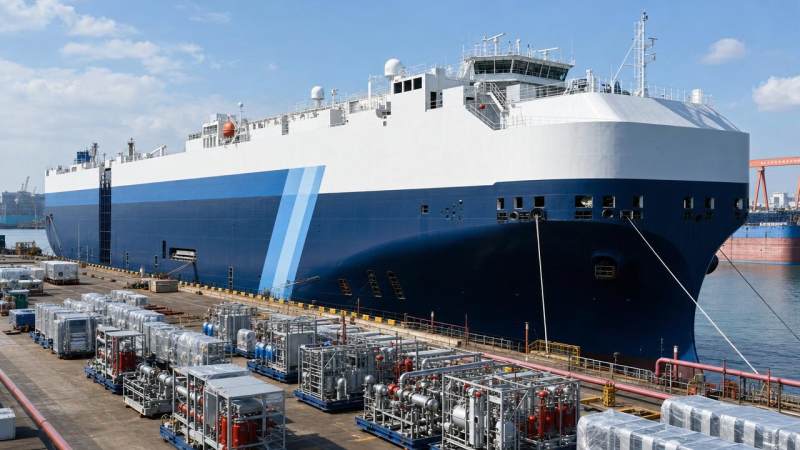
On June 9, 2026, K Line announced an order with Yangzijiang Shipbuilding Group for four 7,000 CEU LNG dual-fuel car carriers, with deliveries scheduled to begin from Q3 2027. What makes this development notable for the industry is not only the shipbuilding contract itself, but the fact that the vessels are required to carry ATEX Zone 1 certified explosion-proof lighting systems, marine smoke detectors, and high-pressure water mist fire extinguishing systems. For ship equipment exporters, shipyard procurement teams, compliance specialists, and certification-related service providers, this points to a practical shift in how technical requirements, export readiness, and delivery timing are being tied more closely to vessel assembly schedules.
What the announced order confirms
According to the provided information, K Line announced on June 9, 2026 that it had placed an order with China’s Yangzijiang Shipbuilding Group for four LNG dual-fuel ro-ro vessels with a capacity of 7,000 CEU.
The ships are expected to be delivered progressively starting from Q3 2027.
The batch is described as requiring ATEX Zone 1 certified explosion-proof lighting systems, marine-type smoke detectors, and high-pressure water mist fire extinguishing devices.
The supporting equipment orders have already been subcontracted to six Chinese manufacturers, including Ningbo Pioneer and Foshan Nanyang.
Based on the supplied summary, these subcontracted orders represent about RMB 120 million in additional export value for related ship equipment, and their delivery cycle is embedded into the overall vessel assembly schedule.
Where the compliance impact is likely to be felt first
Specification-driven procurement at the shipyard level
From an industry perspective, shipyards and vessel integrators are likely to feel the impact first because mandatory equipment configuration changes procurement from a price-led exercise into a specification-led one. Where ATEX Zone 1 certification and marine fire safety equipment are named as required configurations, procurement teams need to pay closer attention to certificate validity, technical document completeness, model matching, and delivery coordination with the main build schedule.
Export manufacturers face tighter documentation alignment
For manufacturers of explosion-proof lighting, marine detection devices, and fire suppression systems, the key effect is likely to fall on export documentation and product compliance alignment. Analysis shows that once such equipment is tied directly to vessel delivery milestones, any mismatch in certification scope, technical files, inspection records, or bid documentation may affect not only a component shipment but also a broader installation sequence.
Testing and certification service providers may see earlier involvement
Certification-related firms and testing bodies may also be affected because compliance review is likely to move earlier in the supply process. What deserves closer attention is whether buyers and shipyards increasingly require supporting evidence to be prepared before production and shipment windows narrow, especially for equipment categories where certification wording and technical applicability matter to onboard acceptance.
Supply chain and after-sales roles become more delivery-sensitive
Supply chain service providers and after-sales teams may see increased pressure around schedule reliability and traceability. If supporting equipment is already linked to the total assembly rhythm, then packaging of export files, spare parts planning, and quality traceability records become more relevant to on-time installation and later service support, even if the current information does not yet define a detailed execution framework.
Practical points companies should watch now
Check whether certification scope fully matches onboard use
Companies involved in the relevant equipment categories should pay attention to whether certificate scope, product marking, and technical descriptions are fully aligned with the required onboard application. This is especially important where ATEX Zone 1 is treated as a mandatory entry condition rather than a general product advantage.
Prepare technical files for bid and delivery review
Observably, technical files may become as important as manufacturing capacity in this type of order. Suppliers should closely review test reports, product specifications, compliance statements, and bid-response materials to reduce the risk of document gaps appearing late in the procurement or installation process.
Align production planning with vessel assembly timing
The supplied information specifically notes that the delivery cycle is embedded into the vessel’s overall assembly schedule. That means relevant exporters and subcontractors should watch production sequencing, shipment timing, and coordination points with shipyard integration more carefully, rather than treating equipment delivery as a standalone export transaction.
Continue tracking execution language and buyer-side requirements
Because the provided information confirms the mandatory configuration but does not provide detailed implementation wording, companies should continue to watch for any later clarification in procurement documents, technical appendices, inspection requirements, or acceptance language. At this stage, it would be premature to treat current signals as a complete and settled execution framework.
Why this looks more like an execution signal than a standalone order
Analysis shows that this case is more significant as a compliance and execution signal than as a simple shipbuilding headline. The combination of mandatory certified equipment, identified Chinese subcontract manufacturers, and schedule linkage to vessel assembly suggests that compliance requirements are being translated directly into exportable equipment demand and delivery discipline.
At the same time, it is more appropriate to understand this as a concrete project-level signal rather than proof of a broader universal rule change across the entire market. The industry still needs to observe whether similar specification patterns appear more frequently in future tenders, procurement packages, and acceptance standards.
How the market may best read this development
A rational reading of this development is that it highlights how certification, technical specification, and delivery coordination can move from supporting considerations to core commercial conditions in ship equipment exports. The immediate meaning is not simply that related product demand exists, but that compliance readiness may increasingly determine who can participate smoothly in such orders.
For now, this is best understood as an already visible execution signal within a confirmed project, while broader market implications still require continued observation through later procurement practice, certification interpretation, and delivery performance.
Basis of this article and what still needs verification
This article is generated based on the user-provided news title, event date, and event summary. For events of this kind, commonly relevant source types may include company announcements, regulator releases, trade or customs information, industry association updates, standard-setting documents, and reporting by authoritative media. No specific official source link was provided in the input, so the exact official source path remains to be verified on an ongoing basis.
What still merits follow-up includes any later clarification of compliance wording, certification application in procurement documents, changes in tender specifications, industry feedback on execution, and the actual implementation rhythm among shipyards, equipment suppliers, and export contractors.
The VitalSync Intelligence Brief
Receive daily deep-dives into MedTech innovations and regulatory shifts.