
Security
Vietnam Tightens Fire Suppression Import Rules
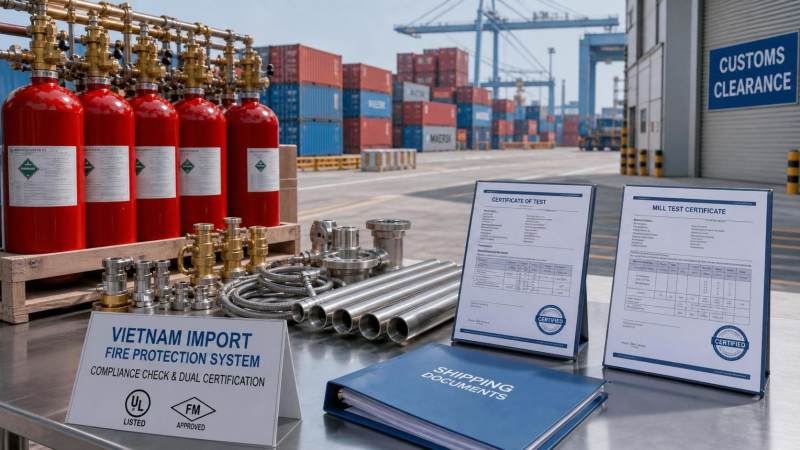
Effective September 1, 2026, Vietnam will require imported fire suppression systems to be supported by two valid English test reports at the same time: UL 2127 and ISO 14520-1:2026. The change, set out under Circular 12/2026/TT-BCT, matters not only to importers but also to manufacturers, distributors, project suppliers, and buyers managing delivery schedules and customs clearance, because the earlier practice of relying on ISO 14520 alone is no longer accepted and pilot inspections have already started in Ho Chi Minh City.
What the new rule states
Vietnam’s Ministry of Industry and Trade (MOIT) issued Circular 12/2026/TT-BCT on July 9, 2026. Under the circular, from September 1, 2026, all imported fire suppression systems must be submitted with both a valid English UL 2127 test report and a valid English ISO 14520-1:2026 test report. Both documents are required, and one cannot replace the other.
The policy also marks the end of the earlier, more relaxed approach under which ISO 14520 alone had been accepted. According to the provided information, customs authorities in Ho Chi Minh City have already begun pilot inspection checks.
Where the impact is likely to appear first
Import transactions may face tighter document screening
From an industry perspective, direct trading companies and importers are the first group affected because the new requirement is tied directly to import submission documents. The main pressure point is no longer only product movement, but whether a shipment file includes two compliant English reports at the same time.
Manufacturers and system suppliers will be drawn into compliance preparation
Analysis shows that producers and system suppliers serving the Vietnam market may be affected through document readiness and customer support. Even when the goods themselves are unchanged, the ability to provide both required reports in valid English form can become a practical condition for shipment planning and market access.
Distributors and project-based sellers may need to revisit delivery commitments
For distributors, channel partners, and project suppliers, the issue is likely to surface in order confirmation, lead-time communication, and customs-related handover risk. What deserves closer attention is that a documentation gap may affect delivery timing even before questions arise about product installation or project use.
Buyers and end users may face procurement and scheduling spillover
Purchasing parties and end-use organizations may also feel the effect indirectly. Where procurement depends on imported fire suppression systems, attention may shift toward supplier document readiness, expected clearance timing, and whether supporting reports can be presented without delay.
What companies should watch now
Check whether both reports are available and current
The immediate practical issue is simple: the rule requires both UL 2127 and ISO 14520-1:2026, in valid English test report form. Companies involved in shipping, procurement, or sales into Vietnam should verify whether current product files actually contain both documents, rather than assuming earlier ISO-based practice remains sufficient.
Separate the written rule from on-the-ground inspection practice
Observably, the circular creates a formal requirement, while the pilot inspections in Ho Chi Minh City point to how enforcement may begin in practice. Businesses should pay attention to both levels: the text of the rule and how customs checks are carried out in real transactions.
Review handoffs across supplier, importer, and customer teams
This change is likely to expose weaknesses in document ownership. Companies should identify who is responsible for obtaining reports, reviewing validity, preparing English files, and presenting them at the import stage. Delays often arise not from the rule itself, but from unclear internal handoffs.
Prepare customer and shipment communication early
For firms with active orders or upcoming deliveries, it is sensible to review pending shipments and customer commitments now. The key focus is whether any order flow still assumes the older, more relaxed acceptance standard, especially where customs timing or project deadlines are sensitive.
Why this looks more than a short-term filing change
Analysis shows that this development should not be read merely as a minor paperwork adjustment. The confirmed facts point to a clearer compliance threshold for imported fire suppression systems: dual-document submission, in English, with the previous single-standard flexibility withdrawn. At the same time, it is still more appropriate to understand the broader market effect as an unfolding process rather than a fully settled outcome, because the provided information confirms pilot checks in Ho Chi Minh City but does not define the full scope of future enforcement practice beyond that.
How the market should read this development
At this stage, the most balanced reading is that Vietnam has moved from a looser recognition approach to a more explicit import documentation requirement for fire suppression systems. For the industry, the significance lies less in headline impact and more in operational consequence: document completeness, shipment readiness, and customs coordination now deserve closer attention. It is more appropriate to understand this as a concrete compliance change with longer-term signaling value, while continuing to watch how inspection practice develops.
Basis of this article and what still needs verification
This article is based on the user-provided news title, event date, and event summary concerning Circular 12/2026/TT-BCT, the September 1, 2026 effective date, the dual requirement for UL 2127 and ISO 14520-1:2026 English test reports, the end of the earlier ISO-only acceptance approach, and the pilot customs inspections in Ho Chi Minh City.
For this type of industry update, typical reference categories may include official government notices, customs announcements, company compliance notices, industry association updates, authoritative media reporting, and standards-related documents. A specific official source link was not provided in the input, so the exact publication record and any subsequent implementation guidance still require ongoing verification. What deserves continued attention is whether further official clarification emerges on inspection scope, submission practice, or additional port-level enforcement details.
The VitalSync Intelligence Brief
Receive daily deep-dives into MedTech innovations and regulatory shifts.