
Security
CPSC Draft Tightens Wireless Smoke Alarm Entry Rules
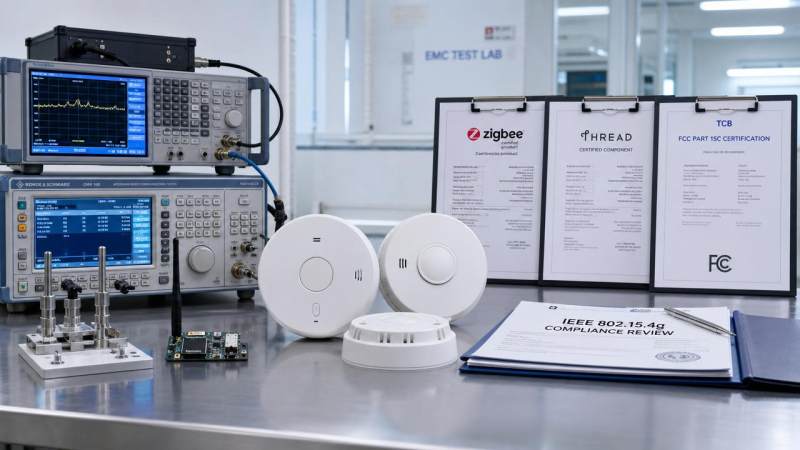
A draft safety guide released by the U.S. Consumer Product Safety Commission (CPSC) on June 13 points to a possible compliance shift for wireless smoke alarms sold into the U.S. market. If the draft takes effect as expected in Q4 2026, smoke detectors using Zigbee or Thread would need both FCC certification and conformity with the anti-interference and low-power RF emission limit provisions in IEEE 802.15.4g-2020. For exporters, certification providers, buyers, and supply chain teams, the issue is not only product design, but also whether market access conditions for connected fire safety devices are moving toward a more explicit wireless compliance baseline.
What the draft would require
The confirmed information available at this stage is limited but clear on the core point. The CPSC issued a draft titled Wireless Interconnected Smoke Alarm Safety Guide on June 13. According to the event summary provided, the draft would make FCC certification mandatory for all smoke detectors equipped with Zigbee or Thread, while also requiring compliance with the anti-interference and low-power RF transmission limit clauses in IEEE 802.15.4g-2020.
The expected effective timing is Q4 2026. The same summary indicates that more than 400 Chinese export-oriented fire electronics companies could be affected if the new requirement is adopted.
Where the pressure may appear first in the supply chain
Export shipments may face a higher documentation threshold
From an industry perspective, exporters of smoke detectors with Zigbee or Thread are likely to feel the impact first because market entry would be tied more directly to wireless compliance evidence. The practical effect may appear in product qualification files, shipment documentation, customer acceptance materials, and pre-delivery compliance checks. What deserves closer attention is whether existing product files fully align FCC certification status with technical proof related to IEEE 802.15.4g-2020 requirements.
Manufacturing and design teams may need earlier compliance alignment
For manufacturers, the issue is not limited to final certification. Analysis shows that if wireless performance requirements become a clearer entry condition, product development, module selection, RF design, and internal validation may need to align earlier with the expected compliance path. This matters especially for products already positioned for export programs where certification timing can affect release schedules and delivery coordination.
Testing and certification service providers may see a shift in review focus
Certification-related companies and testing service providers may need to pay closer attention to how FCC certification and IEEE 802.15.4g-2020 compliance are presented together in technical assessments. Observably, if customers begin updating compliance requests before the rule is finalized, the workload may move upstream into gap reviews, technical file checks, and document readiness rather than only end-stage testing.
Buyers and channel partners may tighten supplier qualification
Procurement teams, import-side buyers, and channel partners may also need to revisit supplier qualification criteria. If wireless smoke alarms become subject to a clearer combined standard of protocol use, RF limits, and certification status, sourcing decisions may increasingly depend on whether suppliers can provide complete compliance materials, not just product availability or price. This could affect tender documents, purchase specifications, and delivery approval workflows.
What companies should review now
Check whether covered products are within scope
Companies should first identify whether current or planned smoke detector models use Zigbee or Thread, because the draft description links the proposed requirement specifically to those protocol-equipped products. This is a basic but necessary screening step for export portfolios, customer projects, and future quotations.
Review certification files and technical records
Analysis shows that firms with relevant products should focus on the completeness and consistency of FCC certification records and technical documentation tied to IEEE 802.15.4g-2020 provisions referenced in the draft summary. At this stage, the prudent approach is to review document readiness rather than assume that current files will automatically satisfy a future enforcement standard.
Watch for official wording and enforcement interpretation
Because the information provided describes a draft and an expected Q4 2026 effective window, companies should continue tracking how the final wording, implementation scope, and compliance interpretation develop. It is more appropriate to understand this as a rule-making signal rather than a fully settled execution outcome.
Prepare for procurement and delivery adjustments
What deserves closer attention is how buyers, distributors, and project contractors may respond before formal effectiveness. Some businesses may start asking for updated test reports, compliance declarations, or supplier statements earlier in the sales cycle. That could affect procurement planning, supplier coordination, and delivery lead-time management even before the rule formally takes effect.
Why this matters beyond a single draft
Observably, this development is not only about a new technical reference. It suggests that wireless functions in smoke alarms may be treated more explicitly as a market access and safety compliance issue, not merely as an optional connectivity feature. Analysis shows that the main industry significance lies in the possible convergence of product safety expectations, RF compliance, and entry documentation for connected fire safety devices.
At the same time, this remains a draft-stage development based on the information provided. It would be premature to treat all enforcement details as settled. Continued attention is warranted because the eventual industry impact will depend on how the final requirement is written, interpreted, and reflected in purchasing and certification practice.
How this update is best understood today
The most balanced reading at present is that this is an important compliance signal with potential market-access consequences, rather than a fully implemented rule already producing fixed outcomes. For companies involved in exporting, certifying, sourcing, or delivering wireless smoke alarms, the value of this update lies in early preparation: identifying affected product lines, checking compliance materials, and monitoring whether draft language turns into binding entry conditions in late 2026.
Basis of this article and what still needs verification
This article is generated from the user-provided news title, event timing, and event summary. Typical source categories relevant to developments like this include official regulator releases, notices from supervisory authorities, trade or customs-related updates, industry association communications, standard-setting organization documents, and reporting by established professional media. A specific official source link was not provided in the input, so the final text of the draft, subsequent official updates, and any later enforcement details still require continued verification.
Further observation should focus on whether the policy text changes before adoption, how certification expectations are interpreted in practice, whether tender and procurement documents begin reflecting the proposed requirements, and how affected companies adjust documentation, testing, and delivery arrangements.
The VitalSync Intelligence Brief
Receive daily deep-dives into MedTech innovations and regulatory shifts.