
Security
Middle East Tightens Fire Device Import Certification
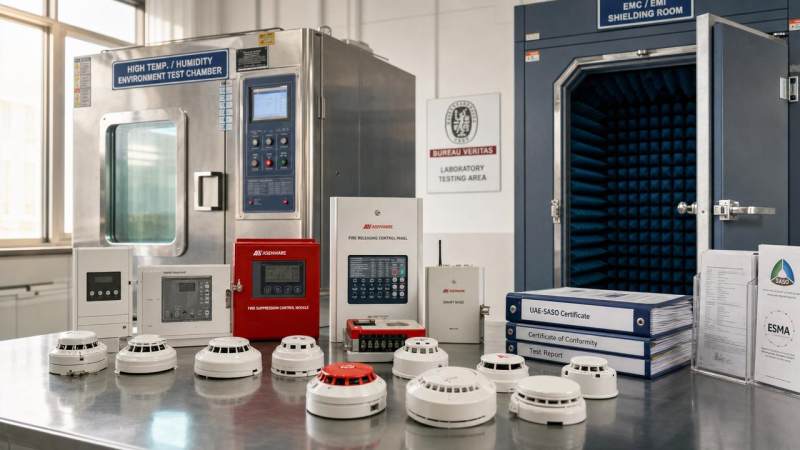
On June 2, 2026, Saudi Arabia’s SASO, the UAE’s ESMA, and the Qatar General Organization of Standardization jointly notified stricter import certification requirements for fire-safety electronic equipment. The update is particularly relevant to exporters of smoke detectors, fire suppression systems, smart node devices, PPE-related products, and security equipment, because it may extend compliance preparation, testing schedules, documentation work, and delivery planning for companies serving Middle Eastern markets.
Event Overview
According to the joint notice issued in June by Saudi Arabia’s SASO, the UAE’s ESMA, and the Qatar General Organization of Standardization, all imported smoke detectors, fire suppression systems, and smart node devices must, from the date of notification, pass type testing conducted by locally authorized laboratories.
The required tests include EMI immunity testing and dual-environment type testing under high-temperature and high-humidity conditions. Importers must also provide Arabic-language operating manuals for the relevant products.
The notice indicates that Chinese PPE and security equipment exporters should reserve an additional six to eight weeks for the certification process. No further confirmed details beyond the above requirements have been provided in the supplied information.
Which Sub-Sectors Are Affected
Direct Export and Import Trade Companies
Direct trading companies handling exports of smoke detectors, fire suppression systems, and smart node devices to Saudi Arabia, the UAE, and Qatar are among the most immediately affected. The reason is that the certification requirements are linked to import access and must be completed through locally authorized laboratories.
The main impact is likely to appear in order lead times, shipment scheduling, contract delivery commitments, and customs clearance preparation. Analysis shows that companies with ongoing shipments or near-term delivery plans may need to reassess whether existing documentation and testing arrangements are sufficient under the newly stated requirements.
Fire-Safety Electronics Manufacturers
Manufacturers of smoke detection devices, fire suppression control equipment, and smart nodes may face additional testing coordination before products can enter the relevant Middle Eastern markets. Since the notice specifies EMI immunity and high-temperature, high-humidity dual-environment type testing, manufacturers need to pay closer attention to whether their products are prepared for the required test scope.
From an industry perspective, the impact is not limited to laboratory testing itself. It may also affect production planning, technical documentation, user manual preparation, and communication between engineering, quality, and export teams.
PPE and Security Equipment Exporters
The notice specifically highlights Chinese PPE and security equipment exporters as needing to reserve an additional six to eight weeks for certification. This means companies in these export categories should pay close attention to whether their product portfolio includes fire-safety electronic devices or related smart components covered by the notice.
What deserves closer attention now is the connection between product classification and compliance responsibility. If a product is sold as part of a fire-safety or security solution, exporters may need to confirm whether smoke detection, fire suppression, or smart node functions fall within the certification scope.
Channel Distributors and Local Market Operators
Distributors serving Saudi Arabia, the UAE, and Qatar may be affected because import certification requirements can change the timing of product availability. Even if they are not responsible for manufacturing, their sales commitments, inventory planning, and customer delivery schedules may depend on whether suppliers can complete local testing and Arabic manual preparation in time.
Observably, the practical pressure for distributors may arise from communication gaps between overseas suppliers and local compliance requirements. They may need to confirm test status, manual language readiness, and expected certification completion timelines before making delivery promises to end users.
Supply Chain and Certification Service Providers
Supply chain service providers, testing coordinators, and certification support teams may see increased demand for scheduling local laboratory testing and coordinating documentation. The notice requires testing by locally authorized laboratories, which makes laboratory booking, sample preparation, and document submission important operational steps.
Analysis shows that the additional six to eight weeks mentioned in the notice could become a key planning factor for companies managing multi-market shipments across the Middle East.
What Companies and Practitioners Should Watch and How to Respond
Track Official Follow-Up and Market-Specific Requirements
Companies should continue monitoring further statements from SASO, ESMA, and the Qatar General Organization of Standardization. The confirmed notice already identifies the product categories, test requirements, laboratory qualification requirement, and Arabic manual requirement, but companies still need to watch whether further implementation details are released for each market.
It is more appropriate to understand this as an active compliance requirement that may require market-by-market confirmation, rather than treating all Middle Eastern destinations as having identical procedures.
Review Covered Product Categories Before Shipment
Exporters should first check whether their products fall under smoke detectors, fire suppression systems, or smart node devices. For companies selling integrated PPE or security solutions, the key step is to identify whether any electronic fire-safety component is included in the shipment.
From an industry perspective, this category review should be completed before production release or shipment booking, because late identification may lead to testing delays or documentation gaps.
Prepare for EMI and Environmental Type Testing Early
Since the notice specifically requires EMI immunity testing and high-temperature, high-humidity dual-environment type testing through locally authorized laboratories, companies should prepare samples, technical materials, and testing schedules in advance.
Analysis shows that the additional six to eight weeks should be reflected in delivery planning, sales contracts, and internal order timelines. Companies should avoid assuming that previous certification cycles or existing export documentation will automatically satisfy the newly stated requirements.
Ensure Arabic Operating Manuals Are Ready
The requirement for Arabic-language operating manuals is a concrete documentation item. Exporters and manufacturers should check whether product instructions, operational warnings, installation guidance, and usage information are available in Arabic before shipment preparation.
What deserves closer attention now is that documentation readiness may affect the overall import process alongside laboratory testing. Companies should coordinate translation, technical review, and document version control early enough to avoid delaying certification submission.
Editor’s View / Industry Observation
Observably, this notice indicates a stricter compliance environment for imported fire-safety electronic equipment in Saudi Arabia, the UAE, and Qatar. It is not merely a routine documentation update, because it combines local authorized laboratory testing, EMI immunity assessment, high-temperature and high-humidity environmental testing, and Arabic-language user documentation.
Analysis shows that the immediate industry impact is likely to be felt most strongly in export lead times and certification coordination. The additional six to eight weeks mentioned for Chinese PPE and security exporters should be treated as a practical scheduling factor when companies plan orders for the affected markets.
It is more appropriate to understand this development as both a current compliance requirement and a signal that import certification for fire-safety electronics in these Middle Eastern markets is becoming more procedure-driven. Industry participants need to continue watching how implementation details are applied in actual trade and certification workflows.
Conclusion
The June 2, 2026 notice from SASO, ESMA, and the Qatar General Organization of Standardization has clear significance for fire-safety electronics, PPE-related exports, and security equipment trade. The confirmed requirements focus on local laboratory testing, EMI immunity, high-temperature and high-humidity type testing, and Arabic operating manuals.
From an industry perspective, the most rational response is not to overinterpret the notice beyond the confirmed information, but to treat it as an immediate compliance planning issue. Companies serving Saudi Arabia, the UAE, and Qatar should review affected product categories, reserve additional certification time, and prepare testing and documentation work before shipment commitments are made.
Information Source Statement
Main sources: Saudi Standards, Metrology and Quality Organization; Emirates Authority for Standardization and Metrology; Qatar General Organization of Standardization.
Items requiring continued observation: further official implementation details, market-specific certification procedures, local authorized laboratory arrangements, and how the additional six to eight week certification cycle is applied in actual export operations.
The VitalSync Intelligence Brief
Receive daily deep-dives into MedTech innovations and regulatory shifts.