
Security
Middle East Launches SafeLight Mutual Recognition: CQC-GS Certificates Accepted
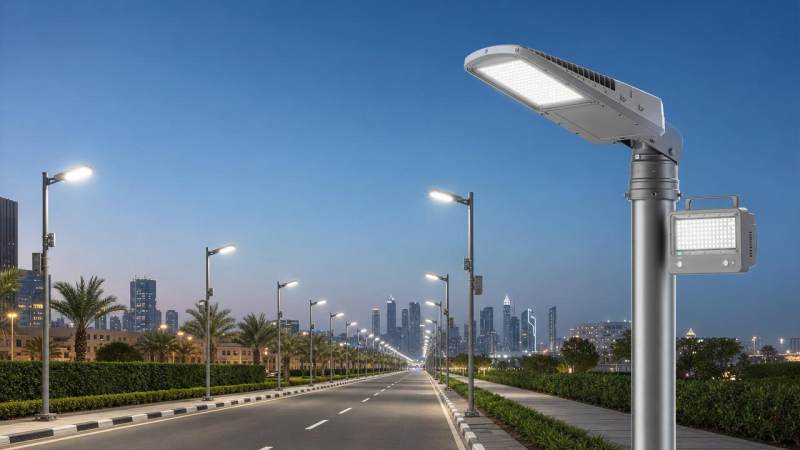
On May 29, 2026, Saudi Arabia’s SASO, the UAE’s ESMA, and Qatar Metrology jointly launched the regional ‘SafeLight’ mutual recognition certification framework for lighting safety — with China’s CQC-issued GS certificates (covering GB 7000.1, GB 7000.201, and IEC 62471 photobiological safety) among the first accepted. This development directly affects manufacturers and exporters of LED industrial lighting, roadway lighting, and emergency lighting targeting GCC government procurement and infrastructure projects.
Event Overview
On May 29, 2026, the Saudi Standards, Metrology and Quality Organization (SASO), the Emirates Authority for Standardization and Metrology (ESMA), and Qatar Metrology announced the formal launch of the ‘SafeLight’ regional mutual recognition certification system. The initiative accepts, as an initial step, China Quality Certification Center (CQC)-issued GS certificates that comply with GB 7000.1, GB 7000.201, and IEC 62471. Certified LED industrial lamps, road lighting fixtures, and emergency lighting products are now eligible for exemption from redundant testing when entering the six GCC member states’ public procurement and infrastructure bidding processes.
Impact on Specific Industry Segments
Direct Exporters and OEM/ODM Lighting Manufacturers
These companies face reduced technical barriers to GCC market access. Since the SafeLight framework recognizes existing CQC-GS certifications covering core safety and photobiological requirements, retesting and local certification costs for eligible product categories may decrease significantly. Impact is most immediate for firms already holding valid CQC-GS certificates aligned with the specified standards.
Supply Chain Service Providers (Testing Labs, Certification Consultants)
Service providers supporting GCC market entry must adjust scope documentation and client guidance to reflect the new mutual recognition pathway. While redundant testing is waived for recognized certificates, verification of certificate validity, scope alignment (e.g., exact product types covered), and compliance with national implementation rules remains essential. Demand may shift toward pre-submission audits and cross-border certificate validation support rather than full retesting.
Domestic Component Suppliers and Module Producers
Suppliers of LED modules, drivers, or optical components used in certified luminaires are indirectly affected. End-product certification under SafeLight does not automatically extend to subcomponents. However, downstream manufacturers may increase scrutiny of supplier documentation — especially photobiological safety test reports traceable to IEC 62471 — to ensure continuity of certified performance across production batches.
What Companies and Practitioners Should Focus On Now
Monitor official implementation guidelines from SASO, ESMA, and Qatar Metrology
The current announcement confirms framework launch and initial scope inclusion; however, detailed procedural requirements — such as certificate submission formats, validity windows, surveillance mechanisms, and dispute resolution — have not been publicly released. These documents will define operational feasibility.
Verify alignment of existing CQC-GS certificates with SafeLight’s defined scope
Not all CQC-GS certificates qualify. Only those explicitly referencing GB 7000.1, GB 7000.201, and IEC 62471 — and covering LED industrial lamps, road lighting, or emergency lighting — fall within the initial acceptance. Companies should audit current certificates for standard references, product classifications, and issuance dates before assuming eligibility.
Distinguish between policy signal and procurement-level enforcement
While the mutual recognition framework is active, its adoption in actual GCC government tenders depends on agency-level procurement rules. Some ministries or state-owned enterprises may require additional declarations, local representation, or transitional conformity assessments. Early engagement with tendering authorities is advisable where bid timelines are tight.
Prepare documentation for cross-border certificate validation
Exporters should compile complete, English-translated certificate files, test reports, and scope statements — including traceable links to original IEC 62471 testing data. Pre-validating these materials with a GCC-based representative or local agent can help avoid delays during tender submission or customs clearance.
Editorial Perspective / Industry Observation
Observably, this initiative represents a coordinated regulatory signal — not yet a fully operationalized trade facilitation mechanism. Its significance lies less in immediate market access and more in institutional recognition of Chinese third-party certification infrastructure for lighting safety. Analysis shows the inclusion of CQC-GS reflects growing alignment between Chinese national standards and GCC technical expectations, particularly around photobiological safety — a historically high-friction area. From an industry perspective, SafeLight is better understood as a foundational step toward harmonized assessment, rather than a standalone compliance shortcut. Continued monitoring is warranted because scalability — such as expansion to indoor commercial lighting or smart control interoperability — remains unconfirmed and will likely depend on early implementation feedback.
This development marks a formal step toward reducing technical redundancy in GCC lighting market access — but its real-world utility hinges on consistent application across agencies and transparency in operational procedures. For now, it is best interpreted as a targeted, scope-limited regulatory alignment, not a broad certification equivalence agreement.
Source: Joint announcement by SASO, ESMA, and Qatar Metrology, issued May 29, 2026.
Note: Implementation details, including application procedures, validity conditions, and potential scope expansions, remain subject to official updates and are currently under observation.
The VitalSync Intelligence Brief
Receive daily deep-dives into MedTech innovations and regulatory shifts.