
Security
Netherlands Alerts on Cd in Chinese Garlic: Implications for Food-Contact PPE
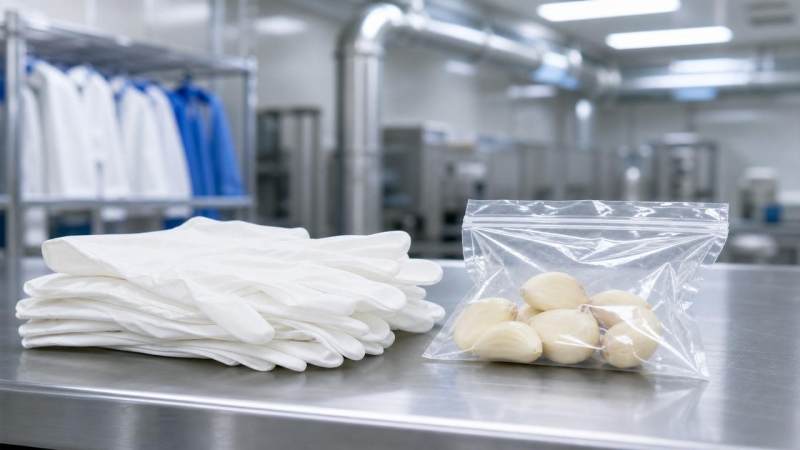
On 20 May 2026, the Netherlands issued an EU RASFF alert (No. 2026.4455) regarding cadmium (Cd) exceeding limits in Chinese-exported garlic. Though an agricultural product, this incident has triggered heightened scrutiny across the EU on heavy metal migration from personal protective equipment (PPE) used in food-contact settings — including food-grade gloves and respirator filter media. Companies involved in manufacturing, exporting, or importing such PPE gear, particularly those referencing GB 20400–2026 for leather components, must now assess cross-border applicability of its cadmium limit (≤0.1 mg/kg).
Event Overview
On 20 May 2026, the Netherlands notified the European Union’s Rapid Alert System for Food and Feed (RASFF) about a batch of Chinese-origin garlic found to contain cadmium above permissible levels (Alert No. 2026.4455). The notification is publicly accessible via the RASFF portal. No further details on sampling methodology, measured concentration, or consignment origin beyond country of export have been disclosed in the official alert.
Industries Affected by This Alert
Direct Exporters of Food-Contact PPE: Entities exporting gloves, aprons, face masks, or respirator components intended for use in food handling or processing facilities may face increased pre-market verification demands. While the alert concerns garlic, EU authorities are now applying stricter interpretation of ‘food-contact scenario’ to include PPE that may contact food surfaces, packaging, or environments where food is prepared.
Leather Component Suppliers: Manufacturers supplying leather-based elements (e.g., glove palms, strap materials) referenced under GB 20400–2026 must verify whether their products meet the revised cadmium limit (≤0.1 mg/kg) — especially if supplied to EU-facing PPE assemblers.
PPE Assemblers & Brand Owners: Firms integrating third-party components into finished PPE must reassess supplier declarations and test reports for cadmium migration under food-contact-relevant conditions (e.g., EN 1186 or ISO 10993-12), not just general safety standards.
Importers & Distributors in the EU: Importers placing food-contact PPE on the EU market may be asked to provide evidence of compliance with heavy metal migration requirements aligned with the tightened enforcement posture signaled by this alert.
What Relevant Companies or Practitioners Should Focus On — And How to Respond
Monitor official updates on RASFF follow-up actions and EU guidance documents
The current alert does not constitute a binding regulatory amendment, but analysis shows it reflects an emerging enforcement emphasis. Stakeholders should track any subsequent RASFF notifications, Commission notices, or national authority circulars referencing heavy metal migration from non-food items in food-contact contexts.
Review cadmium testing scope for leather and polymer components in food-contact PPE
Observably, GB 20400–2026’s cadmium limit (≤0.1 mg/kg) applies to leather used in consumer goods — including PPE. Companies should determine whether existing test reports cover migration under simulated food-contact conditions (e.g., acidic or alcoholic food simulants), not only total content.
Distinguish between policy signaling and enforceable requirements
This alert is currently better understood as a risk-based signal rather than a formal change to Regulation (EC) No 1935/2004 or Regulation (EU) No 10/2011. From the industry perspective, it indicates rising due diligence expectations — not yet a new legal obligation — for PPE used near food.
Update technical documentation and supplier communication protocols
Companies should proactively request updated declarations of conformity and migration test reports from material suppliers — specifically covering cadmium — and revise internal technical files to reflect food-contact exposure scenarios where applicable.
Editorial Perspective / Industry Observation
This RASFF alert is best interpreted as an early indicator of evolving regulatory attention toward indirect contamination pathways in food systems. Analysis shows that while cadmium in garlic falls squarely under agricultural food safety, the EU’s extension of scrutiny to PPE suggests a broader conceptual shift: treating all items routinely present in food production zones as potential sources of elemental migration. It is not yet a rule change, but observably, it signals increasing convergence between food safety and occupational product safety frameworks — particularly where overlap in use context exists. Continued monitoring is warranted, as similar alerts could inform future revisions to harmonized standards or national market surveillance priorities.
From a practical standpoint, this alert underscores that compliance for food-contact PPE can no longer be assessed solely against occupational health standards (e.g., EN 374, EN 149); alignment with food-contact material principles is becoming a de facto expectation in high-scrutiny markets.
Conclusively, this event does not introduce new legislation, nor does it retroactively invalidate existing certifications. Rather, it highlights a developing operational reality: cadmium compliance in leather and polymer components used in food-handling PPE is increasingly subject to food-safety-aligned verification — both in documentation and in potential market surveillance. Current practice should treat this as a procedural signal requiring documentation review and supplier engagement, not as an immediate compliance crisis.
Source: European Commission RASFF Portal (Alert No. 2026.4455, published 20 May 2026).
Note: Ongoing observation is recommended for any follow-up statements from the European Food Safety Authority (EFSA), the European Chemicals Agency (ECHA), or national food safety authorities regarding migration testing protocols for PPE.
The VitalSync Intelligence Brief
Receive daily deep-dives into MedTech innovations and regulatory shifts.