
Security
New Maritime Code Sparks Surge in Unclaimed Cargo Disputes at Chinese Ports
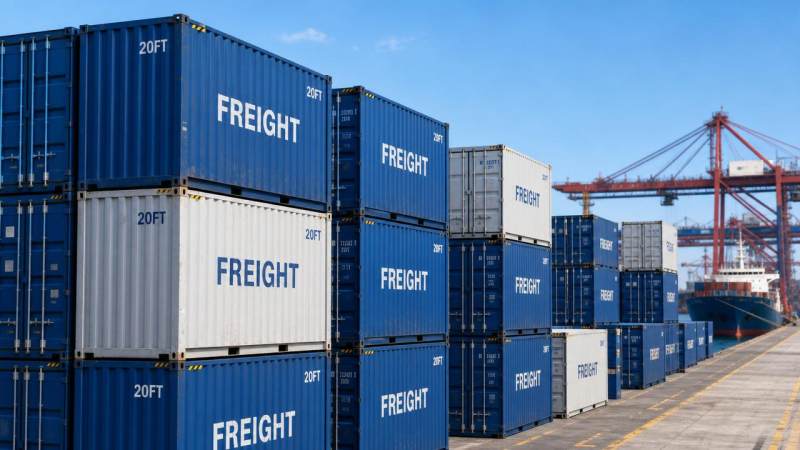
The revised Maritime Code of the People’s Republic of China, effective May 1, 2026, has triggered a notable rise in unclaimed cargo disputes at major Chinese ports within its first week of implementation—particularly affecting exporters of lighting and security equipment. The shift centers on Article 93’s formalization of the ‘shipper-first liability’ principle, reshaping risk allocation in international ocean freight. This development warrants close attention from export-oriented manufacturers, freight forwarders, and trade finance practitioners.
Event Overview
The newly amended Maritime Code of the People’s Republic of China entered into force on May 1, 2026. Article 93 explicitly establishes the ‘shipper-first liability’ principle. As of May 29, 2026, port authorities and logistics operators in Ningbo, Shanghai, and Shenzhen reported a 210% year-on-year increase in claims related to container demurrage and warehouse storage fees arising from overseas consignees’ refusal to take delivery. In response, several international freight forwarders have begun requiring Chinese exporters to sign a Commitment Letter on Delivery Responsibility at the time of booking.
Industries and Roles Affected
Direct Exporting Enterprises
Exporters bear direct legal exposure under the new shipper-first liability framework. Previously, responsibility for unclaimed cargo often rested with the buyer or their local agent; now, Chinese shippers may be held liable for demurrage, detention, and storage costs—even when payment terms (e.g., LC) are fulfilled and goods are shipped per contract. This increases financial uncertainty and complicates dispute resolution with overseas buyers.
Manufacturers of Lighting and Security Equipment
These sectors are highlighted in the event summary as particularly impacted due to their high reliance on just-in-time delivery, narrow profit margins, and frequent use of letter-of-credit (LC) payment mechanisms. Delays or refusals to take delivery—whether due to market shifts, regulatory changes abroad, or buyer insolvency—now carry immediate cost implications for the exporter, potentially undermining LC compliance if documentation timelines are disrupted by port delays.
Freight Forwarding and Logistics Service Providers
Forwarders face heightened operational and contractual risk. The requirement to collect a Commitment Letter on Delivery Responsibility during booking signals a systemic shift in risk management practice. They must now verify shipper awareness of liability exposure, update standard terms, and manage increased client queries regarding liability boundaries—especially where shipping terms (e.g., FOB vs. CIF) interact with the new statutory default.
Trade Finance and Credit Risk Managers
Credit insurers, banks issuing LCs, and internal credit teams must reassess risk models. A 210% surge in unclaimed-cargo–related claims suggests elevated default correlation between shipment execution and final delivery acceptance. This affects LC scrutiny criteria, pre-shipment risk scoring, and post-shipment monitoring—particularly for markets where consignee reliability is historically volatile.
Key Considerations and Practical Responses
Monitor official interpretations and enforcement patterns
Article 93 sets a statutory baseline, but courts and maritime arbitration bodies have yet to issue guiding cases or interpretive notices. Exporters and forwarders should track rulings from the Shanghai Maritime Court and the China Maritime Arbitration Commission for early signals on how ‘shipper fault’ or ‘reasonable diligence’ will be defined in practice.
Review contracts and Incoterms® usage with renewed focus
While the law applies regardless of Incoterms®, shippers using FOB (where buyer controls carriage) remain exposed under Article 93 unless contract language explicitly allocates delivery risk downstream. Exporters should audit existing sales contracts for clauses assigning responsibility for import clearance, customs release, and physical receipt—and consider adding express indemnity or contingency provisions.
Distinguish between policy intent and operational reality
The 210% claim increase reflects early reporting behavior—not necessarily a full-scale legal enforcement wave. It likely captures both legitimate claims and precautionary invoicing by carriers/terminals. Companies should avoid overreacting to headline figures and instead benchmark their own incident rates against pre-May 2026 baselines before adjusting commercial terms.
Update internal documentation and pre-shipment checks
Exporters should integrate delivery-readiness verification into pre-booking workflows: confirming consignee import licensing status, recent payment history, and local warehousing capacity. Where feasible, obtain written confirmation from the overseas buyer acknowledging receipt readiness prior to vessel departure—this may support a ‘due diligence’ defense if disputes arise.
Editorial Observation / Industry Perspective
Observably, this is less an abrupt regulatory shock and more a formalization of long-standing commercial friction—now codified into statutory liability. The sharp uptick in claims during the first four weeks suggests market participants are testing boundaries and recalibrating risk expectations, rather than reacting to widespread litigation. Analysis shows the current phase reflects procedural adaptation: forwarders embedding new requirements, terminals enforcing charges more consistently, and exporters revising internal controls. It is not yet evidence of systemic non-compliance or buyer-side bad faith—but it does signal that ‘delivery’ can no longer be treated as a purely post-shipment administrative step. Sustained attention is warranted, especially as Q3 2026 approaches—the traditional peak season for lighting and security equipment exports—and port congestion risks re-emerge.
This development is best understood not as a standalone compliance change, but as a structural recalibration of risk ownership across the export supply chain. For affected exporters, the priority is not legal avoidance—but clarity: clear contracts, documented communications, and calibrated expectations with all parties involved in the delivery chain.
Source: Public reports from Ningbo Port Group, Shanghai International Port Group, and Shenzhen Customs Authority (as of May 29, 2026); confirmed implementation date and statutory text from the National People’s Congress Standing Committee Gazette (April 2026).
Further developments—including judicial guidance or ministry-level implementation notices—remain under observation.
The VitalSync Intelligence Brief
Receive daily deep-dives into MedTech innovations and regulatory shifts.