
Security
12 Anhui Chemical Parks Upgraded to Lowest-Risk D-Level
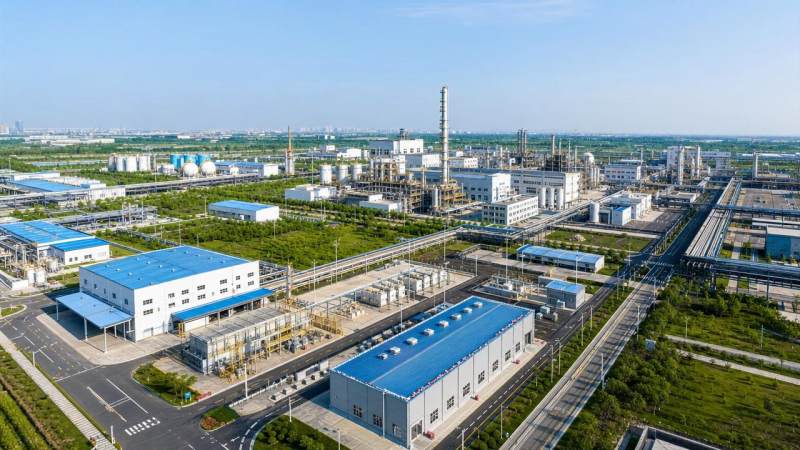
On May 13, 2026, the Anhui Provincial Department of Emergency Management announced that 12 chemical industrial parks—including those in Hefei and Wuhu—were upgraded from C-level to D-level (the lowest risk classification) for work safety. This development signals enhanced regulatory confidence in the continuity and compliance of local production capacity for personal protective equipment (PPE), safety wear, and explosion-proof industrial lighting—key supporting elements for process safety. International certification bodies including SGS and TÜV Rheinland have incorporated this provincial risk rating into ESG due diligence scoring for Chinese suppliers, potentially facilitating long-term procurement agreements with European and U.S. buyers.
Event Overview
On May 13, 2026, the Anhui Provincial Department of Emergency Management officially upgraded the safety risk classification of 12 chemical industrial parks—from C-level to D-level, the lowest risk tier under China’s chemical park safety grading system. The announcement explicitly links this upgrade to verified stability and regulatory compliance in the local supply of PPE gear, safety wear, and industrial lighting products designed for hazardous environments. No further details on methodology, duration of assessment, or individual park performance metrics were disclosed in the public notice.
Impact on Specific Industry Segments
Direct Export-Oriented Trading Enterprises
These enterprises may experience improved buyer trust during ESG evaluations, as D-level park certification is now referenced by SGS and TÜV Rheinland in supplier scoring. Impact manifests primarily in tender eligibility and contractual negotiation leverage—not automatic qualification—and remains contingent on individual facility-level documentation and audit readiness.
Manufacturers of PPE and Safety Lighting Products
Factories located within the upgraded parks gain a formal, province-endorsed signal of operational stability and regulatory alignment. This does not alter mandatory product certifications (e.g., CE, ANSI, GB standards), but may reduce perceived supply chain volatility in third-party ESG assessments—particularly where sourcing location is weighted in sustainability scoring frameworks.
Supply Chain Service Providers (Logistics, Compliance Consulting, Certification Support)
Providers offering ESG documentation support or regional compliance verification may see increased demand for services related to park-level risk validation. However, no new regulatory reporting requirements or standardized verification protocols were introduced alongside the upgrade; current demand reflects market interpretation—not legal obligation.
What Relevant Enterprises or Practitioners Should Focus On
Monitor official follow-up guidance from Anhui authorities
The May 13 notice is an outcome statement—not a policy release. No implementation guidelines, renewal timelines, or criteria for maintaining D-level status were published. Enterprises should track whether the provincial department issues technical bulletins or inspection frequency updates later in 2026.
Verify applicability to specific facilities and product lines
D-level status applies to the park as a jurisdictional entity—not automatically to every tenant or product category. Companies must confirm whether their manufacturing site is included in the official list and whether their PPE or lighting products fall under the scope of the cited ‘supporting capacity’ referenced in the announcement.
Distinguish between ESG scoring weight and regulatory enforcement
The inclusion of D-level status in SGS/TÜV Rheinland ESG assessments reflects voluntary commercial due diligence—not statutory compliance. It does not replace mandatory product testing, factory audits, or import-country conformity requirements. Businesses should avoid conflating this recognition with reduced obligations under EU REACH, OSHA, or GB standards.
Prepare documentation linking park status to supply chain resilience claims
For companies referencing Anhui’s D-level designation in client-facing ESG disclosures or RFP responses, it is advisable to retain copies of the original provincial announcement and cross-reference facility addresses with the published list. Unsupported generalizations (e.g., “all Anhui-made PPE is low-risk”) carry reputational and verification risk.
Editorial Perspective / Industry Observation
Observably, this upgrade functions primarily as a jurisdictional credibility signal—not a standalone market access instrument. Analysis shows it gains relevance only when embedded in broader ESG evaluation workflows used by international buyers, not as a substitute for product-level conformity. From an industry perspective, it is better understood as an incremental reinforcement of existing supply chain narratives around regulatory maturity in select regions—rather than a structural shift in global sourcing criteria. Continued relevance depends on whether additional provinces adopt similar transparent grading—and whether global auditors standardize how park-level ratings feed into supplier scores.
This announcement underscores how localized regulatory milestones can acquire transnational significance through integration into private-sector ESG frameworks. Yet its immediate operational impact remains narrow: it validates context, not compliance. For stakeholders, it is more accurately interpreted as a reinforcing data point—not a trigger for strategic realignment.
Source Attribution
Main source: Official notice issued by the Anhui Provincial Department of Emergency Management on May 13, 2026. Confirmation of SGS and TÜV Rheinland’s incorporation of the rating into ESG due diligence was stated in the same notice. No additional technical specifications, park-specific lists, or implementation timelines were provided. Ongoing observation is warranted for any subsequent provincial guidance on maintenance criteria or reporting expectations.
The VitalSync Intelligence Brief
Receive daily deep-dives into MedTech innovations and regulatory shifts.