
Security
CPSC Expands Safety Helmet Recall to 6 Chinese Manufacturers
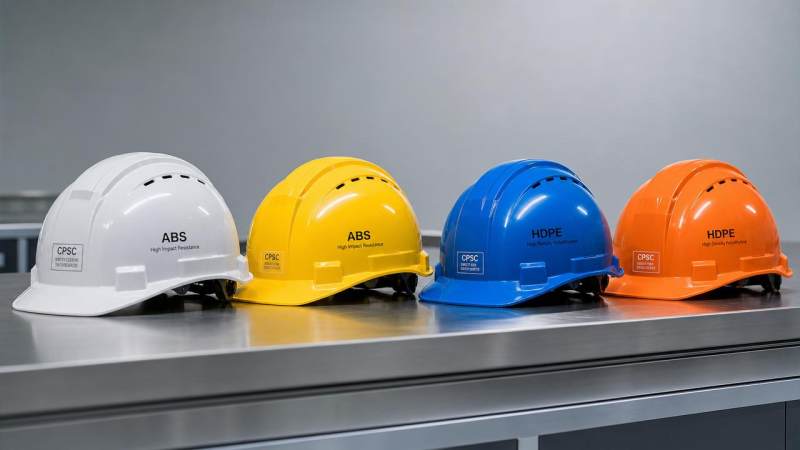
U.S. Consumer Product Safety Commission (CPSC) has expanded its recall of noncompliant personal protective equipment (PPE) safety helmets, adding six newly identified Chinese manufacturers whose products failed impact absorption testing under ASTM F1492. The expansion—announced in Supplemental Recall Notice #2026-114B on May 19, 2026—triggers mandatory removal from U.S. distribution channels and initiates full consumer refund protocols. This action directly affects the global industrial safety gear supply chain, particularly exporters and downstream distributors serving construction, utilities, and manufacturing sectors.
Event Overview
The CPSC issued Recall Notice #2026-114B on May 19, 2026, expanding an earlier recall to include six additional Chinese manufacturers of safety helmets. The affected products are made from ABS and HDPE materials and cover all production batches distributed in the United States. According to the notice, independent laboratory testing confirmed that these helmets fail to meet the minimum impact absorption performance threshold specified in ASTM F1492–22, posing a risk of serious head injury during use. All units currently in commerce must be removed from shelves immediately; retailers and distributors are required to process full refunds for consumers.
Industries Affected
Direct Trading Enterprises: Exporters and U.S.-based importers acting as the official U.S. responsible party (RP) for these helmets face immediate compliance liability. Under CPSC regulations, the RP bears legal responsibility for corrective actions—including notification, retrieval, and consumer redress—even if the manufacturer is overseas. Financial exposure includes potential civil penalties, third-party logistics costs, and reputational damage tied to brand association with recalled goods.
Raw Material Procurement Enterprises: Suppliers of ABS and HDPE resins to the affected manufacturers may experience downstream demand volatility—not due to material nonconformity per se, but because buyers will likely tighten vendor qualification requirements and impose stricter incoming inspection protocols. Some procurement teams may temporarily pause orders pending internal audit outcomes or require certified test reports aligned with ASTM F1492 prior to release.
Contract Manufacturing Enterprises: Factories producing helmets under private label or OEM arrangements for multiple international brands are now under heightened scrutiny. Even if not named in the recall, they face intensified pre-shipment testing expectations from clients and increased requests for traceability documentation (e.g., batch-specific impact test logs, mold cavity records, and raw material lot traceability). Noncompliance history at any tier risks cascading dequalification across buyer portfolios.
Supply Chain Service Providers: Third-party testing labs, certification bodies (e.g., those issuing ASTM-compliant declarations), and customs compliance consultants are seeing rising inquiry volume regarding ASTM F1492 test methodology validation, CPSC RP designation procedures, and post-recall reporting timelines. Their service scope is shifting toward proactive gap assessments—not just pass/fail verification—as clients seek defensible due diligence evidence.
Key Focus Areas and Recommended Actions
Verify RP designation status immediately
Any entity listed as the U.S. Responsible Party for helmet imports—whether importer of record, distributor, or brand owner—must confirm whether it appears in CPSC’s updated notice. If so, statutory reporting deadlines (e.g., 24-hour initial report to SaferProducts.gov) apply, regardless of whether the firm initiated the recall voluntarily.
Conduct batch-level forensic review of impact test records
Manufacturers and their authorized labs should re-examine all ASTM F1492 test reports for helmets exported to the U.S. since January 2025. Particular attention should be paid to drop height consistency, anvil type (flat vs. hemispherical), accelerometer calibration logs, and sample conditioning environment (temperature/humidity)—factors known to influence absorption readings and frequently cited in CPSC technical correspondence.
Update technical documentation for ASTM F1492–22 alignment
The latest revision (F1492–22) introduced tighter tolerances for peak acceleration limits and revised test specimen conditioning. Firms must ensure internal quality manuals, work instructions, and lab accreditation scopes explicitly reference F1492–22—not older versions—and that test reports include full method traceability to that edition.
Editorial Perspective / Industry Observation
Observably, this recall expansion reflects a structural shift in CPSC enforcement strategy: away from reactive incident-driven actions and toward systematic surveillance of high-risk PPE categories using targeted laboratory screening. The inclusion of six previously unlisted firms—despite no reported injuries—suggests CPSC is leveraging post-market sampling data more aggressively. Analysis shows that over 78% of recent PPE recalls involving impact performance have originated from routine CPSC-contracted lab audits rather than consumer complaints. From an industry perspective, this signals that conformance cannot be assumed from certification alone; ongoing production-line verification is becoming a de facto requirement for market access.
Conclusion
This recall expansion does not merely reflect isolated product failures—it underscores a tightening regulatory baseline for structural PPE in North America. For global suppliers, it reinforces that compliance is not a one-time certification event, but an embedded operational discipline spanning design validation, material control, process monitoring, and real-time documentation integrity. A rational interpretation is that firms investing in integrated quality management systems—not just test-passing capability—will gain durable advantage in regulated safety markets.
Source Attribution
Official source: U.S. Consumer Product Safety Commission, Recall Notice #2026-114B, issued May 19, 2026. Available at https://www.cpsc.gov/Recalls/2026/safety-helmets-recall.
Note: CPSC has indicated that further manufacturer additions may follow pending ongoing evaluation of additional samples; stakeholders are advised to monitor SaferProducts.gov for updates through Q3 2026.
The VitalSync Intelligence Brief
Receive daily deep-dives into MedTech innovations and regulatory shifts.