
Security
Security Knowledge Gaps That Often Lead to Avoidable Incidents
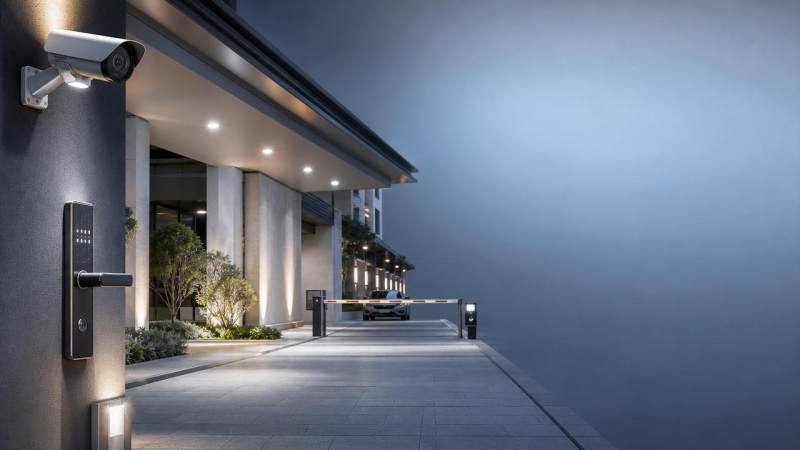
Many avoidable incidents do not begin with malicious intent or major system failure—they begin with security knowledge gaps that go unnoticed until risks become real. For everyday consumers navigating smarter homes, public spaces, and digital-physical environments, understanding where these blind spots appear is essential. This article explores how limited security knowledge shapes weak decisions, increases exposure, and creates preventable safety problems in a rapidly evolving world.
What do security knowledge gaps really look like in daily life?
For most end consumers, security knowledge is not the same as technical expertise. It means knowing enough to make safer choices about cameras, lighting, access control, alarms, personal privacy, and the rules that affect how these systems operate. A knowledge gap appears when a person buys, installs, or uses a security-related product without understanding its limits, legal context, maintenance needs, or interaction with the wider environment.
In a connected world, physical security and optical conditions increasingly overlap. A dim parking area reduces camera accuracy. Poor placement of a smart doorbell creates blind spots. A low-cost recorder without proper update support becomes a weak link. In each case, the incident is not caused by a single dramatic failure. It grows from incomplete security knowledge, rushed decisions, and missing context.
This is why consumers now need a broader decision framework. Products can no longer be judged only by price, resolution, or brand familiarity. They must be evaluated in relation to environment, user behavior, legal expectations, lighting conditions, and future compatibility. That is where a platform such as GSIM becomes useful: it connects policy interpretation, optical environment insight, and procurement intelligence so buyers can see risks before they become losses.
- Assuming visible equipment always deters risk, while ignoring coverage gaps, false confidence, and poor incident recording quality.
- Believing product specifications on packaging are enough, without checking installation conditions, firmware support, or compliance considerations.
- Treating lighting as a separate comfort issue rather than a core factor in image clarity, response time, and public-space safety.
- Overlooking how fast urban safety standards, surveillance rules, and smart infrastructure expectations are changing in 2026 and beyond.
Why do consumers keep making avoidable security mistakes?
The problem is rarely lack of concern
Most consumers do care about safety. The problem is that security knowledge is often fragmented. They may understand one part of the puzzle, such as device cost, but miss another part, such as retention settings, low-light performance, or data handling. This partial understanding leads to purchases that look reasonable at first but fail under real conditions.
The market is full of mixed signals
The wider security market combines consumer electronics, building systems, urban infrastructure, and legal compliance. Product pages often highlight headline features rather than decision-critical details. A camera may advertise 4K resolution while saying little about nighttime optical quality, installation angle sensitivity, or compatibility with existing access points. A light fixture may look bright but produce glare that actually reduces visibility and image capture reliability.
Digital infrastructure is changing the risk profile
In the 2026 environment of smart buildings, connected neighborhoods, and upgraded public safety systems, users face more linked decisions than before. Security knowledge now includes awareness of AI-assisted vision tools, network dependency, power continuity, and the role of optical optimization. GSIM’s Strategic Intelligence Center is relevant here because it helps translate fast-moving global developments into practical consumer-facing judgment.
The table below summarizes where security knowledge gaps most often turn into avoidable incidents for end users across home, mixed-use, and public-facing spaces.
A key lesson is that incidents often emerge from interaction effects. Security knowledge must cover not only the device itself, but also lighting, user habits, maintenance, regulation, and installation context.
Which scenarios create the biggest exposure for end consumers?
Smart homes with uneven planning
Many homes now mix video doorbells, Wi-Fi cameras, app-controlled lighting, and digital locks from different vendors. The convenience is attractive, but fragmented setup creates uneven security knowledge. If one device has poor update discipline or unclear permission settings, the whole system becomes harder to trust. Consumers also underestimate how internet interruptions or poor router placement can affect response time and event recording.
Shared residential and semi-public spaces
Lobbies, garages, hallways, rooftops, and shared access points create more complex boundaries. Residents may install devices that seem protective but conflict with building rules, privacy expectations, or visibility needs. Security knowledge in these settings includes understanding who controls the area, what coverage is permitted, and how lighting impacts both safety and respectful use.
Consumer-facing retail and service environments
Even small shops, clinics, salons, and neighborhood service counters face physical security decisions. Owners who act like end consumers often buy low-cost systems quickly, then discover that image retention, low-light capture, and queue-area visibility do not meet practical needs. Here, security knowledge also affects customer trust, not just theft prevention.
- Entry points need layered thinking: sightlines, lock behavior, alerts, and lighting should support each other.
- Shared spaces require policy awareness: what is allowed, what is visible, and what creates conflict.
- Nighttime performance depends heavily on optical environment quality, not just sensor claims.
How should consumers compare options instead of buying on impulse?
One of the most practical ways to close security knowledge gaps is to compare solutions by decision value rather than by headline marketing. End users need to weigh not only acquisition cost, but also visibility quality, installation fit, legal acceptability, and the effort needed to keep systems dependable over time.
The comparison below helps consumers evaluate common security approaches in a more realistic way.
This comparison shows why security knowledge must support purchasing. The “best” option depends less on marketing claims and more on fit between environment, user discipline, and long-term manageability.
What should consumers check before purchasing any security-related solution?
A practical security knowledge checklist
- Define the incident you are actually trying to reduce. Is it package loss, unauthorized entry, poor nighttime visibility, or weak evidence after an event?
- Map the environment. Note light levels, entry paths, reflective surfaces, obstructions, weather exposure, and whether the space is private, shared, or public-facing.
- Check operational needs. Ask how footage is stored, how long records are kept, who receives alerts, and what happens during power or network interruption.
- Review compliance factors. Electronic surveillance and recording use can be shaped by local privacy and building rules, especially in shared or customer-facing environments.
- Look beyond hardware. Installation quality, optical conditions, update support, and user permissions matter as much as device specifications.
Consumers with limited security knowledge often skip the environment and compliance steps. That is risky. A technically good product can still underperform if the optical environment is poor or if the installation creates legal or social conflict.
How do lighting, optics, and compliance affect real-world security outcomes?
A major blind spot in consumer decision-making is the assumption that security is only about detection devices. In reality, optical environment optimization is central to safety performance. Light placement, contrast control, glare reduction, and scene uniformity all influence what a person sees and what a camera can reliably capture. This is especially important in entrances, paths, elevators, loading points, and parking edges.
GSIM’s positioning is useful because it does not isolate physical protection from optical intelligence. Its Strategic Intelligence Center connects policy shifts with technology evolution, including the growing fusion of AI vision and Visible Light Communication. For consumers, that means more informed questions: Will this setup remain suitable as infrastructure becomes smarter? Does the lighting help machine vision or confuse it? Is the system aligned with likely future upgrade paths?
Compliance matters too. While consumers may not need specialist legal training, they do need awareness that surveillance practices can trigger privacy concerns, building restrictions, and evidence usability issues. Sound security knowledge includes asking what is permitted, what should be disclosed, and what retention approach is appropriate for the space.
What are the most common misconceptions about security knowledge?
“More devices automatically mean more protection”
Not always. More devices can create more alerts, more maintenance points, and more settings that users fail to review. A smaller but well-planned system often performs better than a large but unmanaged one.
“High resolution solves everything”
Resolution helps, but poor lighting, bad angles, compression limits, and wrong motion settings can still make footage unusable. Security knowledge must include optical and operational basics.
“Indoor and outdoor risks can be handled the same way”
They cannot. Weather, reflections, low-light conditions, and public visibility all change the decision criteria. Outdoor security planning requires different assumptions about durability, light control, and incident review.
“Cheap first, fix later”
This is a common source of avoidable cost. Replacement, rewiring, repositioning, or legal correction may exceed the initial savings. Good security knowledge reduces total cost by preventing mismatched buying.
FAQ: practical questions consumers ask about security knowledge
How much security knowledge do I need before buying a home security system?
You do not need engineering-level expertise, but you should understand your risk scenario, lighting conditions, recording method, and whether the space is private or shared. If you cannot explain what incident you want to prevent and how the system will capture it, you likely need more guidance before purchase.
Which matters more: camera quality or lighting quality?
They work together. Strong camera specifications cannot fully compensate for poor scene lighting. In many real settings, improving illumination uniformity and reducing glare can deliver a bigger practical gain than upgrading resolution alone.
Are smart security products always safer than traditional ones?
Not automatically. Smart products can add remote visibility and control, but they also introduce configuration, connectivity, and update responsibilities. Security knowledge means judging convenience against reliability and operational discipline.
What should I ask before requesting a quote?
Ask about recommended placement, low-light performance, retention options, power backup, compliance considerations, integration with existing devices, and expected delivery or installation lead time. These questions reveal whether a proposal is tailored to your actual environment.
Why informed guidance matters more in 2026 and beyond
As cities, buildings, and neighborhoods become more connected, isolated product decisions become less effective. Security knowledge increasingly depends on understanding systems, standards, and evolving use cases. AI-assisted monitoring, smarter optical infrastructure, and more formal policy frameworks will make casual buying less reliable than it once was.
That shift creates a clear advantage for decision-support platforms that combine global policy reading, sector news, optical technology insight, and commercial procurement analysis. GSIM is positioned around exactly that intersection. Its value for end consumers is not simply product exposure. It is the ability to convert scattered market information into practical, risk-aware decisions.
Why choose us for clearer security decisions?
If you are facing security knowledge gaps, the most useful support is not generic promotion. It is decision clarity. GSIM helps connect physical security assurance with optical environment optimization so you can assess products and solutions in relation to real conditions, not just catalog claims.
You can consult GSIM for practical topics such as parameter confirmation for cameras and lighting, product selection for entrances or shared spaces, delivery timeline expectations, custom solution planning for mixed environments, certification and compliance considerations, sample evaluation support, and quotation communication based on actual use scenarios.
For consumers, property users, and small operators trying to reduce avoidable incidents, better security knowledge is not a luxury. It is the foundation of better buying, better installation, and better long-term protection. GSIM’s mission—Visioning Risks, Illuminating the Future—fits that need by turning uncertainty into structured decisions you can act on with confidence.
The VitalSync Intelligence Brief
Receive daily deep-dives into MedTech innovations and regulatory shifts.