
Security
Commercial Security Systems for Malls: Cost vs Coverage
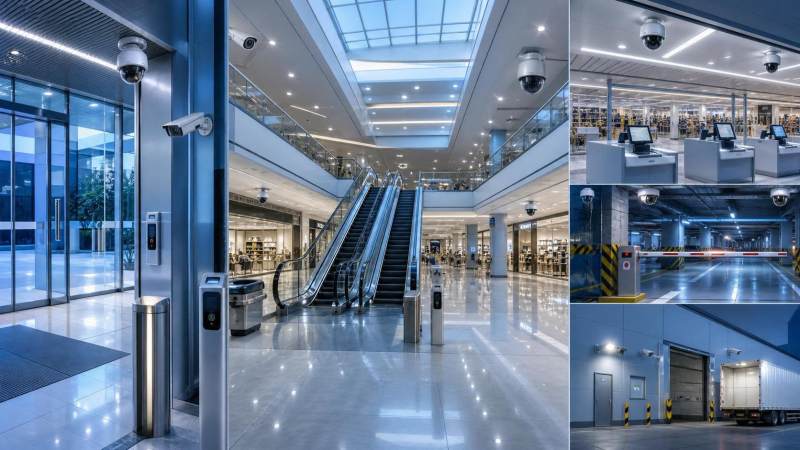
Commercial Security Systems for Malls: Cost vs Coverage
Choosing commercial security systems for malls is rarely a simple price comparison.
The real question is how much protection each dollar actually buys.
A lower quote may leave blind spots, weaker evidence quality, or future integration limits.
A higher quote may include coverage that reduces incidents, speeds investigations, and supports compliance.
That is why commercial security systems for malls should be assessed through total value, not sticker price alone.
In practice, surveillance, access control, perimeter protection, lighting, and software all affect operating risk.
They also affect staffing efficiency, tenant confidence, and the mall’s long-term asset performance.
This guide explains the main cost versus coverage trade-offs behind commercial security systems for malls.
Why Cost Alone Can Mislead
Many mall projects begin with a target budget and a rough device count.
That approach is fast, but it often hides serious performance gaps.
Two vendors may both propose 200 cameras, yet deliver very different coverage quality.
One layout may focus on entrances, payment zones, and parking lanes.
Another may spread devices thinly and still miss escalators, service corridors, or loading docks.
This is where commercial security systems for malls should be measured by usable coverage.
Usable coverage means clear footage, controllable access points, reliable alerts, and enough redundancy for peak hours.
From a procurement perspective, cheap systems often become expensive after the first major incident.
What Coverage Really Means in a Mall Environment
Coverage is broader than camera placement.
For commercial security systems for malls, coverage should be mapped by risk zone and operational priority.
- Public areas: entrances, atriums, food courts, corridors, elevators, and rest areas.
- Transaction zones: cashier points, kiosks, ATMs, and customer service desks.
- Back-of-house areas: control rooms, stockrooms, service halls, and management offices.
- Perimeter areas: parking lots, drop-off lanes, emergency exits, and loading zones.
- High-risk time periods: weekends, holiday campaigns, late-night cleaning, and deliveries.
A solid mall security design aligns each zone with the right technology.
Wide-angle cameras may suit atriums, while high-detail cameras fit payment areas and license plate capture points.
Access control matters more in staff-only areas than in customer circulation spaces.
Lighting quality also changes how well commercial security systems for malls perform at night or during power transitions.
Core Cost Drivers Behind Commercial Security Systems for Malls
The biggest cost driver is usually system architecture, not individual devices.
A mall with multiple buildings, parking structures, and tenant zones needs a more complex deployment.
That complexity affects cabling, storage, software licenses, integration, and long-term maintenance.
Recent market signals show more buyers asking for integrated platforms, not standalone devices.
That shift matters because integration can reduce operator workload and improve incident response time.
When comparing commercial security systems for malls, request both capital cost and five-year operating cost.
How to Balance Coverage Depth With Budget Reality
The strongest buying strategy is tiered protection.
Not every square meter needs the same level of monitoring.
This helps keep commercial security systems for malls aligned with business risk instead of blanket overspending.
- Define critical zones first, including entrances, cash areas, parking access, and emergency routes.
- Set required image quality by use case, such as detection, recognition, or identification.
- Match retention periods to legal rules, insurance terms, and incident history.
- Separate must-have integrations from future-phase enhancements.
- Reserve budget for maintenance, training, and software updates.
A phased rollout is often more effective than cutting device quality to fit year-one budgets.
For example, it may be smarter to fully secure the main building now and expand parking later.
That approach preserves performance where risk is highest and keeps the commercial security systems for malls scalable.
Common Procurement Mistakes That Raise Long-Term Costs
One common mistake is treating surveillance as a standalone purchase.
In reality, commercial security systems for malls work best when surveillance, access control, alarms, and lighting support each other.
Another mistake is underestimating storage growth.
Higher resolution, longer retention, and analytics can quickly push infrastructure beyond original estimates.
A third mistake is overlooking compliance requirements across jurisdictions or tenant categories.
Privacy rules, signage obligations, access logs, and data handling standards can all affect system design.
There is also the vendor lock-in risk.
Proprietary systems may look manageable early on, then become expensive during expansion or replacement.
A stronger tender process asks how commercial security systems for malls will connect with future upgrades.
What to Ask Vendors Before Final Selection
Better vendor questions usually lead to better project outcomes.
For commercial security systems for malls, ask for clear evidence rather than broad claims.
- Which mall zones are covered at identification level, and which are only monitored for movement?
- What are the tested night performance conditions for parking and delivery areas?
- How does the system handle failover, power loss, and network interruption?
- Which standards, interoperability protocols, and cybersecurity controls are supported?
- What five-year license, service, and replacement costs should be expected?
- Can the platform integrate future AI vision, optical controls, or smart-building tools?
This is also where market intelligence becomes useful.
GSIM tracks regulatory movement, optical technology shifts, and procurement patterns shaping physical security decisions.
That broader view helps evaluate whether a vendor proposal fits today’s needs and tomorrow’s operating model.
A Practical Way to Compare Options
The simplest evaluation method is a weighted scorecard.
It keeps commercial security systems for malls tied to measurable business priorities.
Score each proposal across coverage, lifecycle cost, compliance fit, integration ability, service support, and expansion readiness.
Then compare the trade-offs in a structured way, not by unit price alone.
In many cases, the winning proposal is not the cheapest or the most feature-heavy.
It is the option that protects critical zones well, integrates cleanly, and stays manageable over time.
That is the real balance point for commercial security systems for malls.
Coverage should reduce risk in the places that matter most.
Cost should remain predictable across deployment, operation, and future upgrades.
When those two factors are aligned, the purchase becomes easier to defend internally.
It also creates a stronger foundation for tenant safety, incident response, and asset resilience.
Before final approval, review every proposal against risk maps, operational workflows, and five-year ownership cost. That step usually reveals the most reliable choice.
The VitalSync Intelligence Brief
Receive daily deep-dives into MedTech innovations and regulatory shifts.