
Security
Critical Infrastructure Protection Solutions That Fit Modern Utility Networks
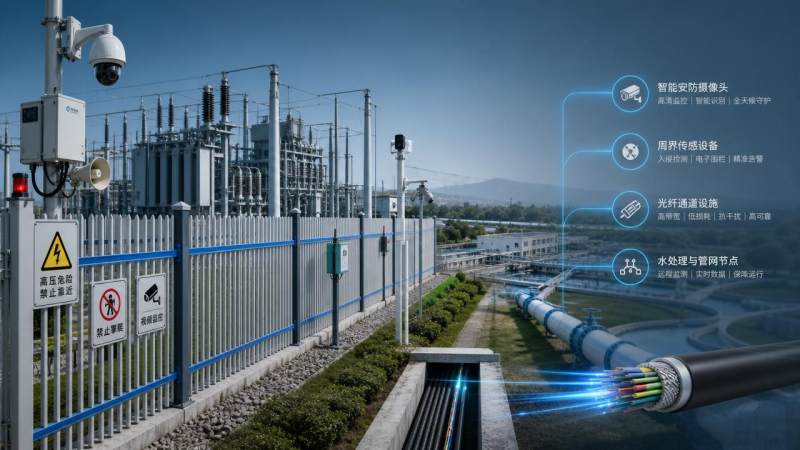
As utility networks become more connected, exposed, and regulation-driven, choosing critical infrastructure protection solutions is no longer a technical upgrade but a strategic necessity. For enterprise decision-makers, the challenge lies in aligning physical security, optical visibility, and operational resilience with evolving compliance demands. This article explores how modern protection strategies can better fit today’s utility environments while supporting smarter, safer infrastructure planning.
Why decision-makers should use a checklist before selecting protection strategies
Utility operators no longer protect a single fenced asset. They manage distributed substations, remote pumping stations, grid edge devices, fiber corridors, treatment facilities, mobile crews, and vendor-connected control environments. In that reality, critical infrastructure protection solutions must be assessed as a business continuity decision, not as an isolated equipment purchase.
A checklist-based approach helps leaders avoid three common mistakes: buying technology that does not match site risk, overinvesting in one control while leaving major gaps elsewhere, and missing compliance or audit evidence requirements. It also improves cross-functional alignment between security, operations, engineering, procurement, and executive governance. For organizations working across multiple jurisdictions, this structure is especially valuable because regulations, threat models, and environmental conditions differ widely.
For platforms such as GSIM, which connect global security assurance with optical environment optimization, the practical question is clear: which evaluation points matter first, and how can leaders rank them quickly enough to support capital planning, resilience programs, and safer modernization?
First-pass checklist: the key questions to confirm before anything else
Before comparing vendors or architectures, enterprise buyers should verify the basics below. These are the minimum decision points that shape whether critical infrastructure protection solutions will actually fit modern utility networks.
- Is the protection objective clearly defined? Confirm whether the priority is intrusion detection, sabotage prevention, perimeter awareness, lighting adequacy, operational continuity, regulatory readiness, or a combination of these.
- Which assets are truly mission-critical? Separate high-consequence sites from standard facilities. A primary substation, command center, or water treatment intake requires a different control depth than a low-impact storage yard.
- What is the current threat profile? Review theft, vandalism, insider risk, drone exposure, protest disruption, environmental hazards, and cyber-physical manipulation scenarios.
- How visible are the operating conditions at night and in low-contrast environments? Optical performance is often underestimated, yet poor illumination and weak scene clarity reduce the value of surveillance and response.
- Which standards or compliance mandates apply? Map legal duties, sector guidance, audit trails, retention rules, and evidence requirements before solution design begins.
- Can the solution integrate with existing systems? A strong platform should connect with access control, video management, incident workflows, sensors, and command center processes without creating isolated tools.
- What response model will be used? Detection without verified escalation, staffing, and field procedures creates a false sense of resilience.
Core evaluation framework for critical infrastructure protection solutions
Once the first-pass questions are answered, decision-makers can move to a more detailed evaluation framework. The most effective critical infrastructure protection solutions usually perform well across five linked dimensions rather than excelling in only one.
1. Physical security coverage
Check whether the design covers perimeter boundaries, entry points, blind spots, remote structures, asset cages, control rooms, and vehicle approach paths. Good coverage is layered. It should not rely entirely on fencing or cameras alone. Utilities need detection, deterrence, delay, assessment, and response working together.
2. Optical environment and scene usability
In many utility environments, image quality fails because lighting was treated as secondary. Decision-makers should verify illumination uniformity, glare control, color rendering where identification matters, resilience in fog or rain, and compatibility with AI-enabled analytics. Optical conditions directly influence whether alarms can be verified and whether post-incident evidence is usable.
3. Operational resilience
Ask how the system behaves during power disruption, communications loss, equipment tampering, and harsh weather. Modern critical infrastructure protection solutions should support redundancy, local failover, event logging, and maintenance planning. If a site becomes less secure exactly when the network is stressed, the design is not fit for utility reality.
4. Governance and compliance readiness
The strongest projects prepare audit evidence from the start. Confirm data retention rules, access logging, privacy boundaries, chain-of-custody expectations, contractor permissions, and regional regulatory obligations. This is where intelligence-led advisory support becomes valuable, especially when operating across countries or mixed public-private infrastructure models.
5. Scalability and investment logic
Executives should assess whether the solution can scale from one pilot site to an enterprise-wide deployment. Review lifecycle costs, upgrade paths, interoperability, training needs, spare strategy, and reporting value. The right approach is not always the most complex one; it is the one that can be repeated consistently across the network.
A practical decision table for comparing options
The table below can help leadership teams compare critical infrastructure protection solutions more objectively during shortlisting.
What changes by utility type and operating environment
Not all utility networks should apply the same protection priorities. Decision-makers should adjust their checklist according to infrastructure type, exposure pattern, and service sensitivity.
Power and transmission assets
These sites often require stronger perimeter intelligence, substation intrusion controls, anti-tamper monitoring, and dependable low-light assessment. Remote locations make verified response essential. In this segment, critical infrastructure protection solutions should emphasize continuity under weather and communications disruption.
Water and wastewater facilities
Here the risk profile includes trespass, contamination attempts, insider access misuse, and process interruption. Lighting, access segmentation, and protected maintenance zones deserve close review. Decision-makers should also consider how public-facing assets affect privacy, evidence handling, and community trust.
Gas distribution and pipeline networks
Linear infrastructure creates monitoring challenges across long corridors and dispersed nodes. The best critical infrastructure protection solutions in this context are those that combine local protection at key sites with prioritized surveillance and response logic at high-consequence points.
Urban smart utility environments
As cities modernize, security and illumination increasingly intersect with smart poles, AI vision, public safety systems, and connected operations platforms. The evaluation should include interoperability, data governance, and the effect of new lighting technologies on both safety outcomes and sensor performance.
Common blind spots that weaken otherwise good projects
Many utility investments underperform not because the technology is poor, but because a few critical questions were skipped. The following blind spots are worth checking early.
- Treating visibility as a secondary issue. If the optical environment is weak, security analytics, guard response, and forensic review all become less reliable.
- Designing for detection without designing for action. Alarm overload, unclear escalation paths, and fragmented monitoring teams reduce real protection value.
- Ignoring maintenance access and lifecycle realities. Dust, vibration, corrosion, storm exposure, and remote service logistics can erode performance faster than expected.
- Underestimating legal and policy changes. Cross-border operators in particular need current intelligence on surveillance rules, evidence handling, and public accountability expectations.
- Running pilots without enterprise standards. A successful trial at one site does not guarantee repeatability across a utility network with different risk classes and operating constraints.
Execution checklist: what to prepare before engaging vendors or advisors
If an organization wants to move from concept to implementation, it should first prepare a concise decision pack. This saves time, improves proposal quality, and helps ensure critical infrastructure protection solutions are evaluated on strategic fit rather than sales language.
- A ranked asset inventory showing which facilities have the highest business and public impact.
- A summary of recent incidents, near misses, compliance findings, and known monitoring gaps.
- Basic site data, including operating hours, lighting conditions, weather exposure, power quality, and communications limitations.
- Current system map covering cameras, access control, perimeter technologies, command center workflows, and maintenance arrangements.
- Success criteria for the investment, such as reduced false alarms, faster response validation, stronger audit readiness, or improved resilience under outage conditions.
- Budget boundaries, rollout timeline, and governance ownership across security, operations, procurement, and executive leadership.
FAQ for enterprise buyers evaluating critical infrastructure protection solutions
Should utilities prioritize surveillance, lighting, or perimeter detection first?
Start with the highest operational risk and the weakest current control. In many cases, the answer is not one technology but the relationship among them. If low-light visibility is poor, upgrading cameras alone may not solve the problem. If response is slow, better detection may simply produce more unmanaged alarms.
How can executives tell whether a solution is overengineered?
Look for complexity that does not improve decision quality, resilience, or compliance outcomes. A solution may be overengineered if site teams cannot maintain it, operators cannot interpret it quickly, or expansion costs rise sharply with each additional asset.
Why do intelligence and standards matter in procurement?
Because critical infrastructure protection solutions now sit at the intersection of law, operational technology, public accountability, and emerging optical systems. Trusted intelligence support helps organizations anticipate policy shifts, compare international practices, and avoid short-term purchases that create long-term governance risk.
A final decision guide for safer next steps
For modern utility networks, the best critical infrastructure protection solutions are the ones that match asset criticality, improve usable visibility, strengthen response, and stand up to compliance review. Decision-makers should not begin with product lists. They should begin with a structured checklist: what must be protected first, what operating conditions affect performance, what regulations shape design, and what level of resilience the organization truly needs.
If your organization is preparing for upgrades, expansion, or audit-driven modernization, the most productive next conversation should focus on six items: site risk classification, optical environment conditions, current integration gaps, response workflow maturity, compliance obligations, and lifecycle budget assumptions. With those inputs clarified early, enterprise teams can evaluate critical infrastructure protection solutions with greater confidence and build infrastructure plans that are both safer and more future-ready.
The VitalSync Intelligence Brief
Receive daily deep-dives into MedTech innovations and regulatory shifts.