
Security
Digital Protection Measures That Improve System Resilience
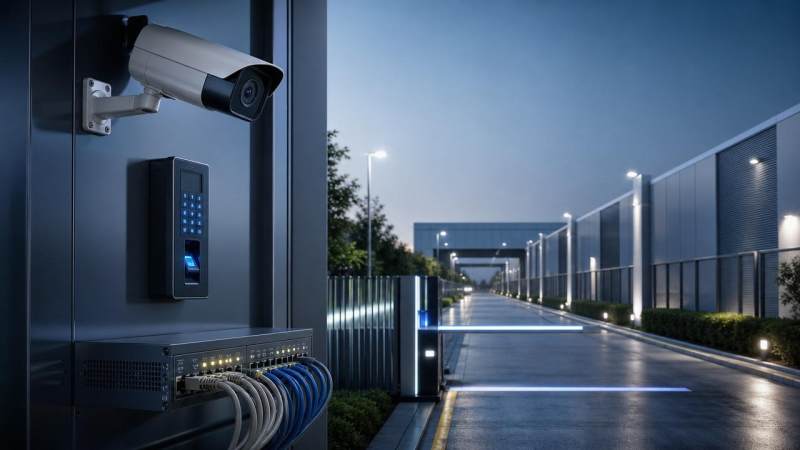
As digital infrastructure expands across cities, facilities, and critical operations, digital protection has become essential for maintaining system resilience and operational continuity. For users and operators, understanding how security assurance, compliance requirements, and optical environment optimization work together is key to reducing risk. This article explores practical measures that strengthen protection frameworks while supporting safer, smarter, and more adaptive systems.
In practice, operators are no longer managing isolated devices. They are supervising connected cameras, access control panels, lighting systems, edge processors, network switches, storage platforms, and compliance workflows that often span 3 to 5 operational layers. A weak password, poorly lit monitoring zone, or delayed firmware update can create a chain reaction that affects detection accuracy, uptime, and audit readiness.
For organizations navigating urban safety upgrades and digital infrastructure expansion in 2026, digital protection is not only about blocking attacks. It is about preserving visibility, maintaining evidence integrity, reducing downtime, and enabling faster decisions. This is where intelligence-led platforms such as GSIM help users and operators connect security assurance with optical environment optimization and global compliance awareness.
Why Digital Protection Now Defines System Resilience
System resilience depends on how well a site can prevent, absorb, and recover from disruption. In security and illumination environments, disruption can come from cyber intrusion, sensor failure, poor visibility, configuration drift, or non-compliant surveillance practices. Digital protection reduces the probability of these failures while improving recovery time from hours to minutes in well-managed environments.
For operators, the biggest shift is that physical security and digital control are now tightly linked. A camera that loses synchronization for 15 minutes may affect incident reconstruction. A lighting zone that drops below its target lux range can reduce AI vision confidence. A storage policy that retains footage for 7 days instead of the required 30 or 90 days can create compliance and liability problems.
The 4 risk domains operators should watch
- Identity and access risk: shared credentials, weak authentication, inactive user accounts.
- Network and device risk: unpatched firmware, open ports, unsecured remote access, flat network design.
- Visibility risk: poor lighting uniformity, glare, shadow zones, uncalibrated sensors.
- Compliance and evidence risk: incomplete logs, unclear retention periods, inconsistent chain-of-custody procedures.
Why optical conditions matter in digital protection
Many users still treat lighting as a separate engineering topic, but resilient systems depend on the relationship between imaging quality and digital controls. In a low-light corridor, image noise rises, bandwidth may increase, storage efficiency can fall, and AI classification performance may weaken. Improving illumination consistency by even 20% to 30% can support better detection stability without changing the entire camera estate.
GSIM’s cross-domain approach is valuable here because users need both policy interpretation and practical deployment guidance. Operators must align electronic surveillance use, optical conditions, and digital protection controls within one operational model rather than handling them in separate teams.
Core Digital Protection Measures for Users and Operators
A resilient framework usually starts with a small set of controls that deliver measurable results within 30 to 90 days. The goal is not to deploy every advanced technology at once. The goal is to reduce high-impact gaps first, especially in active facilities, public safety sites, smart construction projects, transport corridors, and mixed-use urban environments.
1. Segment systems by function and exposure
Separate surveillance devices, access control systems, building lighting controls, and administrative workstations into distinct network zones. Even a basic 3-zone model can reduce lateral movement risk: field devices in one zone, operational management in another, and corporate IT access in a third. This helps contain faults and simplifies troubleshooting.
2. Enforce stronger access control
Operators should replace shared logins with role-based accounts and multi-factor authentication for remote access. A practical rule is to review user roles every 90 days and disable inactive accounts after 30 to 45 days. Access logs should be retained long enough to support internal review cycles and any site-specific legal obligations.
3. Maintain firmware, software, and configuration discipline
Patch windows should be planned rather than reactive. For many environments, critical updates can be assessed within 72 hours and standard updates within 14 to 30 days, depending on operational criticality. Configuration backups should be automated before any update so systems can be restored quickly if compatibility problems appear.
4. Improve monitoring conditions, not just monitoring devices
Digital protection improves when cameras, sensors, and illumination assets are treated as one operating environment. Review glare sources, blind spots, contrast levels, and nighttime uniformity. In loading zones, gates, and perimeter paths, uneven illumination can create recurring false alarms and missed detections, especially during weather shifts or seasonal darkness.
The table below outlines practical control areas that operators can prioritize when building a digital protection baseline across security and illumination systems.
A clear pattern emerges: digital protection is strongest when controls cover people, devices, environments, and records together. Organizations that focus only on software hardening often miss the operational weaknesses caused by poor visibility, unmanaged privileges, or inconsistent evidence handling.
How to Implement a Resilient Protection Framework in 5 Steps
Users and operators often need a practical route from assessment to execution. A structured 5-step framework helps sites improve digital protection without disrupting daily operations. For most medium-scale deployments, the first cycle can be completed in 4 to 8 weeks, depending on device count, site complexity, and local approval processes.
Step 1: Map assets and operating dependencies
Create an inventory of cameras, recorders, access controllers, lighting nodes, edge analytics devices, storage systems, and remote access tools. Identify which assets are critical for 24/7 operations and which can tolerate short maintenance windows. Even a simple spreadsheet with 6 core fields—device type, location, firmware version, owner, network zone, and backup status—can reveal major exposure points.
Step 2: Define risk thresholds and response priorities
Not every issue carries the same operational impact. A disconnected decorative lighting node is not equal to a failed perimeter camera or a broken access gate controller. Build a three-tier severity model: critical issues resolved in under 4 hours, high-priority issues in 24 hours, and routine issues within 3 to 7 days.
Step 3: Standardize configuration and maintenance routines
Consistency is one of the most cost-effective digital protection measures. Use standard naming rules, synchronized timestamps, approved password policies, and repeatable camera and lighting configuration templates. Routine health checks can be scheduled weekly for alarms and logs, monthly for firmware and backups, and quarterly for lighting and image-quality reviews.
Step 4: Align compliance checks with daily operations
Compliance should not be treated as a separate annual exercise. Operators should embed privacy notices, access approvals, retention rules, and event logging into standard workflows. This is especially relevant for electronic surveillance in public-facing spaces, where regional rules may differ on data retention, notice requirements, or export controls.
Step 5: Review outcomes and optimize quarterly
Resilience improves through review cycles, not one-time projects. Every 90 days, measure incident response time, false alarm patterns, patch compliance rate, storage sufficiency, and visibility issues in critical zones. If AI-assisted vision or VLC-enabled infrastructure is being considered, these reviews also help confirm whether the optical and network conditions are mature enough for the next phase.
Implementation checkpoints operators can use
- Confirm all critical devices are inventoried and grouped by site function.
- Verify remote access paths are authenticated and logged.
- Check that footage retention matches policy requirements.
- Inspect 5 to 10 high-risk visual zones for glare, shadows, and blind spots.
- Test restoration from backup at least once per quarter.
Choosing the Right Protection Priorities for Procurement and Operations
In B2B environments, operators rarely purchase technology based on features alone. They need solutions that fit maintenance capacity, policy obligations, site conditions, and integration limits. A strong digital protection strategy therefore combines technical fit with lifecycle practicality, including support response, spare part availability, update management, and cross-system compatibility.
Before selecting platforms, devices, or service partners, teams should compare options against operational criteria rather than generic marketing claims. The table below summarizes decision factors that matter most in integrated security and illumination environments.
This comparison shows why digital protection decisions should not be separated from operating reality. A lower-cost option may become more expensive if it increases false alarms, lacks usable logs, or requires frequent manual intervention. Procurement decisions are strongest when operators, compliance stakeholders, and technical teams evaluate the same criteria together.
Common mistakes that weaken resilience
- Buying higher-resolution devices without addressing lighting uniformity or glare.
- Allowing vendors or contractors to keep unmanaged remote access accounts.
- Using default retention periods that do not match site obligations.
- Ignoring quarterly testing because systems appear to be running normally.
- Separating cyber maintenance from physical security operations entirely.
Where GSIM adds practical value
For users and operators facing rapid infrastructure change, GSIM provides a useful decision-support layer by connecting latest sector news, compliance interpretation, technology trend monitoring, and commercial insight. This matters when evaluating digital protection measures that must remain viable across procurement cycles, policy updates, and evolving AI vision or VLC-related deployments.
Instead of viewing protection as a one-time technical purchase, organizations can use intelligence-led guidance to compare implementation pathways, understand regional surveillance expectations, and improve coordination between physical security assurance and optical environment optimization.
Building Smarter, Safer, and More Adaptive Operations
Effective digital protection is built through layered controls, measurable routines, and better environmental visibility. For users and operators, the most practical path is to strengthen 4 foundations first: access discipline, device maintenance, optical performance, and evidence management. Once these are stable, more advanced capabilities such as AI vision tuning, edge analytics expansion, or VLC integration become easier to deploy with less risk.
Organizations that align digital protection with operational workflows are better positioned to reduce downtime, improve incident response, and meet changing compliance expectations. GSIM supports that effort by helping stakeholders interpret risks, compare options, and make decisions with a clearer view of technology trends and field requirements.
If you are planning upgrades in surveillance, illumination, access control, or integrated safety infrastructure, now is the right time to review your resilience strategy. Contact us to get a tailored digital protection roadmap, discuss operational requirements, or explore more solutions that fit your site, compliance profile, and deployment goals.
The VitalSync Intelligence Brief
Receive daily deep-dives into MedTech innovations and regulatory shifts.