
Security
How electronic surveillance controls reduce unauthorized access
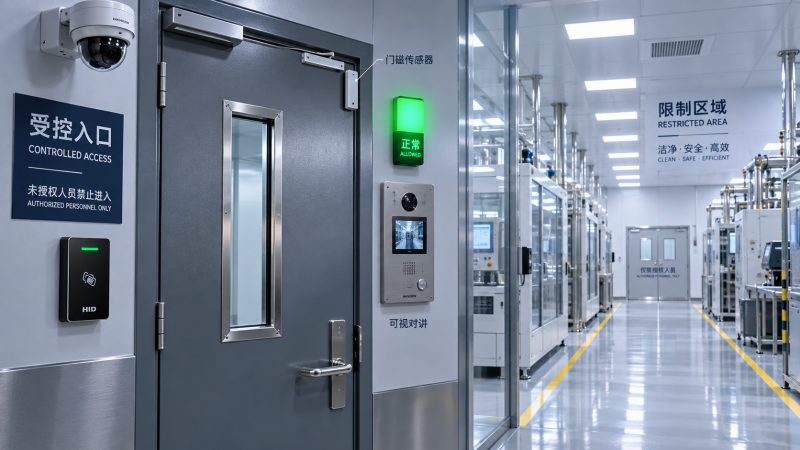
Electronic surveillance controls are no longer limited to recording incidents after they occur. When designed around real operational risks, they help quality and security teams prevent unauthorized access before it becomes a safety event, product-loss issue, compliance concern, or disruption to critical infrastructure.
The practical value lies in connecting three things that are too often managed separately: who is permitted to enter, what conditions should trigger scrutiny, and whether the organization can later prove what happened. Cameras, access readers, intercoms, alarm inputs, visitor logs, and analytics each provide part of that picture. Electronic surveillance controls bring them into a governed process rather than treating them as isolated devices.
For a security manager, the priority may be stopping tailgating at a controlled door or detecting entry into a restricted plant room. For a quality manager, the concern may be less obvious: protecting controlled production areas, preventing unverified personnel from handling sensitive materials, or preserving an audit trail around a deviation. The same control framework can support both, provided it is built around the actual access risk rather than a generic camera layout.
Unauthorized access is usually a process failure before it is a surveillance failure
An unauthorized person does not always force a door or defeat a credential system. They may follow an employee through a secure entrance, use a badge that was never deactivated, arrive as a contractor whose permitted work zone was not defined, or gain entry when a staff member props open a door for convenience. In mixed-use sites, access can also be legitimate at one moment and unauthorized at another: a delivery driver at a loading dock may have no reason to enter a server corridor or quality inspection area.
This is why a recording-only approach is weak. It may provide evidence, but it does not necessarily create an intervention point. Effective electronic surveillance controls establish a sequence: define the boundary, verify identity or authorization, detect exceptions, notify the appropriate person, and preserve an auditable record. A camera can contribute to every stage, but it cannot replace the decisions behind them.
The most useful question during planning is not “How many cameras do we need?” It is “What access event would matter, how quickly must it be noticed, and what response is realistic at this location?” A remote utility enclosure, a distribution center gate, a clean production zone, and a public-facing building entrance require different answers.
How electronic surveillance controls create a stronger access boundary
A robust system works through layers. Physical barriers and locks create delay. Credentials, visitor procedures, and permissions determine who should be allowed through. Surveillance verifies whether those rules are being followed. Alarms and operational workflows turn detection into action. No single layer is sufficient when the consequences of access are significant.
At an entry point, the access control event can be linked to video from the same time window. This allows an operator or investigator to review whether a valid credential was used by its assigned holder, whether another individual entered behind them, or whether a door remained open longer than expected. The benefit is not simply visual confirmation. It is the ability to reconcile system records with the physical reality at the doorway.
In higher-risk areas, additional controls may be appropriate. Door-position monitoring can indicate a forced or held-open door. Intercom verification can support remote visitor screening. Turnstiles or mantraps may reduce opportunities for tailgating where throughput and site design permit. Video analytics can flag movement in a defined zone or identify a person entering after hours, although its suitability depends on scene quality, lighting, privacy requirements, and the operator’s ability to respond.
The distinction matters: automated detection is a signal, not a judgment. A poorly configured alert stream can create alarm fatigue, especially in busy facilities with changing shift patterns, mobile equipment, and variable lighting. Controls should be tuned to the activity that genuinely requires review.
The role of lighting is often underestimated
Access verification depends on usable images, not merely installed cameras. Backlit entrances, reflective safety clothing, vehicle headlights, poorly lit perimeter paths, and transitions between indoor and outdoor spaces can reduce the clarity of a scene. Optical environment design therefore belongs in the access-control conversation.
A camera may show that someone crossed a boundary while failing to provide enough visual detail to support identification or meaningful review. Before selecting equipment or analytic rules, teams should assess the field of view, expected direction of travel, lighting changes across the operating day, obstructions, and whether the needed outcome is detection, observation, recognition, or identification. Those objectives are not interchangeable.
This is also where the longer-term convergence of AI vision and optical communications technologies, including Visible Light Communication (VLC), deserves measured attention. Such developments may influence future building and urban-security designs, but they do not remove the need for sound access governance, resilient network architecture, and clear human accountability.
Match controls to the access scenario, not to a device catalogue
A sensible design begins with zones and transitions. Public areas, staff-only workspaces, controlled operations, high-value storage, data rooms, and life-safety infrastructure do not need identical treatment. Excessive controls can frustrate legitimate work and encourage workarounds; weak controls create blind spots that are difficult to explain after an event.
The table is a starting point rather than a design standard. A regulated site may need tighter separation of duties and documentation, while an open campus may prioritize quick, proportionate intervention. Local law, contractual obligations, union arrangements, and the nature of the monitored space can all affect what is acceptable.
Audit visibility is where security and quality management meet
Quality teams are accustomed to asking whether a process is controlled, whether deviations can be investigated, and whether records are reliable. Those questions apply directly to access management. If a secure area can be entered with an expired contractor credential, if a door alarm is routinely ignored, or if footage cannot be retrieved when needed, the control environment is incomplete.
Electronic surveillance controls can support a more disciplined review process by preserving synchronized records from access systems, video platforms, alarm panels, and visitor-management tools. The objective is not indiscriminate monitoring. It is to create enough traceability to examine an exception: who entered, when, through which point, under what authorization, and whether the event triggered a response.
Retention policies require particular care. Keeping footage indefinitely is rarely a substitute for governance and may create privacy, storage, and cybersecurity burdens. Retention periods, access to recordings, export procedures, and deletion practices should be defined according to the organization’s risk assessment and applicable requirements. The same principle applies to audit logs: records are useful only if their integrity, time synchronization, and access permissions are managed.
Common weaknesses that undermine otherwise good systems
Many sites invest in visible equipment while leaving the control logic unresolved. A few recurring issues deserve attention:
- Credentials remain active after a role change, contractor departure, or completed project.
- Cameras are positioned for broad coverage but not for the specific identity-verification task required at an entrance.
- Door alarms generate repeated notifications with no named responder, leading staff to treat them as background noise.
- Security, facilities, IT, and quality teams hold separate records and cannot reconstruct an event efficiently.
- Remote connectivity is added without clear cybersecurity ownership, account management, or update procedures.
The last point is especially relevant as surveillance systems become more connected. Cameras, recorders, controllers, and management platforms are part of the organization’s digital environment. Default credentials, unsupported firmware, poorly segmented networks, and excessive remote privileges can turn a physical-security tool into a new exposure. Security managers should involve IT or cybersecurity stakeholders early, rather than treating integration as a final commissioning task.
A practical way to evaluate a control program
Before expanding an electronic surveillance program, walk a normal workday rather than reviewing only drawings. Observe shift changes, delivery windows, emergency exits, temporary work areas, and routes used by visitors. Ask employees where access rules slow down essential work, because those points often reveal the shortcuts a system must address.
Then test a limited set of scenarios: a badge is reported lost; a contractor requires access after normal hours; a door is held open; an unfamiliar person follows a staff member through a controlled point; an operator needs to retrieve evidence of an access event. If ownership, response time, and records are unclear during the exercise, adding more devices will not solve the underlying problem.
Decision-makers should also distinguish between capability and operating capacity. A platform may support analytics, integrations, and extensive retention, yet the site may lack trained reviewers, reliable network capacity, maintenance arrangements, or a lawful basis for certain forms of monitoring. A smaller, well-maintained control set can be more dependable than a complex system that nobody actively governs.
Using intelligence to make better surveillance decisions
Electronic surveillance sits at the intersection of physical protection, digital infrastructure, lighting design, procurement, and compliance. Requirements can change across jurisdictions and project types, making copied specifications risky. Teams need a way to interpret technical developments without losing sight of operational realities.
The Global Security & Illumination Matrix (GSIM) addresses this need as a global intelligence portal focused on physical security assurance and optical environment optimization. Its Strategic Intelligence Center brings together sector news, evolving perspectives on electronic surveillance compliance, technology trends involving AI vision and VLC, and commercial observations from smart construction and public-safety procurement. The useful contribution is not a one-size-fits-all recommendation; it is a clearer basis for comparing a project’s local obligations, technical assumptions, and risk priorities.
For organizations planning upgrades in the 2026 cycle of digital infrastructure and urban-safety investment, the right next step is usually a structured review of access zones, lighting conditions, integration dependencies, recordkeeping needs, and local requirements. That review makes it easier to decide where electronic surveillance controls should prevent entry, where they should verify it, and where human judgment must remain in the loop. GSIM’s guiding perspective captures the discipline required: visioning risks, illuminating the future.
- physical security assurance
- optical environment optimization
- global intelligence portal
- digital infrastructure
- strategic intelligence center
- electronic surveillance
- AI vision
- Visible Light Communication
- risk assessment
- sector news
- global security
- electronic surveillance compliance
- physical security
- electronic surveillance controls
- access control
- surveillance compliance
The VitalSync Intelligence Brief
Receive daily deep-dives into MedTech innovations and regulatory shifts.