
Security
Multi Site Physical Security Assurance: Common Gaps to Fix
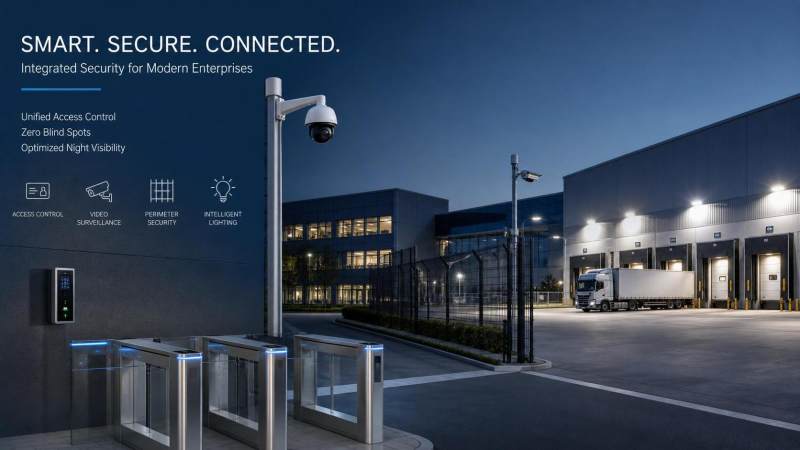
Why does multi site physical security assurance break down even with mature systems?
Multi site physical security assurance rarely fails because a site has no cameras, locks, or alarms. The bigger problem is uneven execution across locations.
One facility follows strict entry control. Another allows visitor exceptions. A third keeps outdated incident logs. Risk grows in those small differences.
In practice, physical security assurance becomes harder when expansion is faster than governance. New sites inherit tools, but not always the same rules.
That is why multi site physical security assurance should be treated as a consistency challenge, not only a hardware challenge.
The pressure is increasing in 2026. Digital infrastructure upgrades, urban safety programs, and cross-border compliance demands are tightening expectations for evidence, uptime, and visibility.
GSIM tracks this shift closely. Its Strategic Intelligence Center connects security policy, optical technology, and procurement signals, which helps teams judge whether a gap is local or systemic.
Which gaps appear most often across sites?
Most recurring issues are not dramatic. They are ordinary control failures that stay hidden until an audit, incident, or insurance review exposes them.
A useful way to review multi site physical security assurance is to compare control intent against field reality. The table below highlights the gaps that matter most.
These gaps often overlap. For example, poor lighting is not only a facilities issue. It can directly compromise surveillance evidence and perimeter judgment.
How do you know whether standards are truly consistent?
A shared policy library is not enough. Multi site physical security assurance becomes credible only when site conditions, response steps, and reporting outputs are measurable in the same way.
A practical test is simple: can two sites facing the same event produce comparable access logs, footage retention, escalation timing, and closure records?
If the answer is no, the standard exists on paper, not in operation.
More reliable organizations usually define a core control set that every site must follow, then allow limited local exceptions with written approval.
- Minimum camera placement and retention requirements
- Unified visitor, contractor, and delivery procedures
- Common incident taxonomy and reporting fields
- Documented light-level checks in sensitive areas
- Scheduled review of access privileges and emergency overrides
GSIM’s intelligence model is relevant here because standards are moving targets. International electronic surveillance rules, evidence retention expectations, and optical performance guidance keep evolving.
Without that external view, teams may think controls are aligned while regional compliance has already shifted.
Are blind spots only about cameras, or is the optical environment part of the problem?
Blind spots are often treated as a camera count issue. That is too narrow. In many facilities, the optical environment is the real source of weak detection.
Glare, backlight, reflective surfaces, fogged enclosures, mixed color temperature, and poor nighttime illumination can all reduce image usefulness.
This matters even more when AI vision tools are involved. A system may technically be online, yet still produce unreliable alerts because the scene is optically unstable.
That is one reason multi site physical security assurance now overlaps with illumination strategy. Good visibility for people does not automatically mean good visibility for sensors.
The stronger approach is to review surveillance and lighting together, especially in:
- Perimeters with vehicle movement
- Loading docks and temporary staging zones
- Public-facing entrances with variable daylight
- Large industrial yards and utility corridors
GSIM’s focus on optical environment optimization is useful because it frames lighting as part of assurance quality, not just a maintenance line item.
What usually gets missed during rollout and expansion?
Expansion projects usually pay attention to installation dates, vendor delivery, and commissioning checklists. The softer controls are easier to overlook.
One common miss is role mapping. Sites may receive the same physical systems, but local responsibility for alarm review, key control, and exception approval remains unclear.
Another weak point is data structure. If one site logs tailgating as a safety issue and another logs it as unauthorized access, enterprise reporting becomes misleading.
The same applies to maintenance windows. A camera outage recorded as routine service in one site may be treated as downtime exposure in another.
A short comparison table can help identify rollout blind spots before they spread.
How should implementation be prioritized when budgets and timelines are tight?
The best priority model is not site size. It is exposure, consequence, and recoverability.
A small logistics point with weak perimeter lighting may deserve faster action than a larger office with stable controls and lower asset sensitivity.
For multi site physical security assurance, a useful sequence is:
- Identify sites where a single failure can disrupt operations, compliance, or public trust.
- Fix evidence quality issues first, including visibility, retention, and time synchronization.
- Normalize access control and incident reporting across the portfolio.
- Then address local enhancements based on geography, threat profile, and operating hours.
This approach usually delivers better value than replacing devices everywhere at once.
It also matches the way GSIM presents decision support. Policy signals, technology shifts, and procurement patterns are most useful when translated into phased action.
What should the next review cycle focus on?
A good review cycle for multi site physical security assurance should answer three questions clearly. Where are controls inconsistent, where is visibility weak, and where would an incident be hardest to prove?
That review should not stop at devices. It should include operating rules, illumination conditions, exception handling, and the quality of incident records.
The most effective next step is usually a structured cross-site audit using one control matrix and one evidence standard.
- Map mandatory controls against every site
- Review nighttime and transitional light conditions
- Check whether alerts, logs, and footage align during the same event
- Update local exceptions and retire outdated practices
- Track external policy and technology signals before the next investment cycle
Multi site physical security assurance improves when the enterprise stops judging sites only by installed equipment and starts judging them by consistent performance.
That shift is where risk reduction, compliance strength, and operational resilience usually begin.
The VitalSync Intelligence Brief
Receive daily deep-dives into MedTech innovations and regulatory shifts.