
Security
Security Knowledge Gaps That Slow Down Site Protection
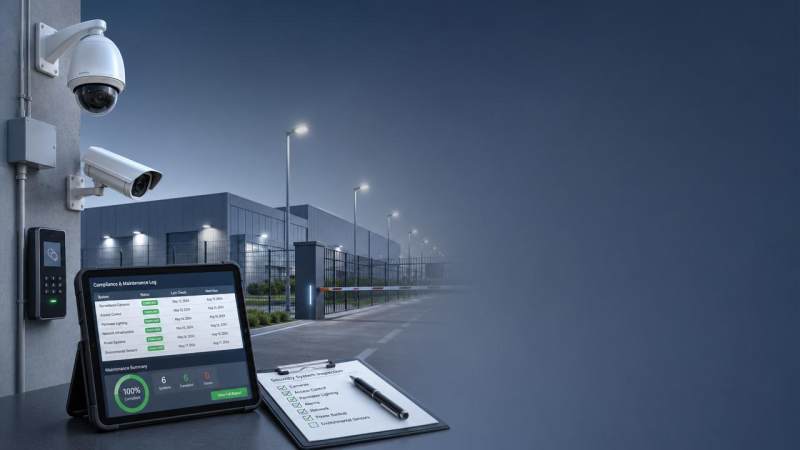
Many site protection delays do not come from equipment failure, but from overlooked security knowledge gaps in daily maintenance, inspection, and response routines. For after-sales maintenance teams, understanding these blind spots is essential to improving system uptime, compliance, and risk control. This article explores where security knowledge breaks down and how practical insight can strengthen protection outcomes across modern sites.
Why security knowledge gaps matter more in some site scenarios than others
For after-sales maintenance personnel, the phrase security knowledge should never be treated as a generic training topic. It directly affects how quickly faults are diagnosed, how accurately risks are escalated, and how reliably a protection system performs under pressure. A camera that appears healthy may still fail a compliance audit. A perimeter light may still create visual blind zones. An access control system may still expose a site because of poor event correlation, weak maintenance records, or misunderstanding of the environment it serves.
Different sites carry different threat models, operating rhythms, and legal expectations. A smart construction site prioritizes temporary layout changes, device relocation, and worker movement. A public safety installation must focus on retention policy, evidence quality, and response timing. A logistics yard worries about perimeter continuity, lighting consistency, and nighttime identification accuracy. Because of these differences, security knowledge gaps do not show up in the same way everywhere.
This is where a platform like GSIM adds value. By connecting global policy interpretation, optical environment optimization, and practical project insight, GSIM helps maintenance teams move beyond hardware replacement and toward informed protection assurance. In the field, that means understanding not only what failed, but why a site condition, workflow weakness, or overlooked standard allowed risk to grow.
Common business scenarios where security knowledge breaks down
Most security knowledge failures appear in routine work rather than emergency moments. After-sales teams often inherit partially documented systems, mixed-brand deployments, or environments that have changed faster than maintenance plans. The result is a gap between installed capability and real protective effect.
1. Smart construction sites with changing layouts
Construction sites are highly dynamic. Fences move, storage zones shift, machinery blocks sight lines, and temporary power creates unstable operating conditions. In this setting, security knowledge gaps often involve outdated camera angles, ignored illumination shifts, weak cable protection, and poor understanding of how temporary site changes affect intrusion coverage. Maintenance teams that focus only on device health miss the larger issue: the security design has drifted away from the site reality.
2. Public safety and municipal environments
In municipal projects, after-sales service is not just technical support. It is part of public accountability. The main security knowledge challenge here is often compliance literacy. Teams may restore video feeds quickly but fail to confirm image retention settings, clock synchronization, access log integrity, or privacy masking requirements. In a public safety context, a functioning device is not enough if evidence quality and regulatory defensibility are compromised.
3. Warehouses, logistics yards, and transport hubs
These sites depend on smooth movement, long perimeters, loading activity, and round-the-clock operations. A typical security knowledge gap here is the failure to connect optical conditions with detection performance. Poorly positioned lighting can reduce recognition, trigger false alarms, or create glare that weakens AI video analytics. Maintenance teams need knowledge that combines surveillance, illumination, and operational flow, not isolated equipment checks.
4. Commercial complexes and mixed-use facilities
In retail or mixed-use property, the challenge is often system coordination. Access control, visitor management, emergency exits, CCTV, and lighting systems may each work separately while still failing as a unified protective layer. Security knowledge gaps emerge when technicians troubleshoot one subsystem without understanding occupancy patterns, tenant behavior, or evacuation logic. That leads to recurring nuisance alarms, poor user experience, and hidden vulnerabilities during peak traffic periods.
Scenario comparison: where maintenance teams should focus first
The table below helps after-sales teams identify how security knowledge should be applied differently by scenario, rather than using one maintenance mindset across every site.
Different site conditions require different security knowledge priorities
After-sales maintenance staff often work across multiple projects, so they need a fast way to judge which security knowledge areas deserve priority. The wrong focus wastes labor and leaves the real weakness untouched.
High-change environments need adaptive knowledge
When a site changes weekly or even daily, static maintenance schedules are not enough. Teams need practical security knowledge about site evolution: how changing materials affect visibility, how temporary structures interrupt line of sight, and how shifting workflows alter access risk. In such cases, the best maintenance practice is not only inspection, but ongoing validation against the current field condition.
High-compliance environments need documentation knowledge
For government-linked projects, regulated facilities, and public-facing systems, knowledge of standards and records is as important as technical repair. Teams should understand audit trails, configuration baselines, firmware change records, and evidence handling expectations. This is where GSIM’s Strategic Intelligence Center can support maintenance leaders with policy-linked interpretation that turns abstract compliance rules into field action.
High-traffic environments need coordination knowledge
Busy facilities fail when systems are maintained in silos. Security knowledge must include how access control affects surveillance review, how lighting supports face capture, and how emergency pathways interact with locking logic. In these scenarios, cross-functional testing matters more than isolated pass-fail checks.
Practical signs that a site is being slowed by security knowledge gaps
Not every weak system looks broken. In many projects, the clearest warning signs are operational patterns that repeat over time. After-sales teams should look for these indicators:
- Repeated alarm complaints with no confirmed device fault
- Frequent camera cleaning or adjustment requests from the same zone
- Video available, but poor evidentiary value during incident review
- Access events that cannot be correlated with surveillance records
- Maintenance reports focused on replacements, with little environmental analysis
- Gaps between as-built drawings and current site conditions
- Nighttime performance significantly worse than daytime assumptions suggested
These are not only maintenance issues. They point to missing security knowledge about context, usage, standards, or optical performance. When teams identify these patterns early, they can shift from reactive service to preventive protection.
How after-sales teams can match security knowledge to the right scenario
A strong maintenance strategy starts with scenario fit. Before deciding what to inspect, repair, or escalate, technicians should ask a small set of business-aware questions.
Ask what changed at the site, not only what failed
If performance dropped recently, the cause may be a new fence, a changed lighting angle, a storage stack, a software rule update, or a revised traffic route. This approach turns security knowledge into situational analysis instead of device diagnosis alone.
Review optical conditions as part of protection quality
Because GSIM emphasizes optical environment optimization, maintenance teams should evaluate whether visible light conditions still support the intended security outcome. Detection, recognition, analytics accuracy, and incident reconstruction all depend on more than sensor uptime. Light distribution, glare control, reflection surfaces, and nighttime contrast should be part of every serious field review.
Use layered checklists by scenario type
A single universal checklist is too shallow for modern sites. Instead, teams should maintain layered checklists: one for hardware health, one for environmental fit, one for compliance settings, and one for operational relevance. This structure reduces recurring security knowledge gaps because it forces technicians to inspect the system in context.
Frequent misjudgments that weaken site protection
Some errors appear across industries because teams rely on assumptions that no longer match today’s digital infrastructure environment.
- Assuming uptime equals security effectiveness. A live system may still underperform if angles, retention rules, or illumination are wrong.
- Separating lighting from surveillance. In many outdoor and mixed-use sites, optical conditions decide whether analytics and identification succeed.
- Treating every alarm as a configuration issue. Repeated false alerts may come from environmental movement, reflective surfaces, or changed site use.
- Ignoring documentation because the equipment works. In regulated environments, missing records can create major operational and legal exposure.
- Using the same maintenance logic for permanent and temporary sites. Temporary projects require more frequent validation and flexible response plans.
FAQ: scenario-based questions about security knowledge
Which sites are most vulnerable to security knowledge gaps?
Sites with frequent layout changes, multiple subsystems, strict compliance obligations, or difficult night conditions are usually most exposed. Construction, logistics, public infrastructure, and mixed-use facilities are especially sensitive because the environment shifts faster than maintenance habits.
What should after-sales staff check first when protection performance drops?
Start with context: recent site changes, lighting variation, access flow updates, software rule changes, and gaps between original design assumptions and current use. This often reveals the real security knowledge issue faster than replacing hardware.
How can teams improve security knowledge without slowing service response?
Use scenario-based playbooks, brief compliance reference sheets, optical review routines, and structured post-incident learning. Knowledge becomes practical when it is tied to recurring field situations rather than isolated classroom theory.
Turning knowledge into faster, stronger site protection
For after-sales maintenance teams, closing security knowledge gaps is one of the fastest ways to improve protection outcomes without waiting for full system replacement. The key is to stop viewing every issue as a device fault and start judging each project by its scenario, operating pattern, optical environment, and compliance burden.
GSIM’s role as a global intelligence portal is especially relevant here. By connecting policy insight, technology evolution, and procurement reality, it supports a more disciplined view of site protection—one where maintenance decisions align with actual risks and modern standards. If your team is managing varied sites across changing conditions, the next step is to review where your current maintenance routine may still lack the security knowledge needed for real-world assurance. That review can reveal whether the site needs better documentation, better optical tuning, better cross-system checks, or simply a more scenario-aware service method.
The VitalSync Intelligence Brief
Receive daily deep-dives into MedTech innovations and regulatory shifts.