
Security
Security Optimization Mistakes That Weaken Modern Access Control
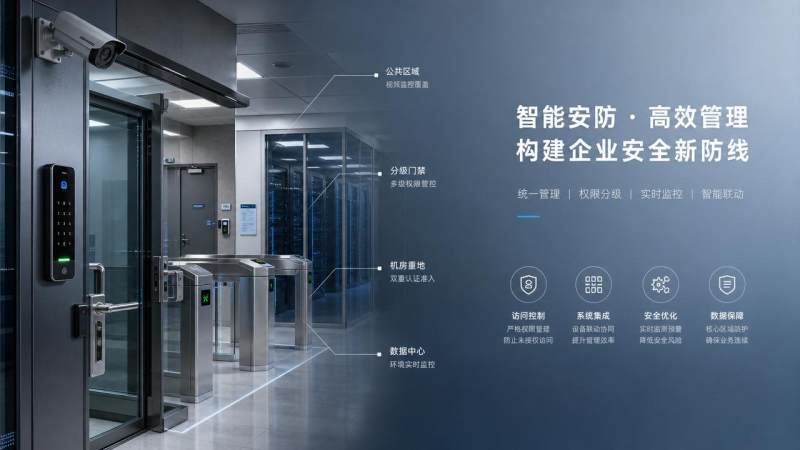
In modern facilities, security optimization can fail when access control upgrades focus only on hardware while overlooking policy gaps, user behavior, system integration, and compliance risks. For quality control and security management teams, these mistakes do more than reduce efficiency—they create hidden vulnerabilities that weaken protection outcomes. Understanding where optimization goes wrong is the first step toward building access control systems that are resilient, scalable, and aligned with evolving operational demands.
Across industrial campuses, logistics hubs, data rooms, hospitals, mixed-use buildings, and public infrastructure, access control is no longer a stand-alone door function. It is a layered control point tied to visitor management, video verification, alarm workflows, audit trails, cyber hygiene, and sometimes even optical conditions that affect camera-based identity checks. When security optimization is treated as a one-time hardware purchase instead of a full operational discipline, organizations often create a system that looks modern on paper but underperforms under daily pressure.
For quality control personnel and security managers, the practical question is not whether to upgrade, but how to avoid common design, procurement, and implementation mistakes. The sections below examine the failures that most often weaken modern access control, the warning signs that appear during deployment, and the actions that support stronger long-term outcomes.
Why Security Optimization Fails in Access Control Programs
Many organizations begin security optimization by replacing legacy readers, controllers, or locks. That step matters, but in most facilities it represents only 30% to 40% of the real risk picture. The remaining exposure usually sits in weak credential rules, inconsistent visitor workflows, delayed revocation, poor interdepartmental ownership, and a lack of verification between physical and digital identities.
Mistake 1: Treating Hardware Refresh as a Complete Strategy
A common error is assuming that newer readers, biometric devices, or smart locks automatically improve protection. In practice, a modern edge device installed on top of outdated approval logic still leaves exploitable gaps. If badge rights are reviewed only once every 12 months, if temporary staff retain permissions after contract completion, or if access zones are not mapped by risk level, the upgrade delivers limited value.
Quality teams should verify whether critical areas are segmented into at least 3 levels such as public, controlled, and restricted. Security managers should also check whether the system enforces time-based access, anti-passback where appropriate, and two-step authorization for high-value rooms. Without those controls, security optimization remains superficial.
Operational warning signs
- More than 1 credential type is used without a unified policy matrix.
- Access rights are approved by email rather than through a controlled workflow.
- Deactivation of terminated users takes longer than 24 hours.
- Door events are recorded, but alarm escalation steps are undefined.
Mistake 2: Ignoring User Behavior and Process Drift
Even well-specified systems fail when human behavior is excluded from planning. Doors are propped open for convenience, shared credentials become normal in shift environments, and contractors bypass reception when throughput pressure rises. In facilities with 2 or 3 shifts, process drift can appear within 60 to 90 days after commissioning if training and supervisory checks are weak.
Security optimization should therefore include behavior controls, not only devices. That means role-based induction, exception reporting, supervisor sign-off for unusual access windows, and monthly reviews of forced-open, held-open, and repeated denial events. A system that generates data but does not trigger corrective action is only partially optimized.
Mistake 3: Overlooking Integration Dependencies
Modern access control rarely operates alone. It often interacts with video management systems, intrusion alarms, fire panels, building management tools, HR databases, and visitor platforms. If these links are poorly specified, organizations face delayed event correlation, duplicate records, and blind spots during incident response. In high-traffic sites, even a 5-minute delay between badge revocation and system synchronization can become a meaningful security gap.
This issue is especially relevant where optical verification is used. Camera-based identity checks depend on lighting uniformity, image contrast, and positioning. If entrance illumination falls outside practical operating conditions, recognition accuracy drops, and operators may start overriding alerts. That is one reason platforms such as GSIM emphasize both physical security assurance and optical environment optimization: access quality is often influenced by more than the credential itself.
The table below shows how common optimization assumptions differ from actual operational requirements in modern facilities.
The main lesson is clear: security optimization fails when organizations optimize visible components first and governance components last. In access control, governance usually determines whether the system performs consistently after the first 30, 90, and 180 days of real use.
The Most Damaging Access Control Mistakes for Quality and Security Teams
Some mistakes are more harmful because they directly affect compliance, auditability, and operational continuity. For quality control teams, these errors can also compromise process validation and traceability. For security managers, they create conditions where incidents are harder to detect, investigate, and contain.
Weak Role Design and Excessive Privilege
Access groups are often built too broadly during fast deployment. A contractor may receive the same area permissions as a maintenance supervisor, or a night-shift worker may keep daytime logistics access that is no longer necessary. A practical rule is to review roles every 90 days in dynamic environments and every 180 days in stable sites. Least-privilege design is one of the most effective forms of security optimization because it reduces exposure without requiring major hardware changes.
Poor Visitor and Vendor Control
Many facilities secure employee credentials while leaving visitor management semi-manual. Temporary badges are issued with limited identity verification, escort policies vary by shift, and departure checks are inconsistent. In high-turnover construction, warehousing, and service environments, this gap can affect dozens of people per week. Visitor workflows should define pre-registration, ID check, zone limitation, time expiration, and badge return confirmation as 5 separate control points.
No Measurable Performance Thresholds
Security optimization becomes difficult to sustain when no operational thresholds are defined. Teams should know what counts as acceptable door release latency, offline controller duration, false denial frequency, credential revocation timing, and held-open alarm tolerance. For example, if alarm acknowledgement regularly exceeds 2 minutes in restricted zones, that is not a minor delay; it is a performance issue with direct security impact.
Key thresholds worth tracking
- Credential deactivation completed within 15 minutes to 4 hours, depending on risk class.
- Visitor badge expiration enforced automatically at end of approved window.
- Held-open door alarms investigated within 2 to 5 minutes for critical areas.
- Quarterly review of access groups and exception logs.
- Backup power and fail-state verification tested at least 2 times per year.
The following table can help procurement and operational teams align common mistakes with control actions and review frequency.
For many organizations, these actions are not expensive compared with controller replacement or infrastructure rewiring. Yet they often produce faster gains because they improve consistency, accountability, and traceability across the entire access chain.
How to Build a More Resilient Security Optimization Framework
A durable access control strategy should be built as a management framework rather than a device list. For quality and security leaders, that means linking technical specifications to risk classes, process ownership, and measurable service outcomes. A good framework usually includes 4 layers: policy, identity, system integration, and environmental reliability.
1. Start with a Risk-Zone Map
Before selecting readers or credentials, divide the facility into risk-based zones. A simple structure may use 3 categories, while complex sites may use 5 or more. Each zone should define who can enter, during which hours, with what authentication method, and under which supervision conditions. This is one of the strongest foundations for security optimization because it prevents overbuilding low-risk areas and underprotecting critical spaces.
2. Align Identity Governance with Real Staffing Patterns
Permanent employees, temporary workers, visitors, and third-party service teams should not pass through the same approval path. High-turnover operations may need daily or shift-based provisioning checks, while office environments may tolerate weekly synchronization. The important point is matching identity governance to actual workforce dynamics rather than to an idealized org chart.
3. Validate Lighting and Visual Conditions at Controlled Entries
This step is often missed. Where video verification, facial matching, license plate recognition, or optical analytics support access decisions, lighting conditions should be assessed during design and commissioning. Uneven illumination, backlight, glare, or low contrast can reduce verification reliability. In facilities that operate 24/7, day and night conditions should be tested separately, ideally across at least 2 to 3 operating scenarios.
This is where intelligence-led planning becomes valuable. GSIM’s cross-focus on global security policy and optical environment optimization is particularly relevant for teams evaluating modern entrances, public access points, and mixed-use infrastructure where visual performance affects control quality.
4. Build a 5-Step Implementation Sequence
A practical rollout sequence reduces the chance of fragmented deployment:
- Assess current state, including credentials, zones, exception logs, and fail modes.
- Define policy architecture, approval ownership, and risk tiers.
- Specify integration points with HR, video, alarms, and visitor tools.
- Pilot one high-traffic area for 2 to 4 weeks before site-wide release.
- Measure performance, retrain users, and adjust thresholds after 30 and 90 days.
Organizations that skip the pilot stage often discover user resistance, data mismatch, and door behavior problems too late. Even a limited pilot involving 1 entrance cluster and 20 to 50 users can reveal issues that would otherwise scale across the site.
Procurement, Compliance, and Long-Term Maintenance Considerations
Security optimization is weakened not only by design errors but also by procurement shortcuts and weak service planning. Buyers sometimes compare products by unit price alone, ignoring lifecycle support, firmware update practices, interoperability limits, and documentation quality. In regulated or high-scrutiny environments, these omissions can create future compliance pressure.
What Procurement Teams Should Ask Before Approval
- What is the expected service life of controllers, readers, and locking hardware under the site duty cycle?
- How are firmware updates managed, tested, and documented?
- Which integration protocols or APIs are supported today, and what are the upgrade limits?
- What is the fallback mode during network loss, power interruption, or database synchronization failure?
- How quickly can critical credentials be revoked across all connected nodes?
Compliance Is Not a Late-Stage Add-On
Electronic surveillance laws, data retention rules, contractor screening obligations, and incident documentation requirements vary by region and sector. A system that is technically functional may still expose the organization if logs are incomplete, retention periods are undefined, or access decision records cannot be reconstructed during an audit. Security managers should align legal review with system design at the start, not after commissioning.
Maintenance Discipline Sustains Real Performance
Long-term effectiveness depends on recurring checks. At minimum, teams should schedule quarterly log reviews, semiannual fail-safe and backup tests, annual policy recertification, and event-driven role cleanup after organizational changes. In harsh environments, reader cleanliness, cable integrity, enclosure condition, and door alignment may need inspection every 30 to 60 days.
When these maintenance routines are absent, the access control program slowly shifts from controlled security optimization to reactive troubleshooting. The difference is important: one approach manages risk by design, while the other waits for symptoms.
A Smarter Direction for Access Control Decisions
Modern access control is strongest when hardware, policy, identity governance, integration logic, and environmental conditions are planned as one system. The most damaging mistakes usually come from narrow optimization: replacing devices without redefining roles, digitizing credentials without tightening workflows, or expanding surveillance without checking compliance and optical reliability.
For quality control personnel and security management teams, better results come from structured review, measurable thresholds, phased implementation, and informed procurement. GSIM supports this decision process by connecting global policy intelligence, security assurance insight, and optical environment considerations that influence how real facilities perform under modern risk conditions.
If you are evaluating access control upgrades, reviewing weak points in an existing deployment, or planning a more resilient security optimization roadmap, now is the right time to compare policy, technology, and operating conditions together. Contact us to discuss your application, request a tailored solution path, or learn more about practical strategies for stronger access control performance.
The VitalSync Intelligence Brief
Receive daily deep-dives into MedTech innovations and regulatory shifts.