
Security
Security Risk Assessment Checklist for 2026
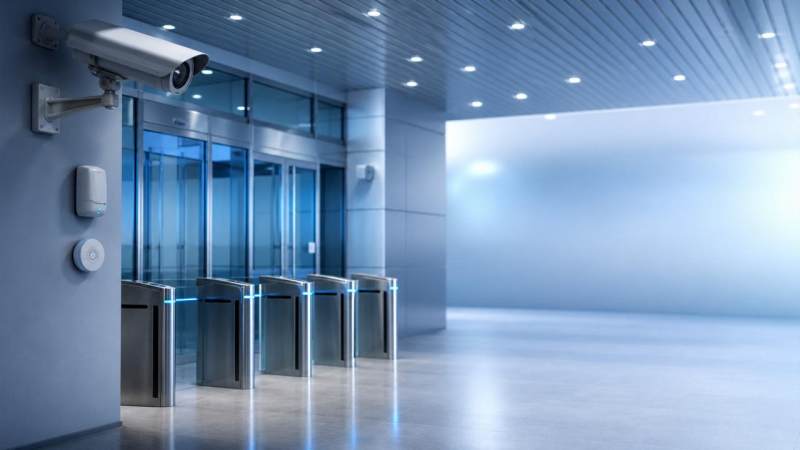
Security Risk Assessment Checklist for 2026
In 2026, every security risk assessment must address a faster, more connected threat landscape.
Physical protection, digital infrastructure, surveillance compliance, and lighting conditions now overlap in daily operations.
A practical checklist is no longer only a documentation tool. It is a decision framework for safer environments.
This guide supports clearer security risk assessment, stronger safeguards, and better alignment with evolving global standards.
Why Security Risk Assessment Is Changing in 2026
The 2026 security environment is shaped by urban digitalization, AI-enabled monitoring, and stricter rules for electronic surveillance.
Facilities, public areas, logistics networks, and construction sites rely on connected sensors, cameras, lighting, and access systems.
This convergence expands visibility, but it also increases exposure. A security risk assessment must now evaluate interdependent systems.
Weak lighting can reduce camera accuracy. Poor access control can weaken incident response. Data misuse can trigger compliance risk.
GSIM observes a clear shift from isolated inspections toward integrated assurance across protection, optics, data, and governance.
Trend Signals Reshaping the Checklist
A modern security risk assessment checklist should reflect real operational signals, not only generic facility requirements.
- AI vision is moving from passive recording to real-time anomaly detection.
- Visible Light Communication is entering smart infrastructure planning.
- Regulators are tightening rules around surveillance retention, consent, and auditability.
- Public safety projects demand clearer evidence of resilience and continuity.
- Optical environment quality is becoming measurable security performance.
These signals make security risk assessment more technical, more legal, and more connected to business continuity.
Key Drivers Behind the New Risk Landscape
These drivers show why security risk assessment cannot remain a static annual exercise.
It should become a living process that reacts to technology upgrades, policy changes, and incident intelligence.
Core Security Risk Assessment Checklist for 2026
1. Asset and Exposure Mapping
Begin each security risk assessment by identifying critical assets, exposed zones, sensitive data points, and operational dependencies.
- List buildings, equipment, entry points, control rooms, and storage areas.
- Map cameras, lighting systems, alarms, access terminals, and networked sensors.
- Identify zones with public access, restricted access, and mixed traffic.
- Record dependencies between power, communications, security devices, and emergency systems.
2. Threat Identification
A useful security risk assessment separates predictable threats from emerging threats.
- Review theft, intrusion, vandalism, workplace violence, sabotage, and unauthorized access.
- Assess drone activity, sensor tampering, identity misuse, and coordinated disruption.
- Check historical incidents, nearby crime patterns, and sector-specific risk intelligence.
- Include weather events, utility failure, civil unrest, and emergency evacuation constraints.
3. Vulnerability Review
The checklist should test how easily a threat could exploit weak procedures, weak visibility, or weak technology.
- Inspect doors, fences, locks, barriers, gates, and loading areas.
- Review blind spots, glare, shadows, and poorly illuminated transition zones.
- Test alarm response, camera coverage, access logs, and escalation procedures.
- Verify whether temporary worksites and remote assets receive equal protection.
4. Optical Environment and Lighting Conditions
In 2026, lighting is a security control, not only a utility function.
A security risk assessment should measure whether illumination supports recognition, navigation, deterrence, and camera analytics.
- Check illuminance levels for entrances, perimeters, corridors, parking zones, and emergency routes.
- Evaluate uniformity, color rendering, flicker, glare, and shadow depth.
- Confirm that lighting supports facial recognition, license plate capture, and human observation.
- Review backup lighting for power loss and emergency operations.
5. Surveillance Compliance and Data Governance
A security risk assessment must verify that monitoring capabilities remain lawful, proportionate, and auditable.
- Document camera purpose, field of view, retention period, and access authority.
- Review signage, consent requirements, privacy zones, and cross-border data rules.
- Restrict exports, screenshots, remote access, and unauthorized device pairing.
- Maintain audit logs for evidence handling and investigative review.
6. Control Effectiveness Testing
Controls should not be accepted only because they exist. They must be tested under realistic conditions.
- Run access attempts using expired badges, visitor credentials, and tailgating scenarios.
- Test alarms during low staffing, bad weather, and high traffic periods.
- Compare camera performance during daylight, night, rain, fog, and glare conditions.
- Review response time, command clarity, and incident closure quality.
Business Impact Across Operations
The outcome of security risk assessment affects investment planning, compliance readiness, insurance discussions, and operational continuity.
When risks are scored consistently, corrective actions become easier to prioritize and justify.
- Facilities gain clearer protection priorities and fewer unresolved blind spots.
- Project planning gains better technical specifications for surveillance and lighting.
- Compliance workflows gain stronger evidence for legal and audit review.
- Emergency planning gains better assumptions about visibility, access, and response limits.
Poor assessment has the opposite effect. It creates false confidence, duplicated spending, and delayed response during incidents.
Priority Areas to Watch in 2026
A forward-looking security risk assessment should focus on areas where change is fastest and consequences are highest.
- Integration between cameras, access control, lighting, alarms, and analytics platforms.
- Legal defensibility of surveillance practices and data retention decisions.
- Performance of optical systems under real environmental conditions.
- Cyber-physical exposure created by connected security devices.
- Vendor continuity, firmware support, and spare parts availability.
- Resilience during outages, evacuations, public events, and extreme weather.
These priorities help transform security risk assessment from a checklist exercise into a practical resilience system.
Risk Scoring and Decision Guidance
Scoring should combine likelihood, impact, detectability, compliance exposure, and recovery difficulty.
This approach makes security risk assessment more transparent and easier to defend during reviews.
How GSIM Supports Better Assessment Decisions
The Global Security & Illumination Matrix connects security assurance with optical environment optimization.
Its Strategic Intelligence Center interprets policy changes, technology trends, and procurement signals across global markets.
For security risk assessment, this intelligence helps align safeguards with international standards and emerging technical expectations.
GSIM’s mission is to connect protection demand with precision supply through transparent, professional, standards-based knowledge.
Its guiding idea remains clear: Visioning Risks, Illuminating the Future.
Practical Next Steps for 2026 Readiness
A strong security risk assessment begins with disciplined preparation and ends with measurable improvement.
- Update the asset map before reviewing threats or controls.
- Validate lighting and surveillance performance under real conditions.
- Review compliance duties before expanding monitoring coverage.
- Prioritize fixes by risk level, not convenience.
- Retest high-risk controls after corrective action is completed.
- Use trend intelligence to refresh assumptions throughout the year.
The best checklist is not the longest checklist. It is the one that produces decisions, accountability, and verified resilience.
In 2026, security risk assessment should illuminate hidden exposure before incidents reveal it.
Start with the checklist, connect it to operational evidence, and turn every finding into a tracked improvement.
The VitalSync Intelligence Brief
Receive daily deep-dives into MedTech innovations and regulatory shifts.