
Security
Emerging Security Technologies Reshaping Alarm Systems in 2026
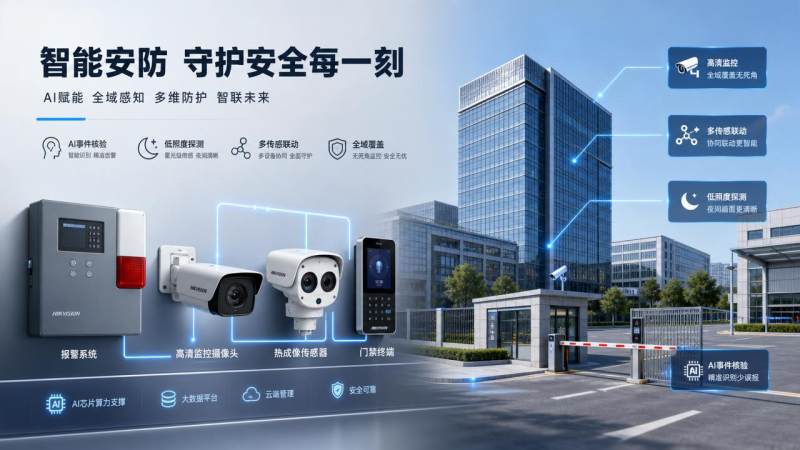
As urban safety upgrades accelerate worldwide, emerging security technologies are redefining how alarm systems detect, respond, and integrate with digital infrastructure in 2026. From AI-driven monitoring to optical communication and compliance-led system design, this shift is creating smarter, faster, and more adaptive protection frameworks. For information researchers, understanding these trends is essential to evaluating future-ready security strategies and global market direction.
Why scenario differences matter more than technology labels
When researchers evaluate emerging security technologies, the biggest mistake is to treat all alarm systems as if they solve the same problem. In reality, a logistics park, a hospital campus, a smart construction site, and a municipal transit hub face very different risk patterns, response timelines, lighting conditions, legal duties, and integration requirements. The same AI analytics engine may perform well in one location and create false alarms, privacy concerns, or deployment friction in another.
This is why 2026 alarm modernization is increasingly scenario-led. Buyers are no longer asking only which technologies are new. They are asking which emerging security technologies fit high-traffic public areas, low-light industrial perimeters, mixed indoor-outdoor facilities, or regulation-heavy environments. For a research audience, the value lies in mapping each technology to business context: what risk it reduces, what infrastructure it depends on, and what operational trade-offs it creates.
Platforms such as GSIM are especially relevant in this transition because they connect policy, optical environments, and physical security assurance. That linkage matters: a technically advanced alarm layer is not future-ready if it cannot align with compliance frameworks, lighting realities, or cross-border procurement expectations.
The main application scenarios reshaping alarm systems in 2026
The practical impact of emerging security technologies becomes clearer when viewed through common deployment environments. In 2026, five scenarios stand out because they combine high upgrade demand with strong pressure for smarter alarms.
1. Smart commercial buildings and mixed-use complexes
These properties need alarm systems that do more than trigger sirens. They must coordinate visitor flow, access control, elevator logic, fire interfaces, after-hours intrusion alerts, and tenant safety expectations. Here, emerging security technologies often center on AI-enabled anomaly detection, sensor fusion, and cloud-based event management. The goal is not maximum sensitivity, but accurate filtering of routine activity versus suspicious behavior.
2. Public safety infrastructure and transport environments
Stations, terminals, tunnels, and civic facilities require wide-area awareness, rapid escalation, and resilience under heavy foot traffic. Alarm systems in these settings increasingly rely on edge analytics, thermal sensing, and networked incident routing. Technologies that reduce latency and continue working during bandwidth stress are especially valuable.
3. Construction sites and temporary project zones
This is one of the most dynamic use cases. Risks change weekly as site boundaries, materials, power access, and workforce density shift. Mobile cameras, battery-backed sensors, remote notification platforms, and low-light detection technologies are often more important than permanent infrastructure. For this scenario, adaptability matters more than architectural elegance.
4. Industrial parks and logistics facilities
Warehouses and production zones need layered detection across perimeters, loading docks, restricted rooms, and outdoor storage areas. False alarms caused by weather, vibration, vehicles, or lighting fluctuations can be costly. That is why emerging security technologies here frequently emphasize multi-sensor verification, thermal imaging, machine vision, and automated zone-based response.
5. Healthcare, education, and regulated campuses
These environments place special pressure on privacy, duty of care, selective monitoring, and emergency coordination. Advanced alarm systems may support behavioral alerting, lockdown workflows, occupancy-aware routing, and tamper-resistant communications, but only if governance rules are clear. In this scenario, compliance and human factors are often as critical as detection quality.
Scenario comparison: what each environment should prioritize
The table below helps information researchers compare how emerging security technologies align with different alarm system deployment contexts.
Which technologies are most relevant by use case
Not every innovation deserves equal attention. For researchers tracking emerging security technologies in alarm systems, the strongest signals in 2026 can be grouped into practical use-case categories.
AI-driven event verification
This is highly relevant where operator fatigue and nuisance alarms are common. Commercial properties, campuses, and logistics yards benefit when alarms are paired with visual or behavioral verification. The real value is not just automation, but prioritization of events that deserve human intervention.
Optical sensing and low-light performance
Since many alarms fail in weak, changing, or overly bright conditions, optical environment optimization has become a strategic differentiator. Facilities with night operations, mixed indoor-outdoor transitions, or reflective surfaces should assess how emerging security technologies handle illumination variance. This is one area where GSIM’s linkage between security assurance and optical intelligence is especially useful.
Visible Light Communication and secure signaling pathways
VLC is still selective rather than universal, but it is increasingly relevant in settings that value localized transmission, electromagnetic sensitivity management, or integrated lighting-security infrastructure. It is more likely to appear in smart buildings, advanced public facilities, and experimental urban safety projects than in basic standalone alarm deployments.
Edge intelligence for time-critical response
When response speed matters, edge-based processing often outperforms cloud-reliant architectures. Industrial parks, transport facilities, and remote sites benefit from local decision logic that can trigger alerts even if connectivity degrades. Researchers should examine not only detection performance but also fail-safe behavior.
Compliance-aware system design
This may be the least visible but most decisive trend. Emerging security technologies are increasingly assessed through legal, procurement, and data-governance standards. In many multinational or public-sector contexts, non-compliant solutions are effectively unusable regardless of technical merit.
How demand differs by organization type and project scale
The same scenario can produce different alarm requirements depending on the buyer profile. A city authority, a property operator, a multinational manufacturer, and a project-based contractor do not evaluate emerging security technologies in the same way.
- Public-sector buyers often prioritize interoperability, auditability, resilience, and compliance with procurement standards.
- Commercial property groups usually focus on tenant experience, integration with building systems, and cost-efficient remote management.
- Industrial operators care most about operational continuity, environmental robustness, and reduction of false dispatches.
- Temporary project owners need flexible deployment, rapid commissioning, and easy relocation.
Scale also changes the decision logic. Smaller sites may gain more from modular, remotely managed alarm upgrades than from fully converged platforms. Large campuses, by contrast, can justify advanced orchestration, multi-layer analytics, and standards-based integration because the operational savings accumulate over time.
Practical fit criteria before choosing emerging security technologies
Before recommending or shortlisting any alarm innovation, researchers should verify a few scenario-specific conditions. These checks help separate genuinely suitable solutions from trend-driven overselection.
- What are the dominant triggers: intrusion, occupancy anomalies, asset movement, or environmental hazards?
- How stable is the optical environment across day, night, weather, and interior transitions?
- Is continuous connectivity available, or must the alarm system act locally during outages?
- What legal limits apply to recording, analytics, retention, and cross-border data handling?
- How fast must operators respond, and what downstream actions should alerts trigger automatically?
- Will the environment remain stable, or will site layout, occupancy, and access rules change frequently?
Common misjudgments in scenario-based alarm planning
A recurring issue in alarm modernization is assuming that more intelligence always means better protection. In many cases, the gap lies not in technical capability but in poor scenario fit.
One misjudgment is deploying advanced AI analytics without correcting lighting and camera placement. Another is copying public infrastructure logic into private facilities that lack the staffing or governance to manage complex alerts. A third is underestimating compliance barriers, especially when emerging security technologies process identifiable data or depend on offshore cloud architectures. Researchers should also watch for “integration inflation,” where multiple systems are connected without a clear response workflow, creating more noise instead of better decisions.
The safest evaluation approach is to compare technologies by operational outcome: fewer false alarms, faster verified response, better coverage in difficult optical conditions, and stronger legal defensibility.
FAQ: what information researchers often need to clarify
Are emerging security technologies only relevant for large smart-city projects?
No. While large public programs accelerate adoption, many of the most practical upgrades appear in mid-scale facilities such as warehouses, office clusters, schools, and active construction sites. The deciding factor is scenario need, not prestige level.
Which scenario gains the fastest return from smarter alarm systems?
High-false-alarm environments usually benefit first. Logistics yards, mixed-use buildings, and temporary sites often see immediate value from better verification, remote visibility, and improved low-light detection.
How should researchers compare vendors or solution directions?
Compare them by scenario evidence: supported environments, compliance alignment, optical performance, integration depth, edge capability, and measurable response outcomes. Trend language alone is not enough.
A scenario-first way to track the 2026 market
For anyone studying emerging security technologies, the most useful lens in 2026 is not simply innovation intensity, but deployment suitability. Alarm systems are becoming more connected, more intelligent, and more responsive, yet their value still depends on environment, governance, and use-case alignment. A smart building may benefit from AI-assisted anomaly detection, a logistics perimeter may need thermal confirmation, and a regulated campus may prioritize secure workflows over experimental features.
That is where structured intelligence becomes critical. By combining policy interpretation, market movement, and optical-security insight, GSIM helps researchers move from generic trend awareness to scenario-based judgment. The next step is to map your target environment, define the risk and response logic, and then evaluate which emerging security technologies are truly fit for purpose.
The VitalSync Intelligence Brief
Receive daily deep-dives into MedTech innovations and regulatory shifts.