
Security
Optical Monitoring for Faster Intrusion Detection
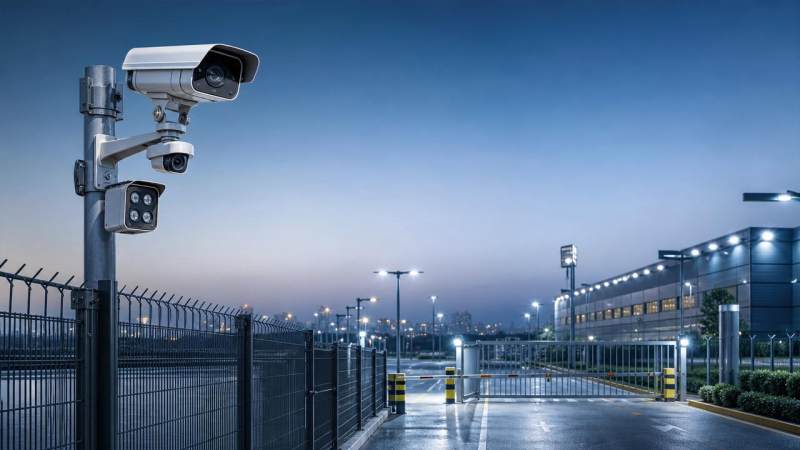
As digital infrastructure and urban safety systems evolve, optical monitoring is becoming a critical tool for faster intrusion detection and more reliable risk assessment. For technical evaluators, understanding how optical sensing, AI-driven analytics, and compliance-ready surveillance frameworks work together is essential to selecting solutions that improve response speed, reduce false alarms, and support resilient physical security strategies.
Why optical monitoring matters when faster intrusion detection is the priority
Technical evaluators are often asked to solve a difficult equation: detect intrusions earlier, reduce nuisance alarms, fit within budget, and stay aligned with evolving surveillance regulations. In mixed environments such as data centers, transport nodes, municipal facilities, smart construction sites, and logistics yards, traditional perimeter tools alone may not provide enough visual context or environmental awareness. This is where optical monitoring adds measurable value.
Optical monitoring uses visible, infrared, low-light, and image-processing methods to identify movement, boundary crossing, abnormal behavior, light-level changes, or optical anomalies. When integrated with analytics, access control, and event management platforms, it can shorten verification time and help operators distinguish a real intrusion from weather, wildlife, shadows, glare, or authorized maintenance activity.
For GSIM, the discussion is broader than camera hardware. Its Strategic Intelligence Center connects security policy interpretation, optical technology trends, and procurement insight. That matters to evaluation teams because a faster system is not enough if it creates compliance friction, weak interoperability, or expensive rework during deployment.
- Earlier visual confirmation for perimeter breaches, tailgating, fence climbing, unauthorized entry, and loitering events.
- Better alarm qualification by combining optical signals with AI vision, sensor fusion, and rule-based event filtering.
- Improved design choices for low-light zones, reflective surfaces, harsh weather corridors, and temporary project sites.
What technical evaluators should examine before selecting an optical monitoring solution
Procurement challenges usually begin with incomplete requirement mapping. Many teams compare devices by resolution alone, then discover too late that lens choice, scene contrast, illumination design, analytics maturity, and network architecture have greater impact on intrusion detection speed. A technical review should therefore start with the environment, not the brochure.
Core evaluation dimensions
- Detection objective: Identify whether the goal is early warning, evidence capture, forensic review, or autonomous trigger generation. Different goals require different optical setups.
- Environmental profile: Assess day-night variation, fog, dust, rain, backlighting, vibration, and ambient light pollution. Optical monitoring performance changes significantly under these conditions.
- Scene geometry: Measure stand-off distance, field of view, blind spots, fence lines, gate areas, and vertical surfaces that create occlusion.
- Analytics behavior: Review false alarm handling, object classification logic, motion sensitivity, event thresholds, and retraining needs.
- Compliance fit: Confirm data retention, privacy masking, audit logging, and electronic surveillance policy alignment across relevant jurisdictions.
The table below helps technical evaluators align optical monitoring requirements with practical intrusion detection outcomes instead of generic feature claims.
A strong evaluation framework turns optical monitoring into a decision tool rather than a specification checklist. This approach is especially valuable in cross-sector projects where public safety, critical infrastructure, and commercial operations intersect.
Which optical monitoring architectures fit different application scenarios?
Not all intrusion detection environments require the same optical architecture. Some sites need wide-area awareness. Others need precise recognition at controlled boundaries. In practice, technical evaluators should match architecture to risk pattern, not simply to site size.
Scenario-based selection logic
The following comparison highlights how optical monitoring strategies differ across common environments in the broader security and infrastructure market.
This comparison shows why a single device type rarely solves every problem. Optical monitoring works best when the imaging method, placement plan, and analytics profile are tailored to the operational pattern of each zone.
When hybrid optical monitoring is the better choice
In many projects, hybrid design provides the best balance. A fixed visible-light camera may support broad situational awareness, while low-light or infrared support strengthens nighttime detection. Analytics then filter events by object type, movement direction, or restricted area policy. This layered model often improves response speed without overburdening operators.
How to compare optical monitoring options beyond resolution and price
Technical evaluators are frequently pressured to compare solutions quickly, yet the cheapest visible specification may create the highest lifecycle cost. A low upfront price can lead to extra poles, more recording bandwidth, constant alarm review, or added lighting retrofits. Better comparison requires looking at total operational fit.
Decision points that influence total value
- Determine whether the solution is detection-led or evidence-led. A system optimized for forensic image detail may not be configured for earliest intrusion alerting.
- Compare alarm workflow efficiency. Faster intrusion detection depends on event prioritization, alert routing, and the operator interface as much as on the camera itself.
- Review illumination dependency. Some optical monitoring setups perform well only when site lighting is upgraded, which changes both budget and deployment schedule.
- Check maintenance burden. Lens cleaning frequency, firmware update process, and environmental hardening affect sustained performance.
GSIM’s Commercial Insights perspective is useful here because procurement trends reveal where buyers commonly underestimate integration work, environmental adaptation, and policy mapping. Those hidden variables often decide whether a deployment remains efficient after handover.
What compliance and standards questions should not be ignored?
Optical monitoring for intrusion detection is not only a technical purchase. It is also a governance decision. Cross-border infrastructure, public-facing projects, and critical operations may face different rules on surveillance legality, recording retention, privacy controls, and auditability. Technical evaluators need early input from legal, security, and operations stakeholders.
Practical compliance checklist
- Verify whether video capture zones intersect public areas, worker rest areas, or third-party property lines that require special handling.
- Confirm logging and audit features for alarm actions, operator review, and evidence export.
- Check whether privacy masking, retention controls, and role-based access are available and manageable at scale.
- Review interoperability with policy-driven incident management and documentation workflows.
GSIM’s Strategic Intelligence Center is positioned for this exact challenge. By linking latest sector news, international compliance interpretation, and optical technology evolution, it helps evaluation teams reduce the gap between system capability and regulatory acceptability. That is particularly important when projects span public safety, construction technology, and smart city infrastructure.
Common mistakes that slow intrusion detection instead of improving it
Many optical monitoring projects fail not because the technology is weak, but because assumptions are wrong. Faster detection depends on the full chain from image capture to alarm handling to response procedure.
Frequent evaluation mistakes
- Assuming higher resolution automatically means better intrusion detection. Without correct lensing and scene design, resolution alone may not improve usable detection.
- Testing only in daytime conditions. Many failures appear at dusk, under glare, or in low-contrast weather conditions.
- Treating analytics as plug-and-play. Event rules often need tuning based on site traffic, seasonal changes, and security policy.
- Ignoring illumination planning. Optical monitoring and lighting strategy should be evaluated together, especially in large outdoor zones.
- Buying for isolated zones without considering command integration. Delayed handoff across systems can erase the benefit of faster sensing.
A disciplined pilot test can expose these issues early. For technical evaluators, a short field validation with defined alarm scenarios is usually more revealing than a long feature presentation.
FAQ: practical questions technical evaluators ask about optical monitoring
How do I know if optical monitoring is suitable for my site?
Optical monitoring is suitable when the site needs visual confirmation, event context, or behavior-aware intrusion detection. It is especially useful where access routes are complex, perimeter length is large, or human patrol coverage is inconsistent. Suitability increases when operators need to distinguish between people, vehicles, weather effects, and authorized activity in near real time.
What should be prioritized during procurement: camera quality or analytics?
Neither should be isolated. Camera performance determines whether the scene is usable, while analytics determine whether events are actionable. If the site is low light or visually complex, imaging quality may deserve early priority. If operator workload is the main pain point, analytics quality and workflow integration may produce faster operational gains.
Can optical monitoring reduce false alarms?
Yes, but only when detection zones, object rules, environmental filtering, and alarm logic are configured properly. False alarms are reduced by combining optical data with context-aware analytics, lighting design, and system integration. Poor deployment can do the opposite, so tuning and validation are essential.
How long does implementation usually take?
Implementation time depends on site readiness, network availability, pole or mounting work, compliance review, and software integration. A compact pilot can move quickly, while multi-zone or multi-site programs take longer because they involve environmental testing, policy approval, and operations training. Early requirement clarity is the best way to reduce delays.
Where optical monitoring is heading next
The next phase of optical monitoring is not just sharper imaging. It is the fusion of AI vision, contextual decision logic, better optical environment design, and communication-aware infrastructure. GSIM’s Evolutionary Trends lens is relevant here, particularly as Visible Light Communication, intelligent sensing, and policy-aware surveillance frameworks continue to converge.
For technical evaluators, this means future-ready planning should include upgrade pathways, software extensibility, and data governance from the start. Systems selected only for current compliance or current lighting conditions may become costly to adapt as urban safety programs and digital infrastructure standards evolve through 2026 and beyond.
Why choose GSIM for optical monitoring decision support
GSIM supports technical evaluators who need more than vendor claims. Its value lies in connecting global physical security assurance, optical environment optimization, compliance interpretation, and commercial insight into one decision-support framework. That combination helps teams evaluate optical monitoring for faster intrusion detection with greater clarity and less procurement risk.
If you are comparing options for a smart construction site, public safety upgrade, logistics perimeter, or digital infrastructure facility, GSIM can help structure the conversation around the issues that matter most to technical review teams.
- Parameter confirmation for optical monitoring layouts, low-light expectations, and analytics scope.
- Product and solution selection guidance based on scenario, risk pattern, and integration requirements.
- Delivery timeline discussion for pilot deployment, staged rollout, or temporary-to-permanent site transitions.
- Compliance and certification direction for surveillance policy alignment, documentation planning, and audit readiness.
- Sample support, quotation communication, and custom solution review for mixed-risk environments.
When the goal is faster intrusion detection with fewer blind spots in policy, procurement, and performance, GSIM offers a more informed path forward: Visioning Risks, Illuminating the Future.
- physical security assurance
- optical environment optimization
- digital infrastructure
- strategic intelligence center
- optical technology
- electronic surveillance
- AI vision
- Visible Light Communication
- procurement trends
- smart construction sites
- risk assessment
- sector news
- evolutionary trends
- commercial insights
- optical sensing
- optical monitoring
The VitalSync Intelligence Brief
Receive daily deep-dives into MedTech innovations and regulatory shifts.