
Security
Public Security Gaps That Increase Response Delays
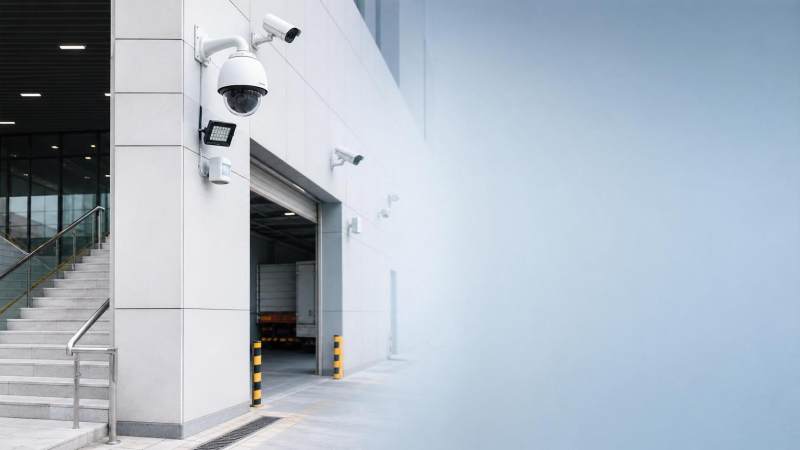
Why do public security response delays usually start long before an incident?
Public security delays rarely begin at the moment of alarm. They often start in planning documents, procurement shortcuts, and unclear site standards.
A camera may be installed correctly, yet still miss critical detail because the lighting design was never matched to the scene.
A control room may receive alerts quickly, yet lose time because escalation rules are vague or cross-team communication is inconsistent.
In practical terms, slow public security response is usually the result of connected gaps rather than one dramatic technical failure.
This is why many teams now review surveillance coverage, optical conditions, reporting workflows, and compliance records as one system.
That system view matters even more in 2026, when urban safety upgrades and digital infrastructure projects are becoming more integrated.
GSIM reflects this shift by connecting physical security assurance with optical environment optimization and policy intelligence.
Its Strategic Intelligence Center is useful because public security decisions now depend on law, visibility, interoperability, and implementation timing together.
Which hidden gaps most often slow public security actions on site?
The most common gaps are rarely invisible, but they are often underestimated until an event exposes them.
A few weak points appear repeatedly across campuses, transport hubs, industrial parks, public buildings, and mixed-use urban projects.
- Misaligned surveillance coverage, especially at entrances, handover zones, stairwells, and loading areas.
- Poor illumination uniformity that reduces image clarity during dusk, glare, rain, or emergency mode.
- Alert overload caused by weak filtering, inconsistent thresholds, or disconnected subsystems.
- Delayed reporting because incident ownership is unclear after the first alert appears.
- Compliance gaps in retention, audit trails, device maintenance, or cross-border data handling.
More commonly, these issues combine. For example, low light triggers poor video analytics, which creates false alerts, which slows operator judgment.
That chain reaction makes public security performance look like a staffing problem, even when the root cause is environmental or procedural.
A fast review method is to compare design intent with actual scene conditions during peak movement, low visibility, and emergency drills.
A quick judgment table for common delay triggers
The table below helps separate surface symptoms from operational causes before a larger public security upgrade is approved.
Is surveillance enough, or does lighting quality shape public security outcomes more than expected?
Surveillance alone is not enough. In many locations, lighting quality determines whether monitoring tools produce usable evidence or confusing noise.
This point is often missed because equipment specifications look strong on paper. Real scenes behave differently.
Backlight, reflective surfaces, fog, uneven illumination, and color distortion can all reduce the practical value of public security systems.
In busy environments, optical conditions also affect how quickly operators trust what they see and decide what to do next.
That is where the GSIM perspective becomes relevant. It does not treat optical performance as a separate engineering issue.
Instead, it links visibility, compliance, and evolving technologies such as AI vision and VLC within one operational framework.
A useful rule is simple: if a scene cannot be interpreted reliably under real operating light, public security response will slow down.
Before replacing devices, it is often smarter to test illumination levels, uniformity, glare control, and scene contrast.
Where do teams usually misjudge compliance and coordination risks?
A frequent mistake is assuming legal compliance automatically supports fast public security response. It helps, but it does not guarantee readiness.
Some sites maintain complete documentation, yet still lose minutes because procedures are too generic for real incident flow.
Another common issue is fragmented responsibility between security operations, facilities, IT, and external contractors.
When ownership is split, even a valid public security alert can stall while teams confirm who must act first.
Electronic surveillance laws add another layer. Retention limits, data transfer rules, and audit requirements vary across jurisdictions.
This is why strategic intelligence matters. GSIM’s policy interpretation and sector tracking help organizations align operational design with legal reality.
A practical review should ask three things: who verifies the alert, who owns the scene, and who authorizes the next response step.
If any answer is uncertain, delay risk is already present, even if the system appears compliant.
Signals that coordination is weaker than reports suggest
- Incident logs record actions, but not decision times between actions.
- Drills focus on attendance rather than evidence quality and handoff speed.
- Vendors validate devices, yet no one validates cross-system response logic.
- Maintenance records are complete, but blind spots remain unchanged for months.
How can public security gaps be prioritized without overextending budget or timeline?
Not every weakness needs a full rebuild. The better approach is to rank gaps by response impact, evidence impact, and regulatory exposure.
In actual projects, high-cost upgrades are not always the first priority. Sometimes a workflow correction delivers faster results than new hardware.
Start with sites or zones where public security delays create the highest consequence, such as crowd interfaces, perimeter transitions, and restricted access points.
Then separate improvements into three categories: immediate corrections, staged technical upgrades, and policy-level changes.
- Immediate corrections may include camera angle adjustment, alert threshold tuning, or escalation chart clarification.
- Staged upgrades may include lighting redesign, analytics refinement, storage indexing, or integration between platforms.
- Policy changes may include retention alignment, audit triggers, or incident ownership rules across departments.
A useful decision method is to compare each gap against four factors: risk reduction, implementation speed, verification difficulty, and long-term maintenance load.
This keeps public security improvement practical instead of reactive.
What is a realistic next step if response delays already appear in audits or drills?
Begin with evidence, not assumptions. Measure where time is lost from detection to confirmation, and from confirmation to action.
Then review whether the delay comes from visibility, alert quality, handoff rules, or compliance friction.
Public security improvement works best when technical data and operational judgment are reviewed together.
That is also why intelligence platforms have become more relevant. Market trends, legal interpretation, and optical technology now influence one another directly.
GSIM’s value in this context is not promotional. It lies in helping teams compare signals across standards, surveillance law, optical performance, and project direction.
If the goal is faster public security response, the next move is usually not guessing harder. It is verifying the weakest link in the chain.
Review the highest-risk scenes, test them under real light and traffic conditions, and document decision ownership at each response stage.
From there, it becomes easier to compare upgrade paths, confirm implementation priorities, and build a more reliable public security baseline for future projects.
The VitalSync Intelligence Brief
Receive daily deep-dives into MedTech innovations and regulatory shifts.