
Security
Safety Technology Upgrades That Reduce False Alarms
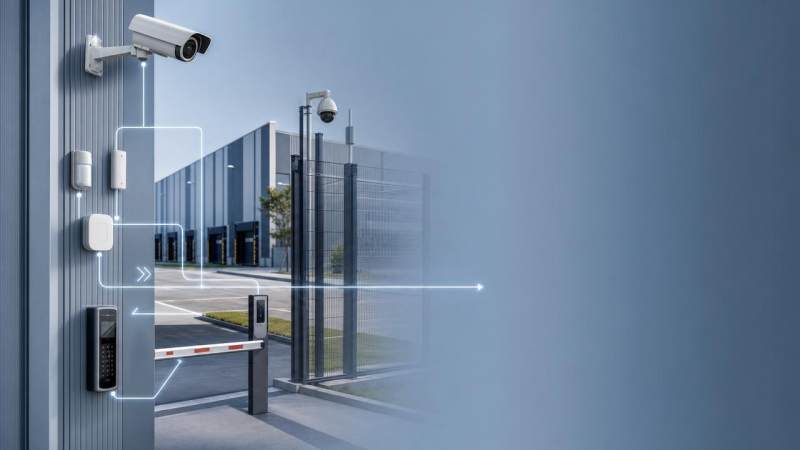
False alarms drain resources, disrupt operations, and weaken trust in critical systems. For quality control teams and safety managers, upgrading safety technology is no longer optional—it is essential for improving response accuracy and maintaining compliance. This article explores practical technology upgrades that reduce nuisance alerts, strengthen situational awareness, and help organizations build more reliable, standards-aligned protection strategies.
Why false alarms remain a costly problem across mixed-use operations
In comprehensive industry environments, false alarms rarely come from one weak device alone. They usually emerge from a chain of issues: poor sensor placement, unstable lighting, disconnected systems, outdated analytics, inconsistent maintenance, and weak alarm verification workflows.
For quality control personnel, every nuisance alert creates inspection noise. For safety managers, repeated false triggers erode team discipline, slow emergency response, and complicate audit readiness. Over time, staff begin to treat alarms as routine disturbance instead of actionable signals.
This is why modern safety technology should be evaluated as a system capability rather than as a single product feature. The most effective upgrades reduce unnecessary activations while improving evidence quality, operator confidence, and regulatory traceability.
- Operations waste time investigating non-events, especially across warehouses, public facilities, campuses, construction zones, and utility spaces.
- Maintenance teams spend budget on repeated dispatches instead of preventive optimization and lifecycle planning.
- Audit and compliance records become harder to defend when alarm logs show excessive noise, incomplete video evidence, or inconsistent escalation steps.
Which safety technology upgrades reduce false alarms most effectively?
Not every upgrade delivers the same operational value. The strongest reductions in false alarms usually come from layered improvements that connect sensing, imaging, analytics, communication, and verification into one governed decision chain.
1. Multi-sensor detection instead of single-point triggering
A single motion detector can be affected by heat shifts, dust, vibration, or passing machinery. A multi-sensor setup combines motion, thermal patterns, acoustic cues, door status, occupancy logic, or environmental inputs before elevating an alert.
This approach is especially useful in facilities where forklifts, ventilation, reflective surfaces, and temporary barriers create frequent signal ambiguity. Safety technology becomes more selective because alarm logic depends on correlation, not isolated activity.
2. AI video analytics with scene-aware filtering
Conventional motion-based video alerts generate nuisance events from shadows, insects, headlight glare, or weather movement. AI-enabled analytics can distinguish people, vehicles, perimeter crossings, loitering patterns, and direction of travel with much higher relevance.
The key is not simply “adding AI.” Teams should validate whether analytics support scene calibration, exclusion zones, object classification confidence thresholds, and daylight-to-night transition stability. Poorly tuned analytics can still produce unnecessary alerts.
3. Optical environment optimization for cleaner detection
Lighting is a major but often ignored cause of unreliable alarm behavior. Uneven illumination, overexposure, deep shadow zones, and backlighting reduce the quality of machine vision and human review. Upgrading optical conditions improves both detection accuracy and post-event verification.
This is where GSIM’s focus on optical environment optimization becomes highly practical. Better visibility does not only improve image quality; it lowers analytical confusion and supports more stable safety technology performance in real operating conditions.
4. Alarm verification workflows linked to video and access data
An alarm that cannot be verified quickly still creates delay, even if detection is technically correct. Integrated workflows combine intrusion signals with nearby video clips, badge events, door states, and time-based access rules. Operators can then validate intent before dispatching response.
For safety managers, this upgrade reduces escalation fatigue. For quality teams, it creates a cleaner event history that supports incident review, root-cause analysis, and process correction.
5. Edge processing and network resilience
Some false alarms are actually communication faults, delayed packets, or central server interpretation issues. Edge-based processing allows local filtering and event prioritization before data reaches the control layer. This can reduce duplicate alarms and improve continuity during bandwidth fluctuation.
How different upgrades compare in day-to-day safety technology performance
The table below compares common safety technology upgrades by false alarm impact, operational fit, and implementation complexity. This helps procurement teams avoid investing in visible features that do not solve the real source of nuisance alerts.
A clear pattern emerges: the best safety technology upgrades do not work in isolation. False alarm reduction improves fastest when detection quality, lighting quality, and response verification are designed as one operational stack.
What should quality control teams and safety managers evaluate before buying?
Buying decisions often fail because teams compare device specifications without reviewing alarm history, environmental conditions, and workflow needs. A lower-cost sensor can become more expensive than an advanced system if it generates repeated investigations and staff overtime.
A practical procurement checklist
- Map current false alarm sources by location, time band, environmental trigger, and response outcome.
- Separate detection faults from visibility faults, network faults, and human workflow faults.
- Check whether the safety technology supports configurable logic rather than fixed default rules.
- Review standards exposure, including data handling, video surveillance policy, and installation safety requirements relevant to your region.
- Ask how event evidence is stored, exported, and used for internal audit or insurer review.
- Confirm whether the vendor or advisory partner can support calibration after installation, not just equipment delivery.
For organizations operating across regions or mixed asset types, GSIM adds value by connecting procurement evaluation with policy interpretation, technology trend analysis, and commercial insight. That reduces the risk of selecting solutions that look modern but are misaligned with site reality or compliance expectations.
The next table summarizes core purchasing criteria for safety technology when the goal is measurable false alarm reduction rather than simple hardware replacement.
Procurement decisions improve when buyers ask operational questions instead of product-only questions. The right safety technology is the one that lowers investigation burden and improves action quality under real site conditions.
How to implement upgrades without disrupting operations
Implementation should start with data, not assumptions. A phased rollout lets teams identify the highest-noise zones first and measure whether each safety technology change actually reduces nuisance alerts.
Recommended rollout sequence
- Audit alarm logs from the last three to six months and categorize by root cause.
- Run a site survey covering detector position, camera angle, lighting distribution, and environmental interference.
- Pilot one high-noise zone with upgraded analytics, optical adjustments, and verification workflow integration.
- Compare pre- and post-upgrade metrics such as false alert rate, operator review time, and dispatch reduction.
- Expand only after calibration rules, escalation roles, and evidence retention practices are stable.
This staged approach is useful when budgets are limited or when facilities cannot tolerate full-system downtime. It also gives quality control teams a cleaner basis for validating whether performance improvements are linked to hardware, configuration, or procedural change.
What standards and compliance factors should not be overlooked?
False alarm reduction is not only an efficiency goal. It also affects legal defensibility, monitoring integrity, and reporting discipline. Depending on the application, organizations may need to consider surveillance law, workplace safety obligations, electrical installation practice, cybersecurity controls, and data retention rules.
A useful principle is this: if a system can trigger a response, it should also support traceable justification. Event timestamps, access logs, video associations, operator actions, and maintenance records should be coherent enough to stand up in an internal review or external inquiry.
GSIM’s Strategic Intelligence Center is relevant here because safety technology decisions increasingly sit at the intersection of physical protection, optical performance, and changing global compliance expectations. Teams that monitor both technology evolution and policy changes are less likely to face redesign costs later.
Common mistakes that keep false alarms high
Many organizations invest in upgraded safety technology but see limited improvement because they repeat old deployment habits. The issue is often not product quality alone. It is mismatch between technology capability and operational design.
- Treating lighting as secondary, even though poor visibility undermines camera analytics and human verification.
- Leaving default sensitivity settings unchanged after installation in highly variable environments.
- Assuming more alerts mean better safety, when excessive alarms often reduce response quality.
- Separating procurement from site operations, which leads to equipment that looks compliant on paper but performs poorly in context.
- Ignoring post-installation review, even though most false alarm improvement comes from calibration and workflow tuning.
FAQ: practical questions about safety technology and false alarm reduction
How do I know whether false alarms come from sensors or from workflow issues?
Start by separating alarm generation from alarm handling. If logs show frequent triggers under similar environmental conditions, the issue may be sensor logic, scene analytics, or lighting. If the trigger is valid but response still feels chaotic, the problem is usually verification workflow, escalation design, or operator visibility.
Which safety technology upgrade usually delivers the fastest return?
In many sites, the quickest gains come from tuning existing systems, improving optical conditions, and integrating alarm verification before replacing every device. Full replacement may be necessary in aging infrastructure, but many nuisance alerts can be reduced through smarter configuration and scene-specific upgrades.
Are AI-based systems always better at reducing false alarms?
Not automatically. AI-based safety technology performs best when image quality, placement, and policy rules are well defined. In poor lighting or heavily cluttered scenes, untuned analytics can create new types of misclassification. AI should be paired with site assessment and performance review, not treated as a shortcut.
What should safety managers ask vendors before approval?
Ask how the solution handles lighting variation, how alarms are verified, what data is logged for audit, how quickly rules can be adjusted, and what support is available after commissioning. Also ask whether the provider can help align the solution with local surveillance and operational compliance expectations.
Why choose us for safety technology decision support?
GSIM supports quality control teams and safety managers who need more than a product catalog. Our strength is connecting physical security assurance with optical environment optimization, global policy interpretation, and procurement intelligence for real-world decision making.
If you are reviewing safety technology to reduce false alarms, you can consult GSIM on practical issues such as parameter confirmation, site-fit solution selection, delivery planning, standards and certification considerations, sample evaluation pathways, and quotation alignment for phased deployment.
Through the Strategic Intelligence Center, GSIM helps organizations compare evolving technologies, understand compliance impact, and identify upgrade paths that improve alarm accuracy without losing operational clarity. That means better decisions before procurement, better calibration after installation, and stronger long-term protection strategy.
If your current system produces too many nuisance alerts, the right next step is not guesswork. It is a structured review of detection logic, optical conditions, integration depth, and compliance requirements. Contact GSIM to discuss your alarm profile, application scenario, upgrade priorities, and implementation timeline.
The VitalSync Intelligence Brief
Receive daily deep-dives into MedTech innovations and regulatory shifts.