
Security
Security Optimization: Where to Start When Systems Underperform
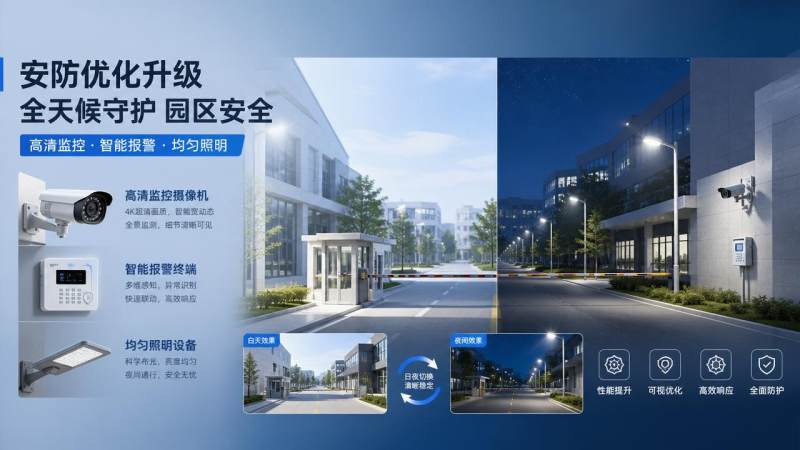
When alarms lag, visibility drops, or workflows become harder to trust, security optimization should begin with what operators face every day: response speed, system clarity, and environmental reliability. For teams managing underperforming systems, the first step is not replacing everything, but identifying where security, illumination, and decision-making disconnect. This guide helps users and operators pinpoint practical starting points for safer, smarter performance improvements.
What security optimization means in daily operations
In practical terms, security optimization is the process of improving how people, devices, lighting conditions, and response procedures work together under real operating pressure. It is not limited to adding more cameras, installing brighter fixtures, or increasing alarm volume. A system can have modern hardware and still underperform if operators cannot verify events quickly, if image quality collapses in low light, or if alerts arrive without useful context.
For operators, the most important view of security optimization is performance at the point of use. Can an event be seen clearly? Can it be interpreted correctly? Can the right person act in time? If any of these steps break down, the issue is no longer only technical. It becomes an operational risk affecting safety, compliance, uptime, and trust in the system.
This is why many organizations now treat optimization as a structured improvement effort rather than a one-time upgrade. In environments shaped by digital infrastructure growth, urban safety modernization, and stricter oversight, the ability to align physical security assurance with optical environment optimization has become a competitive and operational necessity.
Why underperforming systems are getting more attention
Across industries, security systems are expected to do more than record incidents. They now support prevention, verification, coordination, and evidence management. At the same time, operators work in increasingly complex settings: mixed indoor and outdoor lighting, distributed sites, AI-assisted analytics, remote supervision, and evolving policy requirements. Under these conditions, small weaknesses become visible very quickly.
GSIM highlights this shift through its focus on global security policies and optical technology trends. In the 2026 wave of digital infrastructure and urban safety upgrades, organizations are not only asking whether systems are installed, but whether they remain reliable in changing environments. That includes how electronic surveillance aligns with compliance expectations, how AI vision performs in imperfect scenes, and how optical conditions affect the accuracy of decision support.
For operators, this matters because underperformance usually appears first in routine work: more false alarms, slower confirmation, unclear footage, repeated manual checks, and frequent workarounds. Security optimization becomes the bridge between policy goals and operator reality.
Where to start when systems underperform
The best starting point is a focused operational baseline. Before changing equipment, document how the system behaves in normal and difficult conditions. Review a recent set of incidents or test events and identify where delays or uncertainty occur. Security optimization should begin with evidence, not assumptions.
Operators can start with five simple questions:
- Are alarms reaching the right people at the right time?
- Is visual information clear enough for fast verification?
- Do lighting conditions support detection throughout the day and night?
- Are analytics producing useful signals or too much noise?
- Do workflows help operators decide, escalate, and record actions consistently?
These questions help narrow the problem. In many cases, performance issues come from the interaction between systems rather than a single failed device. A camera may be functioning, but glare, shadow, poor aiming, network delay, or a confusing interface may still reduce its value. Security optimization therefore starts with the points where information is lost between sensing, seeing, and acting.
A practical overview of common optimization priorities
The table below gives operators a practical starting map for security optimization in underperforming environments.
The role of illumination in security optimization
One of the most overlooked starting points is illumination. Operators often experience poor image usability as a camera problem when the deeper cause is an unstable optical environment. Uneven lighting, reflections, dark transitions, flicker, and overexposure can all reduce the effectiveness of surveillance, analytics, and human judgment.
This is especially important in mixed-use sites, public safety zones, logistics yards, transport corridors, campuses, and smart construction areas. In such places, the scene is dynamic. Vehicle lights, weather, temporary structures, shifting work patterns, and energy-saving lighting schedules can all change how a monitored area appears. Security optimization should therefore include a scene-based lighting review, not only a device checklist.
For operators, the practical goal is simple: lighting should support recognition, not just visibility. A scene may look bright enough to the eye and still be poor for sensors or analytics. Reviewing image quality together with the illumination profile helps teams identify why some events are easy to confirm while others remain ambiguous.
Who gains the most value from early optimization efforts
Security optimization has broad value, but different user groups experience the benefits in different ways. For operators, the gains are usually immediate: less uncertainty, faster review, and more confidence in the system. For supervisors, optimization improves consistency, reporting quality, and accountability. For organizations, it reduces operational friction while supporting safety objectives and compliance readiness.
Typical scenarios where optimization should begin early
Not every system failure looks dramatic. Many sites continue operating while performance quietly declines. Security optimization should start early in scenarios such as repeated false alerts at perimeter zones, unreliable night monitoring, blind spots created by temporary site changes, poor handoff between local and remote monitoring, or operator dependence on memory rather than guided workflows.
Another common trigger is technology expansion without operational alignment. For example, AI vision may be introduced, but the scene has not been prepared for consistent detection. New sensors may be added, yet alert prioritization remains unclear. Optical upgrades may improve brightness, while interface clutter still slows response. In each case, security optimization should reconnect the technical layer with the user layer.
Practical steps operators can take before major upgrades
A useful optimization path does not need to start with major spending. Operators can help create measurable improvement through disciplined observation and structured feedback. Begin by identifying the top five recurring situations where the system feels weakest. Then record what happened, what the operator needed, what was missing, and what caused delay.
- Run checks across different lighting periods, not just daytime conditions.
- Compare alarm logs with actual operator actions to find workflow gaps.
- Mark locations where visibility changes because of glare, weather, dust, or moving equipment.
- Review whether alert categories reflect real operational priority.
- Share findings with technical teams using examples tied to outcomes, not only complaints.
This approach creates a clear basis for security optimization. It also supports better communication with integrators, managers, and decision-makers because the discussion moves from vague dissatisfaction to observable performance evidence.
What to watch when evaluating improvements
Not every change that looks modern produces better results. Operators should evaluate whether improvements reduce effort while increasing confidence. Useful indicators include faster event confirmation, fewer unnecessary alerts, more stable night performance, simpler escalation, and better continuity between surveillance, lighting, and reporting.
It is also important to consider future-readiness. As global infrastructure and public safety projects evolve, systems will increasingly depend on integrated intelligence, optical precision, and standards awareness. Platforms such as GSIM add value by connecting technology trends, compliance interpretation, and commercial insight so organizations can understand not only what to improve, but why those improvements matter in a wider operating context.
Moving from underperformance to dependable operation
The most effective security optimization begins with daily reality: what operators can see, verify, and act on under pressure. When systems underperform, the smartest first move is rarely a complete replacement. It is a clear assessment of alarm behavior, optical conditions, workflow friction, and decision reliability. From there, targeted improvements become easier to justify and more likely to succeed.
For organizations seeking safer and smarter operations, the goal is not simply more security technology. It is a stronger connection between protection demands, illumination quality, and informed action. If your team is dealing with slow response, uncertain visibility, or declining trust in system outputs, now is the right time to begin security optimization with a practical, operator-centered review.
The VitalSync Intelligence Brief
Receive daily deep-dives into MedTech innovations and regulatory shifts.