
Security
Critical Infrastructure Protection Solutions Worth Comparing Today
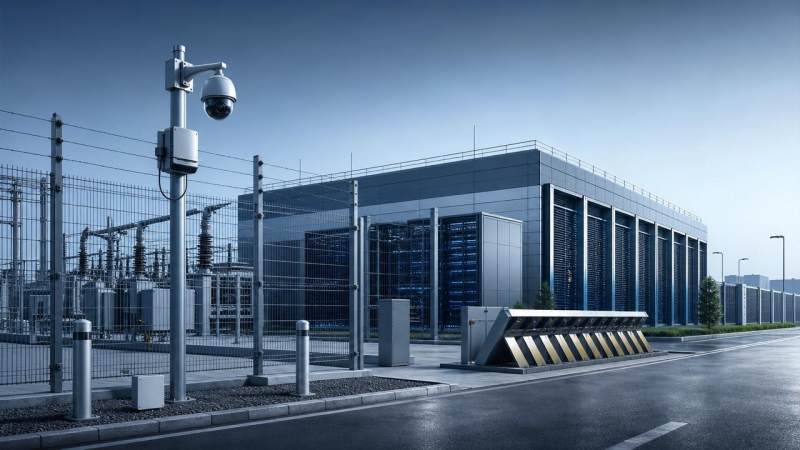
As utilities, transport networks, data centers, and public facilities face rising risks, choosing the right critical infrastructure protection solutions has become a strategic procurement priority. This guide compares today’s most relevant options through the lens of compliance, resilience, and long-term value, helping procurement teams make informed decisions in a fast-changing security and smart infrastructure landscape.
What are critical infrastructure protection solutions, and why are buyers paying closer attention now?
Critical infrastructure protection solutions are the combined technologies, processes, and service models used to secure assets whose disruption would affect public safety, economic continuity, or essential services. In practice, this includes power and water systems, transport hubs, ports, telecom facilities, industrial plants, public campuses, and hyperscale or edge data centers. Procurement teams are paying closer attention because risk is no longer limited to perimeter intrusion. Today’s threat landscape blends physical sabotage, insider access abuse, environmental failure, supply chain opacity, and the operational consequences of poorly integrated systems.
Another reason these solutions matter now is the convergence of security assurance and smart infrastructure modernization. Owners are not only buying cameras, fences, lighting, sensors, or command software in isolation. They are comparing critical infrastructure protection solutions that can support compliance, improve visibility, reduce response time, and deliver measurable lifecycle value. For many procurement teams, the challenge is not whether to invest, but how to compare options without overbuying, under-specifying, or creating integration debt.
From the GSIM perspective, this is where intelligence-led evaluation matters. Decisions should reflect global standards, sector-specific operating realities, and the growing connection between physical security and optical environment optimization. A well-lit site with well-matched sensing often performs better than a site that simply adds more devices.
Which categories of critical infrastructure protection solutions are most worth comparing today?
Buyers typically compare solutions across several functional layers. The first is perimeter and access protection: fencing detection, intrusion sensors, vehicle barriers, smart gates, biometric or credential-based access control, and visitor management. These are often the first line of defense for substations, logistics parks, rail depots, and water treatment facilities.
The second layer is surveillance and situational awareness. This includes fixed and PTZ cameras, thermal imaging, low-light imaging, AI video analytics, radar-assisted detection, and command software that turns visual data into operational alerts. For exposed or large-area sites, the comparison should focus on detection accuracy under variable weather, false alarm rates, bandwidth efficiency, and evidentiary quality.
The third layer is illumination and optical performance. This is often undercompared, even though lighting quality directly affects camera usability, patrol safety, and incident response. Site owners increasingly compare white light, adaptive lighting controls, glare management, energy efficiency, and compatibility with AI vision workflows. In some cases, better optical conditions can defer the need for additional devices.
The fourth layer covers resilience and continuity: backup power, redundant communications, secure control rooms, environmental monitoring, and incident orchestration. These elements are vital because security failures often occur during outages, maintenance windows, or unusual operating conditions.
Finally, there is the integration layer. Many critical infrastructure protection solutions look strong in product brochures but create long-term pain if they cannot interoperate with existing PSIM, VMS, SCADA-adjacent workflows, or compliance reporting processes. Integration readiness is often what separates a promising solution from a sustainable one.
How should procurement teams compare options without getting lost in technical claims?
A useful method is to compare solutions against operational outcomes rather than feature volume. Begin by asking what the site must achieve: deter intrusion, slow unauthorized entry, verify alarms faster, protect sensitive zones at night, reduce guard burden, or support incident reconstruction. Once the operational objective is clear, product claims become easier to test.
Procurement teams should also separate “must-have” performance from “nice-to-have” enhancements. A transport operator may need robust multi-zone detection and fast event handoff, while a data center may prioritize layered access control, optical clarity in low light, and high auditability. Comparing critical infrastructure protection solutions becomes more effective when each solution is scored against mission-critical use cases.
This framework helps buyers compare critical infrastructure protection solutions with discipline. It also supports internal alignment across security, operations, engineering, procurement, and compliance stakeholders.
Which solution types fit different infrastructure scenarios best?
Not every site needs the same protection stack. For utility environments such as substations, pipelines, and water facilities, wide-area awareness and resilience are usually central. Thermal surveillance, fence detection, redundant communications, anti-tamper enclosures, and reliable lighting can be more valuable than high-end indoor access features. The operational goal is early detection with minimal maintenance burden.
For transport infrastructure, including airports, ports, metro assets, and freight yards, protection must support movement rather than block it. Here, buyers often compare layered access control, vehicle screening, crowd-aware analytics, intelligent illumination, and command systems that support multi-agency coordination. The key question is whether the system improves throughput and security at the same time.
Data centers and telecom facilities usually prioritize controlled access, audit trails, continuous monitoring, and low downtime risk. In these settings, critical infrastructure protection solutions should be evaluated for failover capability, integration with facility management, and ability to secure both external and internal high-value zones.
Public campuses, municipal assets, and civic facilities need balanced solutions that are visible enough to deter, efficient enough to scale, and adaptable enough for changing public use. Lighting design, camera placement, emergency communication, and analytics should work together without creating excessive privacy friction or operational complexity.
What are the most common procurement mistakes when comparing critical infrastructure protection solutions?
One common mistake is buying by device count instead of risk reduction. More cameras, more sensors, or more gates do not automatically create better protection. If alarm workflows are weak, lighting is poorly matched, or operators cannot verify events quickly, the site may remain vulnerable despite a larger bill of materials.
Another mistake is ignoring the optical environment. Surveillance quality depends heavily on illumination uniformity, contrast, glare control, and nighttime conditions. A lower-cost camera deployment may underperform if the site’s lighting creates blind spots or overexposure. Buyers should treat optical optimization as a core part of critical infrastructure protection solutions, not a cosmetic add-on.
A third mistake is underestimating integration and maintenance. Solutions that appear cost-effective during tender review can become expensive if they require custom middleware, frequent recalibration, proprietary parts, or fragmented support contracts. Procurement should ask how updates are handled, how analytics are tuned, who owns performance accountability, and what happens when the site expands.
There is also the compliance trap: assuming a globally marketed product is automatically suitable for local or sector-specific requirements. Documentation quality, data handling practices, evidence retention, and safety certifications all need verification. Buyers should not let brand familiarity replace due diligence.
How can buyers judge long-term value instead of just upfront price?
Long-term value comes from sustained performance, lower operational friction, and adaptability over time. When evaluating critical infrastructure protection solutions, buyers should build a total-cost-of-ownership view that includes installation complexity, operator training, software licensing, firmware updates, service response, energy consumption, and replacement cycles.
It is also helpful to estimate the cost of failure or underperformance. A solution with a lower purchase price may create more nuisance alarms, require more guard intervention, or fail in low-visibility conditions. In contrast, a slightly higher-cost system that reduces false dispatches, supports remote verification, and integrates cleanly with existing workflows may deliver stronger value within the first few years.
Vendor maturity matters as well. Procurement teams should compare support footprint, regional service capacity, training capability, and transparency around product roadmaps. In infrastructure environments, value is not just hardware lifespan; it is the confidence that the vendor can support evolving compliance and operational needs.
GSIM’s decision-support view is especially relevant here: smart comparison is not about choosing the most advanced-looking solution, but selecting the one that aligns standards, environmental realities, and future readiness. The strongest critical infrastructure protection solutions are those that remain effective as sites digitize, regulations tighten, and risks become more interconnected.
What should be confirmed before moving from comparison to shortlist or purchase?
Before issuing a final shortlist, procurement teams should confirm six essentials. First, define the protected assets and the operational consequences of failure. Second, verify whether the proposed solution matches the site’s environmental and lighting conditions. Third, check interoperability with current platforms and workflows. Fourth, confirm compliance evidence and documentation quality. Fifth, model lifecycle cost over at least three to five years. Sixth, validate service responsiveness, spare availability, and upgrade path.
It is often worth running a pilot or proof-of-performance in one representative zone. This reveals practical issues that brochures rarely show, such as mounting constraints, network load, analytics drift, glare impact, or operator usability. For high-stakes facilities, pilot evidence is one of the fastest ways to improve confidence in critical infrastructure protection solutions before larger commitments are made.
Buyers should also document internal decision criteria early. When security teams, facilities managers, engineers, and finance teams evaluate against the same matrix, procurement becomes faster and less vulnerable to vague claims. This is particularly important in cross-border or standards-sensitive projects where approval chains are longer.
Final FAQ takeaway: what should procurement teams ask vendors first?
If your team is actively comparing critical infrastructure protection solutions, the first vendor conversations should focus on practical proof rather than broad promises. Ask which infrastructure scenarios the solution is already protecting, what measurable outcomes were improved, how the optical and physical environment was addressed, which standards were mapped, how integration was achieved, and what the support model looks like after commissioning.
If you need to confirm a specific direction, parameter set, deployment cycle, budget range, or cooperation model, prioritize these questions: What exact risks are being reduced? Which performance metrics can be tested on-site? What assumptions affect cost? What dependencies exist on lighting, connectivity, or third-party software? How scalable is the design if the site expands? And what documentation will support compliance review and future procurement governance?
In a market crowded with overlapping claims, the best critical infrastructure protection solutions are the ones that prove fit, resilience, and lifecycle value in your real operating context. That is the comparison standard procurement teams should use today.
The VitalSync Intelligence Brief
Receive daily deep-dives into MedTech innovations and regulatory shifts.