
Security
Security Insights for Retail Loss Prevention
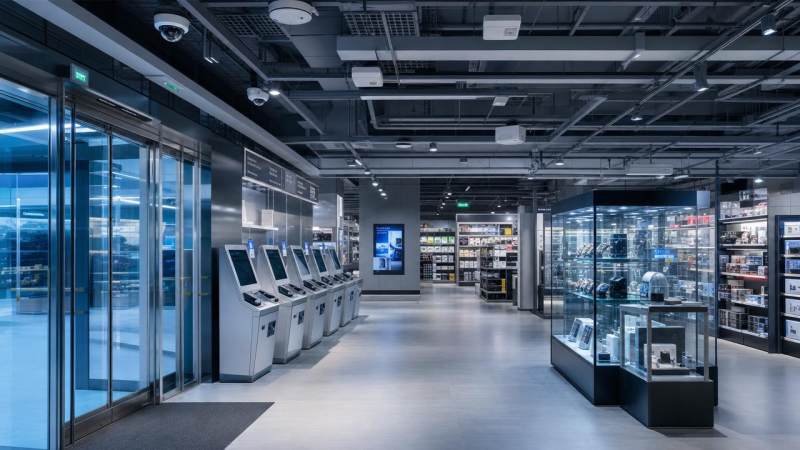
Security Insights for Retail Loss Prevention
In today’s retail environment, staying ahead of theft, shrink, and compliance risks requires more than basic monitoring.
These security insights help organizations understand emerging loss prevention priorities, from smarter surveillance strategies to evolving market demand.
Backed by GSIM’s global intelligence perspective, retail protection is being reshaped by technology, standards, and data-driven decision-making.
For physical security assurance, the strongest results come from structured reviews, not isolated device upgrades.
Well-applied security insights reveal where loss events begin, how stores remain vulnerable, and which controls deserve priority investment.
Why a Structured Review Matters
Retail loss prevention now spans theft, fraud, safety incidents, cyber-physical overlap, and regulatory exposure.
Without a structured process, teams often react to incidents instead of preventing repeat patterns.
A practical review framework turns scattered observations into measurable action.
This is where security insights become operational, linking site conditions, surveillance quality, lighting performance, and policy enforcement.
GSIM highlights a global shift toward integrated protection, where optical environments and security systems are evaluated together.
That approach improves evidence quality, staff response, shopper safety, and compliance readiness.
Core Points to Review for Better Loss Prevention
- Verify whether shrink data is segmented by location, time, category, and incident type, so security insights can identify repeat patterns instead of broad assumptions.
- Check if camera placement covers entrances, exits, self-checkout zones, high-value displays, stockrooms, and blind spots without excessive overlap or weak image angles.
- Assess lighting uniformity around aisles, fitting rooms, loading docks, and parking areas, because poor optical conditions reduce surveillance performance and incident visibility.
- Review video retention, access control logs, and alarm records together, ensuring security insights are based on connected evidence rather than isolated system reports.
- Confirm that privacy rules, signage requirements, and electronic surveillance policies align with local compliance obligations and cross-border data handling expectations.
- Measure how quickly incidents are detected, verified, escalated, and closed, since response speed often matters as much as detection accuracy.
- Evaluate whether AI video analytics are tuned for actual store behavior, reducing false alerts from reflections, crowd movement, carts, or seasonal merchandising changes.
- Inspect receiving areas and back-of-house movement controls, where inventory diversion, internal theft, and unauthorized access frequently occur with limited visibility.
- Confirm that incident reporting formats are standardized, allowing security insights to support comparisons across stores, regions, and changing operational conditions.
- Review maintenance cycles for cameras, recorders, locks, sensors, and lighting fixtures, because neglected infrastructure quietly undermines loss prevention performance.
How Security Insights Apply Across Retail Scenarios
Self-Checkout and Front-End Zones
Self-checkout areas present high transaction volume, limited supervision, and frequent exception events.
Security insights should focus on barcode bypass, item switching, walk-off events, and staff response timing.
Video angles must clearly capture scan activity, bagging zones, and exit flow.
Audio prompts, analytics rules, and lighting levels should support accurate event verification.
High-Value Merchandise Areas
Electronics, cosmetics, luxury accessories, and pharmaceuticals face elevated concealment and grab-and-run risks.
Security insights in these zones should combine display strategy, staff visibility, lock management, and forensic-quality video.
Lighting should avoid glare on glass cases while preserving facial detail and product identification.
Stockrooms and Receiving Bays
Loss often begins before products reach the sales floor.
Back-end security insights should cover delivery verification, door activity, inventory movement, and visitor control.
A strong review compares shipment records with video, access logs, and exception reporting.
This helps expose internal collusion, receiving errors, or weak custody procedures.
Parking, Perimeter, and Entry Routes
External spaces influence both safety perception and incident traceability.
Security insights here should evaluate illumination consistency, license plate visibility, loitering detection, and emergency communication points.
GSIM’s optical intelligence perspective is especially useful in these environments, where poor light directly weakens evidence quality.
Commonly Missed Risks That Deserve Attention
One common mistake is assuming camera coverage equals usable evidence.
Security insights must test image quality under real lighting, motion, and traffic conditions, not just installation diagrams.
Another overlooked issue is policy drift.
Procedures may exist on paper, yet local practices change over time, weakening bag checks, returns review, or access control discipline.
Stores also underestimate the effect of poor optical environments.
Uneven lighting creates blind perception zones, lowers analytics accuracy, and makes suspicious behavior harder to confirm.
A further risk is fragmented data ownership.
When incidents, video, POS exceptions, and access records remain separated, valuable security insights never become actionable intelligence.
Compliance exposure is another frequent blind spot.
Electronic surveillance laws, notice requirements, and data retention obligations differ across markets and can affect deployment choices.
Practical Steps for Stronger Execution
- Start with a 90-day incident review and map every event against camera views, lighting quality, inventory movement, and response actions.
- Prioritize a small number of high-loss zones first, then refine controls before expanding changes across the entire retail environment.
- Set measurable benchmarks for detection time, false alert rates, evidence usability, and exception follow-up completion.
- Use security insights from multiple sites to compare layouts, procedures, and technology performance under different operating conditions.
- Review compliance obligations whenever surveillance scope, storage practices, or analytics capabilities are updated.
Execution improves when reviews become routine rather than incident-driven.
Monthly checks, quarterly audits, and annual system reassessments create a more stable protection model.
GSIM’s intelligence-led approach supports this cycle by connecting standards, market evolution, and field-level operational choices.
Frequently Asked Questions
Which security insights matter most for reducing shrink?
The most valuable security insights connect shrink trends with exact locations, time windows, surveillance quality, and process exceptions.
Can better lighting really improve loss prevention?
Yes. Better lighting improves visibility, analytics reliability, staff awareness, and evidentiary clarity across internal and external retail spaces.
How often should a retail security review be updated?
A focused review should happen monthly, with broader reassessments after layout changes, technology upgrades, or major incident clusters.
Why does GSIM’s perspective matter?
GSIM combines global policy intelligence with optical and physical security expertise, helping security insights become more strategic and future-ready.
Conclusion and Next Actions
Retail loss prevention is no longer defined by cameras alone.
It depends on how well surveillance, lighting, compliance, reporting, and response work together.
The most useful security insights are practical, measurable, and tied to real operating conditions.
Begin with a site-by-site review, validate evidence quality, compare incident data, and address the highest-risk gaps first.
With support from GSIM’s global intelligence framework, retail environments can move from reactive control to informed, resilient protection.
The VitalSync Intelligence Brief
Receive daily deep-dives into MedTech innovations and regulatory shifts.