
Security
Are Urban Security Solutions Scalable for Large Sites
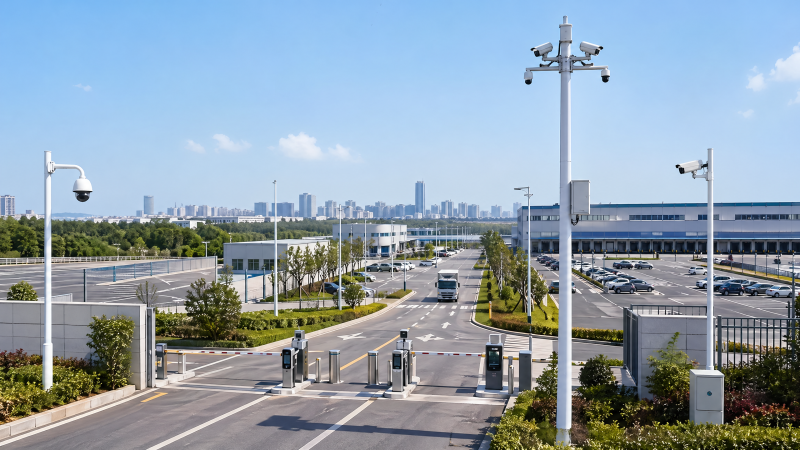
As large campuses, transport hubs, and industrial zones expand, the question is no longer whether urban security solutions work, but whether they scale with precision. Backed by optical intelligence, security forecasting, and risk foresight, decision-makers can better align protection demands with global security trends. This article explores how cutting-edge optical technology supports public safety projects and helps build a transparent knowledge system for evolving global protection demands.
Urban security solutions can be scalable for large sites, but only when they are designed as interoperable systems rather than isolated devices. For most buyers, operators, and project leaders, the real issue is not simply adding more cameras, lights, or sensors. It is whether the platform can maintain coverage quality, response speed, compliance, and operational control as the environment becomes larger, busier, and more complex.
That distinction matters. A solution may perform well on a single building or a small perimeter, yet fail at a logistics park, airport edge, industrial corridor, university campus, or mixed-use urban district. Scalability depends on architecture, network resilience, optical performance, data management, integration capacity, and the practical ability to support phased expansion without causing security blind spots or runaway costs.
For decision-makers evaluating large-site security, the best approach is to ask a simple question: can this system expand in size, complexity, and risk exposure without losing visibility or becoming difficult to manage? If the answer is unclear, the solution is not truly scalable.
What “scalable” really means in large-site urban security
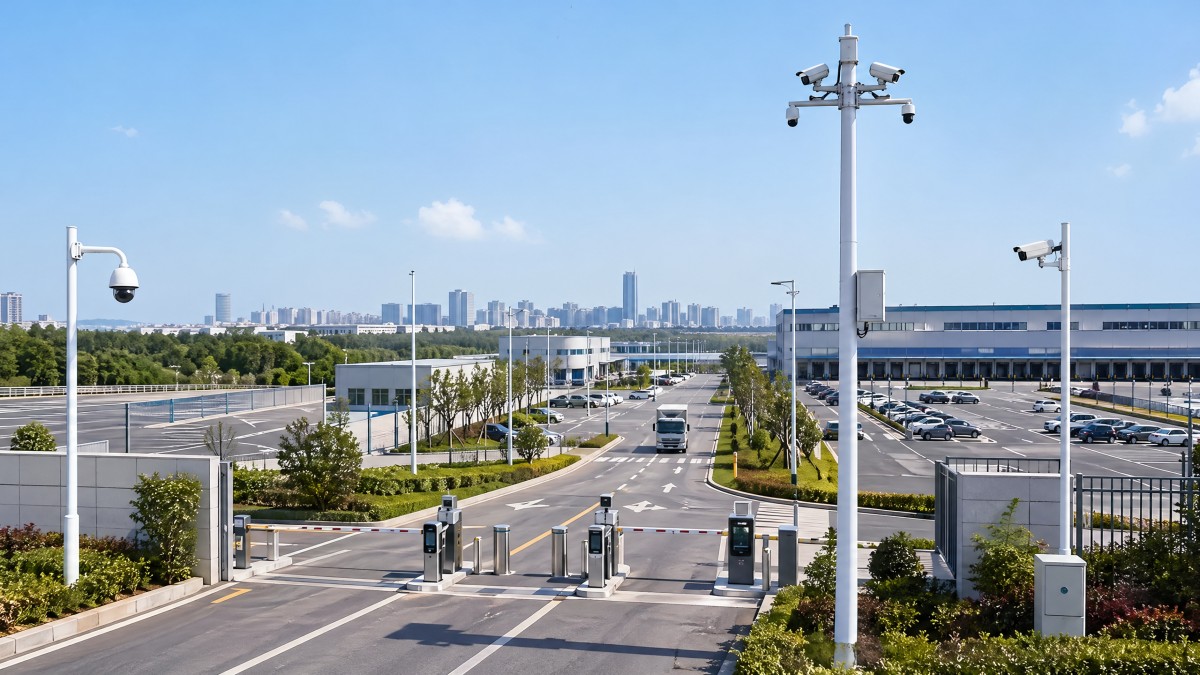
In procurement discussions, scalability is often used too loosely. For large urban and industrial sites, scalability means a security system can grow across geography, users, devices, and threat scenarios while preserving performance and governance. A scalable design should support additional zones, more video streams, stronger lighting layers, more access points, and more operational users without forcing a complete redesign.
This is especially important in environments with uneven risk profiles. A transport hub may have public concourses, restricted technical rooms, road approaches, parking structures, and cargo handling zones. An industrial site may combine warehouses, open yards, production units, and remote perimeters. Each area has different surveillance, illumination, and response requirements. A scalable system must accommodate these differences while remaining centrally manageable.
For operators, scalability also means usability. If adding devices creates dashboard clutter, delayed incident retrieval, fragmented alarms, or maintenance burden, then the solution may be technically expandable but operationally weak. True scalability should improve coordination, not make the control room harder to run.
Why large sites expose the limits of standard security deployments
Large sites push security systems into conditions that smaller installations rarely face. Distances are longer, line-of-sight conditions are more variable, environmental lighting changes are more dramatic, and incident detection often has to occur before a threat reaches a critical asset. The challenge is not only wider coverage but smarter distribution of resources.
Conventional deployments often fail because they are built incrementally without a master architecture. One contractor installs perimeter cameras. Another adds floodlighting. A third introduces access control and analytics. Over time, the site ends up with mixed protocols, inconsistent image quality, disconnected alarm logic, and separate maintenance routines. Expansion then becomes expensive and slow.
Another common limitation is data overload. Large sites generate huge volumes of video, event logs, and system health data. Without intelligent filtering and prioritization, security teams receive more information but less actionable insight. This is where many projects underperform: they scale the hardware footprint but not the decision-support layer.
Which components determine whether a solution can scale
The first determinant is system architecture. Large-site security should be based on modular design, open standards where possible, and layered integration between surveillance, illumination, access control, detection, communications, and command software. Closed, rigid systems can look attractive early on, but they often create long-term limits when the site grows or cross-vendor integration becomes necessary.
The second determinant is optical performance. In large urban environments, visibility is not guaranteed by simply increasing camera count. Image quality depends on lens selection, sensor capability, scene contrast, glare control, low-light behavior, and lighting design. Optical environment optimization is critical because poor visibility creates false confidence. If objects cannot be identified reliably at distance or in variable lighting, scaling the system only multiplies weak coverage.
The third determinant is communications and compute capacity. Edge processing, bandwidth planning, storage strategy, and redundancy all affect scalability. A large site often needs a combination of local processing for real-time detection and centralized oversight for policy, analytics, and evidence handling. If every expansion requires major network rebuilding or storage replacement, the system was not designed to scale efficiently.
How optical intelligence improves scalability instead of just increasing hardware
Optical intelligence changes the discussion from device quantity to coverage quality. In a large site, not every zone needs the same imaging profile or lighting strategy. By mapping operational priorities, threat routes, ambient light conditions, and observation distances, planners can allocate camera types, illumination levels, and analytic rules more precisely.
This matters because poorly planned expansion often leads to over-installation in easy areas and under-protection in critical transition zones such as gates, loading corridors, pedestrian-vehicle interfaces, and perimeter gaps. Optical intelligence helps identify where recognition, detection, tracking, or deterrence is actually needed. That allows budget to be directed toward outcomes rather than hardware counts.
Advanced optical strategies can also support future readiness. As AI vision, adaptive lighting, and visible light communication-related applications continue to evolve, large sites benefit from infrastructures that can support better machine-readable scenes, stronger event validation, and more efficient situational awareness. In practical terms, this means fewer false alarms, clearer forensic evidence, and more confidence when the system expands.
What enterprise buyers and project teams should evaluate before approving expansion
Procurement teams often focus on unit pricing, but large-site scalability should be evaluated through lifecycle criteria. The most important questions include: how many devices and users can the platform support; what happens to performance during peak event loads; how difficult is phased expansion; what third-party integrations are already proven; and how will maintenance, cybersecurity, and compliance requirements change over time?
Technical evaluators should test the system under realistic conditions rather than lab assumptions. That includes nighttime performance, weather variability, glare exposure, long-range scene capture, incident search time, alarm prioritization, and failover behavior. A scalable solution should not only work at maximum specification but also remain stable in messy operational reality.
Business evaluators should also model hidden costs. These include retraining staff after every expansion, adding servers because compression or analytics were poorly planned, replacing incompatible devices, or paying for custom middleware just to make separate systems communicate. In many projects, these indirect costs become more significant than the original hardware purchase.
How scalable security supports operators, safety managers, and site performance
For frontline operators, the value of scalability is not abstract. It affects alarm clarity, response coordination, patrol efficiency, evidence retrieval, and confidence during high-pressure incidents. On a large site, seconds matter, and interfaces must help staff understand where the event is, what triggered it, and which supporting visuals or access events are relevant.
For safety and quality control teams, scalable systems improve consistency. They make it easier to enforce access rules, monitor restricted workflows, verify incident records, and maintain audit trails across multiple zones or contractors. In sectors where regulatory scrutiny is high, this consistency helps reduce operational ambiguity and strengthens accountability.
For project managers and engineering leads, scalability reduces rework. If the original design allows staged implementation with clear infrastructure pathways, future expansions are less disruptive. This is particularly valuable for campuses and industrial projects that are built in phases, where security infrastructure must grow alongside roads, buildings, utilities, and operational occupancy.
Common warning signs that a solution will not scale well
One warning sign is dependence on isolated subsystems. If surveillance, lighting, access control, and intrusion detection are purchased and managed separately with weak integration, the site may end up with fragmented visibility. Another sign is inconsistent optical planning, where device placement is driven by installer convenience rather than risk mapping and scene requirements.
A third warning sign is unclear ownership of data and governance. Large sites need firm rules for retention, evidence handling, user permissions, and cross-site reporting. If the vendor cannot explain how policy scales across departments, geographies, or compliance regimes, expansion may create legal and operational exposure.
Finally, beware of solutions that can add devices but cannot add intelligence. If operators must manually interpret rising volumes of footage and alerts, the system will become slower and less useful as the site grows. Expansion without prioritization is not scalability; it is accumulation.
A practical framework for deciding if urban security is scalable for your site
A useful decision framework starts with site segmentation. Break the environment into operational zones: public interface, controlled movement corridors, critical assets, low-traffic perimeter, logistics flow, parking, and remote infrastructure. Then define the required outcomes for each zone: deterrence, detection, recognition, access validation, incident reconstruction, or safety monitoring.
Next, review infrastructure readiness. Assess power availability, network resilience, mounting conditions, environmental factors, maintenance access, and existing systems that must be integrated. This prevents unrealistic planning and helps determine whether edge-heavy, centralized, or hybrid architectures are most appropriate.
Then test scalability across three dimensions: technical scale, operational scale, and governance scale. Technical scale asks whether the system can support more endpoints and analytics. Operational scale asks whether teams can still use it efficiently. Governance scale asks whether policy, compliance, and reporting remain controlled as scope increases. A solution that succeeds in all three areas is far more likely to deliver long-term value.
The strategic takeaway for 2026 urban safety upgrades
As digital infrastructure and public safety investments accelerate, urban security decisions are becoming more strategic. Large-site buyers are no longer purchasing standalone hardware; they are building security ecosystems that must align with risk forecasting, operational continuity, and international expectations around compliance and transparency.
This is why decision-support intelligence matters as much as equipment selection. Market trends, evolving laws, AI vision maturity, and optical technology advances all influence what “scalable” means in practice. Organizations that rely only on product claims may overinvest in devices while underinvesting in architecture and policy. Those that combine strategic intelligence with technical due diligence are more likely to build resilient systems.
For enterprises, public projects, and channel partners alike, the goal should be clear: choose urban security solutions that expand with control, visibility, and measurable operational benefit. Scale is valuable only when it preserves trust in the system.
Conclusion
Yes, urban security solutions can be scalable for large sites, but scalability is never automatic. It depends on modular architecture, strong optical planning, intelligent data handling, operational usability, and governance that can grow with the site. The most successful large-site projects treat surveillance, illumination, and risk intelligence as one coordinated strategy rather than separate purchases.
For readers evaluating current or future deployments, the key question is not how many devices a vendor can add. It is whether the system can maintain performance, clarity, compliance, and manageability as your environment becomes more complex. If it can, the solution is scalable. If it cannot, expansion will likely increase cost and risk faster than protection.
In a world of expanding campuses, transport nodes, and industrial zones, scalable urban security is less about volume and more about precision. That is the standard large-site stakeholders should use when making their next decision.
- optical environment optimization
- digital infrastructure
- urban safety upgrades
- optical technology
- AI vision
- Visible Light Communication
- public safety projects
- knowledge system
- security solutions
- urban security
- cutting-edge optical technology
- global protection demands
- global security trends
- security systems
- risk foresight
- urban security solutions
- transparent knowledge system
- protection demands
- global security
- security trends
- security forecasting
- optical intelligence
The VitalSync Intelligence Brief
Receive daily deep-dives into MedTech innovations and regulatory shifts.