
Security
Digital Protection Strategies for Safer Connected Environments
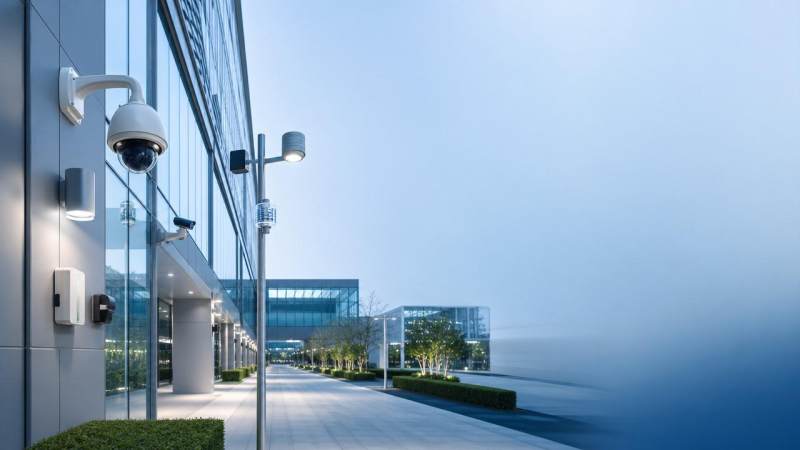
As cities, facilities, and digital infrastructure become more interconnected, digital protection is no longer a technical add-on but a strategic priority for business leaders. From physical security assurance to optical environment optimization, decision-makers need clear intelligence to manage compliance, reduce risk, and guide safer investments in connected environments.
Why a checklist approach works better for digital protection decisions
For enterprise leaders, the biggest challenge is rarely a lack of technology options. The real problem is fragmented judgment. Security teams focus on surveillance uptime, IT teams prioritize network controls, facilities managers look at lighting performance, and procurement teams compare price and delivery. Without a structured checklist, digital protection becomes a patchwork of separate purchases rather than a coherent risk strategy.
A checklist approach helps decision-makers quickly verify what matters first: regulatory exposure, operational risk, integration requirements, site-specific vulnerabilities, and long-term maintainability. This is especially important in the 2026 wave of digital infrastructure and urban safety upgrades, where physical security systems, optical technologies, AI vision, and communication networks increasingly operate as one environment. In this context, digital protection is not only about preventing breaches; it is about enabling safe, compliant, and resilient connected operations.
Start here: the first five items leaders should confirm
Before evaluating products, vendors, or deployment timelines, business leaders should verify these priority items. They create the baseline for a digital protection plan that can scale across sites and jurisdictions.
- Confirm the risk profile of the environment. A smart campus, logistics hub, hospital, transport facility, and public venue do not carry the same exposure. Threats may include unauthorized access, surveillance blind spots, data misuse, poor lighting quality, system downtime, or noncompliance with local monitoring laws.
- Map which systems are already connected. Many digital protection gaps appear not in standalone devices, but in the connection points between cameras, sensors, access control, lighting controls, edge devices, and cloud dashboards.
- Identify the applicable compliance framework. Cross-border operations may need to account for privacy law, data retention rules, electronic surveillance restrictions, procurement standards, and safety regulations.
- Define the operational objective. Some organizations want incident prevention, others want forensic visibility, energy-aware illumination, worker safety, or faster emergency response. A clear objective improves system selection.
- Assign ownership across departments. If security, IT, facilities, legal, and procurement do not share decision criteria, digital protection programs often stall or create hidden liabilities.
Core digital protection checklist for connected environments
The following checklist can be used as a practical screening tool when planning upgrades, reviewing suppliers, or assessing existing infrastructure. It aligns with the realities of physical security assurance and optical environment optimization, two areas that increasingly influence each other.
1. Governance and compliance checks
- Verify whether surveillance and monitoring practices meet national and regional legal requirements.
- Check how access logs, video records, and optical sensor data are stored, retained, and deleted.
- Assess whether suppliers can demonstrate alignment with recognized standards, audit trails, and documented security controls.
- Review who has permission to view, export, or analyze sensitive footage and system intelligence.
2. Physical and digital system resilience
- Check whether cameras, lighting systems, sensors, and gateways continue operating during partial outages or network interruption.
- Confirm backup power strategies, local failover options, and recovery procedures.
- Evaluate cybersecurity hardening for field devices, especially default credentials, firmware updates, encrypted communication, and remote management controls.
- Test whether the system can isolate faults without disabling the entire site.
3. Optical environment quality
- Review illumination uniformity, glare control, contrast conditions, and low-light visibility, since poor optical conditions directly reduce surveillance value.
- Check compatibility between lighting infrastructure and machine vision performance.
- Assess whether optical design supports both human safety and automated detection accuracy.
- Where relevant, evaluate emerging use cases such as Visible Light Communication for secure data exchange in specialized environments.
4. Integration and intelligence value
- Confirm whether platforms can integrate video, access events, environmental data, and lighting analytics into one operational view.
- Check API availability, interoperability, and data export capability to avoid lock-in.
- Evaluate whether AI vision tools improve response speed without creating excessive false alerts.
- Determine whether analytics outputs support executive decisions, not only technical monitoring.
A practical decision table for enterprise review
When comparing digital protection readiness across sites or suppliers, decision-makers often need a fast scoring logic. The table below highlights what to review and why it matters.
What to check by scenario, not just by technology
Digital protection decisions become stronger when the checklist is adapted to the operating context. Connected environments may share technologies, but their risk logic differs.
Smart buildings and commercial properties
Prioritize tenant privacy, access segmentation, lobby and perimeter visibility, after-hours monitoring, and integration between lighting schedules and occupancy data. In these settings, digital protection must support both safety and user experience.
Industrial and logistics sites
Focus on harsh-environment durability, yard visibility, loading area illumination, worker movement tracking, and incident reconstruction. These sites often require stronger resilience against downtime and more detailed event correlation between physical and digital signals.
Public infrastructure and urban projects
Check procurement transparency, public accountability, legal defensibility, data governance, and scalability. Urban projects may involve multi-stakeholder coordination, making digital protection as much a governance issue as a technical one.
Healthcare, education, and high-sensitivity facilities
Review privacy-sensitive zones, role-based access permissions, emergency egress, illumination for safe movement, and alert escalation rules. In these environments, over-collection of data can create as much risk as under-protection.
Common gaps that weaken digital protection programs
Many connected environments already have cameras, sensors, software dashboards, and modern lighting. Yet risk remains high because important checks are skipped. The following are frequent blind spots for enterprise teams.
- Treating lighting as a facilities issue only. In reality, optical conditions influence surveillance quality, AI recognition performance, and safety compliance.
- Buying isolated systems that cannot share events or data. This limits operational visibility and increases response time.
- Underestimating cross-border legal differences for data storage, remote monitoring, and surveillance deployment.
- Measuring success by installation completion rather than incident reduction, uptime, or decision quality.
- Failing to prepare for lifecycle management, including patching, recalibration, maintenance, and future upgrades.
Execution checklist: how to move from review to action
Once leadership agrees that digital protection needs improvement, execution should begin with structured inputs rather than immediate procurement. A disciplined launch process reduces wasted budget and accelerates alignment across teams.
- Document the site portfolio. List facility types, regional legal environments, operating hours, high-risk zones, and existing systems.
- Define decision metrics. Use a short set of measurable outcomes such as compliance readiness, blind-spot reduction, response time, illumination quality, maintenance burden, and total cost of ownership.
- Run a gap assessment. Compare current systems against the governance, resilience, optical, and integration checklist above.
- Prioritize by business impact. Start with sites where safety, regulatory exposure, or operational disruption would have the highest cost.
- Request supplier evidence, not claims. Ask for standards alignment, integration examples, maintenance procedures, audit support, and case-based performance data.
- Create a phased roadmap. Separate urgent remediation from long-term modernization so that digital protection improvements remain financially and operationally manageable.
How GSIM supports better digital protection decisions
For enterprise decision-makers, the value of a platform like GSIM lies in intelligence that connects regulation, technology direction, and procurement reality. Through its Strategic Intelligence Center, organizations can review the latest sector news affecting surveillance compliance, track evolutionary trends such as the convergence of AI vision and VLC, and assess commercial insights tied to smart construction sites and public safety projects.
This matters because digital protection programs fail when leaders rely on product-level comparisons without understanding policy shifts, regional standards, and optical environment implications. GSIM’s role as both a standard-aware knowledge source and decision-support portal helps organizations evaluate not just what to buy, but what to validate before they buy.
FAQ: key questions leaders ask about digital protection
Is digital protection mainly a cybersecurity issue?
No. Cybersecurity is one part of digital protection, but connected environments also depend on physical security assurance, optical performance, legal compliance, system resilience, and coordinated governance.
What is the most overlooked factor in connected safety environments?
Optical environment quality is often underestimated. Poor illumination, glare, or low contrast can undermine even advanced surveillance and analytics investments.
How should executives compare vendors?
Use a checklist that covers compliance evidence, interoperability, resilience, lifecycle support, and measurable business outcomes. Price alone is not a reliable indicator of digital protection value.
Final guidance for the next decision step
If your organization is planning safer connected environments, the most effective next move is to organize the right questions before discussing solutions. Prioritize confirmation of site risks, applicable compliance obligations, current infrastructure limits, optical performance conditions, integration requirements, rollout timelines, and budget boundaries. Also clarify who will own governance after deployment, because digital protection is not a one-time installation but an ongoing operating discipline.
If further evaluation is needed, decision-makers should prepare to discuss system parameters, site suitability, standards alignment, upgrade sequencing, maintenance expectations, and commercial model options. That preparation will make vendor conversations more productive and help ensure that digital protection investments deliver safer, smarter, and more defensible connected environments.
- physical security assurance
- optical environment optimization
- digital infrastructure
- urban safety upgrades
- strategic intelligence center
- electronic surveillance
- AI vision
- Visible Light Communication
- smart construction sites
- public safety projects
- sector news
- evolutionary trends
- commercial insights
- security systems
- optical design
- digital protection
The VitalSync Intelligence Brief
Receive daily deep-dives into MedTech innovations and regulatory shifts.