
Security
AI Vision Integration for Security Cameras: 2026 Setup Priorities
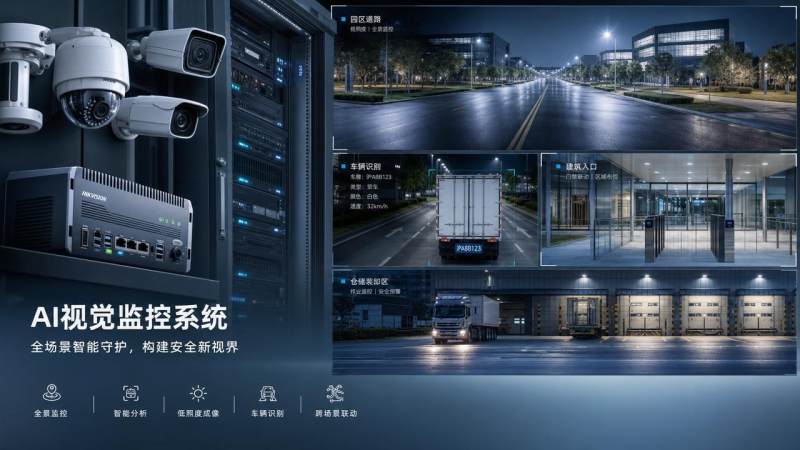
As cities, campuses, and industrial sites accelerate digital safety upgrades, AI vision integration for security cameras has shifted from a future concept to a 2026 procurement priority. For technical evaluators, the real challenge is no longer whether to adopt it, but how to assess interoperability, compliance, optical performance, and long-term scalability with confidence.
Why AI vision integration for security cameras is now a technical evaluation issue
In 2026, the discussion is no longer limited to camera resolution or storage days. AI vision integration for security cameras now affects incident detection logic, network architecture, privacy exposure, and the ability to align with cross-border surveillance rules.
For technical assessment teams, this creates a more complex procurement environment. A camera that performs well in a demo may fail under mixed lighting, struggle with third-party VMS compatibility, or generate compliance concerns when analytics are pushed to cloud services.
GSIM addresses this shift by linking policy interpretation, optical environment optimization, and commercial intelligence in one decision-support framework. That matters when evaluators must compare not just hardware, but the operational consequences of AI-enabled video infrastructure.
- You must evaluate whether AI runs at the edge, on-premises, or in hybrid mode, because latency, bandwidth, and cybersecurity obligations differ materially.
- You must verify optical suitability, especially for backlit entrances, low-light roads, reflective warehouses, and mixed indoor-outdoor transition zones.
- You must check standards alignment, including video interoperability, data retention requirements, and lawful-use boundaries for person or vehicle analytics.
What technical evaluators are really being asked to judge
The question is not simply whether analytics are available. The real task is to determine whether the full system can maintain reliable detection under operational stress while remaining maintainable for five to seven years.
That means evaluating sensor quality, lens behavior, illumination strategy, metadata consistency, firmware lifecycle, API openness, and regional compliance exposure as one combined decision.
Which deployment scenarios most affect AI vision integration for security cameras?
Different environments expose different failure points. AI vision integration for security cameras works best when the deployment model reflects scene complexity rather than generic marketing claims.
The table below helps technical evaluators compare common security environments, key optical constraints, and the AI functions that are typically worth prioritizing during early design reviews.
The key takeaway is that scene design drives analytic performance. A technically sound evaluation process starts with the optical environment and event logic, not with the software feature list alone.
Why optical conditions still decide AI success
AI models do not compensate for poor photons. If the camera sees unstable contrast, excessive glare, weak illumination uniformity, or motion blur, the analytics layer will inherit those weaknesses.
This is why GSIM’s focus on optical environment optimization is strategically useful. Evaluators need guidance that combines imaging fundamentals with AI deployment logic, especially as VLC-related infrastructure and smart lighting systems increasingly interact with video networks.
What should be on a 2026 evaluation checklist?
When teams review AI vision integration for security cameras, they should score systems against a short list of technical priorities. The strongest projects avoid overbuying analytics that cannot be sustained in the field.
- Confirm imaging fundamentals first: sensor size, low-light behavior, WDR handling, frame rate stability, and lens suitability for the target distance.
- Check compute placement: edge AI reduces bandwidth and latency, but can limit model complexity and increase device-level firmware management.
- Review interoperability: ONVIF support, metadata export, API documentation, and compatibility with existing VMS, access control, or alarm systems.
- Assess legal exposure: facial attributes, license recognition, retention policies, and regional rules on biometric or public-space analytics must be reviewed before rollout.
- Test maintainability: model updates, remote diagnostics, cybersecurity patch cycles, and rollback procedures should be documented before purchase approval.
Recommended technical parameters to verify before procurement
The next table organizes practical verification points for technical evaluators. These are not universal pass-fail numbers, but they help structure benchmark discussions across vendors and sites.
A disciplined parameter review reduces downstream surprises. It also allows procurement, engineering, and compliance teams to align on measurable acceptance criteria before tenders are finalized.
How to compare edge, server, and hybrid AI architectures
Architecture choice is one of the most important decisions in AI vision integration for security cameras. It shapes cost, latency, scalability, and legal risk more than many buyers initially expect.
The comparison below gives technical evaluators a practical way to judge fit by deployment context rather than by vendor preference alone.
For many multisite programs, hybrid is becoming the preferred model. It allows event pre-filtering at the edge while preserving the option for central intelligence, forensic search, and policy control.
When each model makes the most sense
- Choose edge-led designs where connectivity is limited, immediate local action is required, or privacy policy favors on-device processing.
- Choose server-led designs when cross-camera search, deep investigation tools, or unified analytics management is the top priority.
- Choose hybrid designs when the estate is large, risk levels vary by site, and future expansion is expected over multiple budget cycles.
What compliance and standards questions cannot be skipped?
AI vision integration for security cameras now sits at the intersection of physical security, data governance, and infrastructure resilience. That means technical selection cannot be separated from legal and operational review.
While exact obligations vary by jurisdiction, evaluators should at minimum examine video interoperability, cybersecurity hygiene, retention control, access logging, and the lawful basis for analytics involving identifiable individuals or vehicles.
Core compliance review points
- Verify support for recognized interoperability practices such as ONVIF profiles where relevant to your VMS and event ecosystem.
- Check whether encryption is applied in transit and whether user permissions can be segmented by operational role.
- Confirm update governance, including patch notification, firmware provenance, and rollback capability for failed releases.
- Map data retention rules to site type, because public areas, schools, and critical infrastructure may require different retention logic and audit handling.
GSIM’s Strategic Intelligence Center is valuable here because technical teams often lack a single source that connects surveillance policy developments with product implications. Compliance delays frequently arise not from missing devices, but from missing interpretation.
Common procurement mistakes in AI vision integration for security cameras
Many projects underperform because the evaluation process starts with promotional features instead of operational conditions. The result is an expensive system that generates extra review work without improving security response.
Mistakes that deserve early prevention
- Treating analytics accuracy claims as universal. Performance depends on scene geometry, illumination stability, camera height, and event definition.
- Ignoring the optical layer. If exposure control, lens choice, and supplementary lighting are wrong, AI tuning will become a permanent maintenance burden.
- Underestimating integration cost. A lower device price can lead to higher middleware, API, storage, and commissioning expenses.
- Skipping phased proof-of-concept testing. Live pilot validation in difficult scenes is usually cheaper than post-install rework.
Technical evaluators should therefore demand scene-based validation, not just laboratory-style demonstrations. In 2026, good procurement is evidence-led and multidisciplinary.
FAQ: practical questions technical evaluators ask most
How do I choose AI vision integration for security cameras when the site has mixed lighting?
Start by testing the hardest zones first: entrances with strong backlight, loading areas at dusk, reflective corridors, and vehicle access lanes at night. Review WDR behavior, illumination uniformity, and false-positive trends before comparing AI features.
Is edge AI always the better choice for faster response?
Not always. Edge AI is strong for immediate alerts and lower bandwidth use, but centralized or hybrid architectures may be more suitable if you need richer forensic analytics, easier model governance, or multi-camera correlation across large estates.
What should be prioritized first: camera hardware or AI software?
Hardware quality and optical suitability come first. AI depends on image quality, and poor visual input usually creates unstable analytics. After that, prioritize integration capability and policy fit over broad but lightly used software feature sets.
How long does a realistic evaluation cycle take?
For a mid-scale deployment, technical review often includes requirements mapping, interoperability checks, pilot testing, and compliance sign-off. The timeline varies by scope, but a structured multi-stage review is generally more reliable than rushing directly from demo to tender.
Why consult GSIM before final selection?
GSIM is positioned for evaluators who need more than a product catalog. Its intelligence model connects global surveillance policy updates, optical technology evolution, and commercial procurement signals in a way that supports real-world decision making.
That matters when you are reviewing AI vision integration for security cameras across public safety, smart construction, campus protection, or industrial modernization programs. The technical question is never isolated from standards, lighting conditions, and rollout risk.
What you can contact us about
- Parameter confirmation for low-light imaging, AI event types, storage impact, and network requirements.
- Product and architecture selection for edge, server, or hybrid AI deployment models.
- Delivery planning, including phased rollout logic, pilot scope definition, and interoperability checkpoints.
- Custom solution discussion for campuses, public projects, logistics yards, and smart construction environments.
- Certification and compliance guidance related to surveillance use, cybersecurity expectations, and regional procurement standards.
- Sample support and quotation communication for comparative evaluation, budget planning, and vendor shortlisting.
If your team is building a 2026 shortlist, GSIM can help structure the decision around optical reality, regulatory context, and integration practicality. That leads to stronger technical justification, fewer deployment surprises, and a more defensible procurement outcome.
The VitalSync Intelligence Brief
Receive daily deep-dives into MedTech innovations and regulatory shifts.