
Security
Optical Applications Improving Detection Accuracy in Harsh Sites
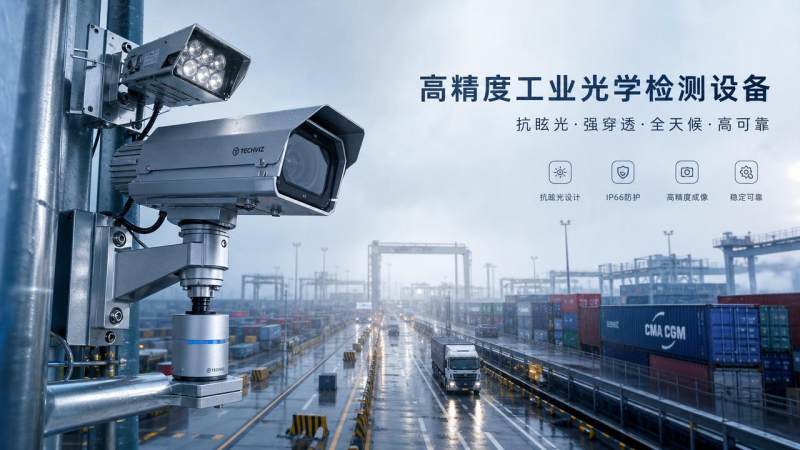
In harsh sites where dust, vibration, glare, and weather can distort sensing results, optical applications are becoming essential for improving detection accuracy and operational reliability. For technical evaluators, understanding how advanced imaging, illumination control, and compliance-driven system design work together is key to selecting solutions that perform consistently under pressure and meet evolving global security and infrastructure standards.
What are optical applications in harsh sites, and why do they matter?
Optical applications include imaging, sensing, illumination, filtering, and signal transmission systems that use light to detect conditions, objects, or events.
In harsh sites, these systems support surveillance, inspection, perimeter protection, traffic control, and industrial monitoring with higher precision than basic visual setups.
Detection accuracy often fails when the environment overwhelms the sensor. Dust lowers contrast. Rain scatters light. Glare saturates pixels. Vibration blurs frames.
Well-designed optical applications reduce those distortions through optics selection, illumination balance, stabilization, image processing, and protective integration.
This matters across the comprehensive industry landscape, from construction zones and logistics yards to transport corridors, substations, ports, campuses, and municipal infrastructure.
GSIM tracks how optical applications align with global security assurance, public safety modernization, and optical environment optimization in these complex settings.
Key functions of optical applications
- Improve object recognition in low visibility
- Enhance event detection at long range
- Support real-time monitoring under unstable lighting
- Strengthen evidence quality for compliance review
- Reduce false alarms caused by optical noise
How do optical applications improve detection accuracy under dust, glare, and vibration?
The first step is controlling the optical path. If incoming light is unstable, software alone cannot recover reliable details.
Optical applications improve accuracy by combining hardware, placement, and image logic. Each layer corrects a different source of error.
1. Lens and sensor matching
A mismatched lens limits resolution before detection starts. Field of view, aperture, focal length, and sensor size must be selected together.
In dusty or wide-area sites, narrow depth of field can create missed targets. Balanced optics protect both coverage and sharpness.
2. Controlled illumination
Supplemental lighting is often the hidden driver of performance. Infrared, white light, polarized lighting, and adaptive intensity all affect visibility.
Optical applications using controlled illumination reduce shadows, backlight washout, and night-time underexposure, especially near gates and vehicle paths.
3. Anti-glare and filtering strategies
Glare from metal surfaces, water, glass, or headlights can overwhelm an image. Optical filters and dynamic exposure control reduce this interference.
Polarizing elements and spectral filters help preserve contrast where reflections would otherwise hide critical edges or identifiers.
4. Stabilization and enclosure design
Vibration affects frame clarity and detection confidence. Stable mounts, shock-resistant housings, and mechanical damping improve repeatable image capture.
In exposed infrastructure, enclosure sealing also matters. A clear sensor window means little if condensation or residue builds on its surface.
5. Analytics tuned to optical conditions
AI vision performs better when trained for site-specific visibility problems. Detection thresholds should reflect particle density, lighting cycles, and motion patterns.
This is where optical applications and intelligent analytics become a single system rather than separate procurement items.
Which harsh-site scenarios benefit most from optical applications?
Not every site faces the same optical risk. The strongest gains come where environmental interference repeatedly damages sensor trust.
Construction and smart work zones
Dust plumes, moving equipment, temporary lighting, and unstable power challenge standard monitoring systems. Optical applications improve worker-zone awareness and intrusion detection.
Ports, yards, and logistics hubs
Large spaces need long-range visibility. Fog, vibration, reflective containers, and variable lighting require robust optical applications with scene-specific tuning.
Roadside and tunnel infrastructure
Headlight glare, speed, dust, and weather shifts complicate incident recognition. Optical applications support clearer vehicle classification and event verification.
Energy and utility environments
Substations, solar fields, and remote assets need reliable monitoring despite heat shimmer, wind, or low-access maintenance schedules.
Public safety and urban perimeter sites
Mixed lighting, crowded backgrounds, and compliance demands make optical applications important for evidentiary quality and consistent alerting.
How should optical applications be evaluated before selection?
A common mistake is judging performance only by catalog resolution. High pixel count does not guarantee high detection accuracy in harsh sites.
Better evaluation starts with operational conditions, not product claims. Define the event, distance, timing, and environmental stress first.
Selection checklist for optical applications
- Target size and required identification distance
- Day and night illumination profile
- Dust, fog, rain, snow, or salt exposure
- Mount vibration and mechanical stability
- Maintenance access and cleaning cycle
- Data retention, audit, and legal requirements
- Compatibility with AI vision or VLC frameworks
GSIM emphasizes evaluation through policy context as well. Cross-border standards, evidence rules, and surveillance compliance increasingly affect optical system decisions.
Quick comparison table
What are the biggest mistakes when deploying optical applications?
Many failures come from integration gaps rather than poor components. A strong camera can still fail in a weak optical environment.
Mistake 1: Ignoring site light behavior
Sun angle, reflective surfaces, and seasonal darkness change detection quality. Optical applications need exposure planning, not only device installation.
Mistake 2: Underestimating maintenance
Lens contamination, housing wear, and lighting drift slowly degrade performance. Accuracy should be checked over time, not only at commissioning.
Mistake 3: Treating compliance as a late-stage task
In regulated environments, retention, privacy boundaries, and evidence quality affect system architecture. Optical applications must support lawful operation from the start.
Mistake 4: Overrelying on software correction
If raw capture lacks contrast or focus, analytics cannot fully restore missing information. Physical optics remain the first layer of accuracy.
How do cost, lifecycle, and future standards affect optical applications?
Initial price should be weighed against false alarms, downtime, cleaning cycles, incident miss rates, and replacement frequency.
In many sites, a more stable optical design lowers total operational cost because fewer errors trigger manual verification or safety disruptions.
Future-readiness also matters. Optical applications increasingly connect with AI vision, edge analytics, remote diagnostics, and Visible Light Communication pathways.
GSIM’s Strategic Intelligence Center highlights that standards pressure is rising. Procurement decisions now intersect with surveillance governance and infrastructure modernization goals.
Practical implementation priorities
- Map the harshest visual conditions by zone and time.
- Test optical applications against real interference, not ideal lab scenes.
- Define acceptable false-alarm and missed-detection thresholds.
- Review cleaning, sealing, and service intervals before rollout.
- Confirm standards, policy, and evidence requirements early.
FAQ summary: how can decision quality be improved?
Optical applications are no longer optional enhancements in harsh environments. They are a core method for protecting detection accuracy, reliability, and compliance value.
The most effective approach combines optics, illumination, enclosure design, analytics, and governance awareness into one performance model.
For organizations navigating 2026 infrastructure and urban safety upgrades, GSIM provides a practical intelligence base for understanding how optical applications fit evolving risk, policy, and technology demands.
Use site evidence, not assumptions, to compare solutions. When optical applications are tested against real environmental pressure, better decisions follow.
The VitalSync Intelligence Brief
Receive daily deep-dives into MedTech innovations and regulatory shifts.