
Security
Optical Applications in Modern Detection Systems: Where They Fit Best
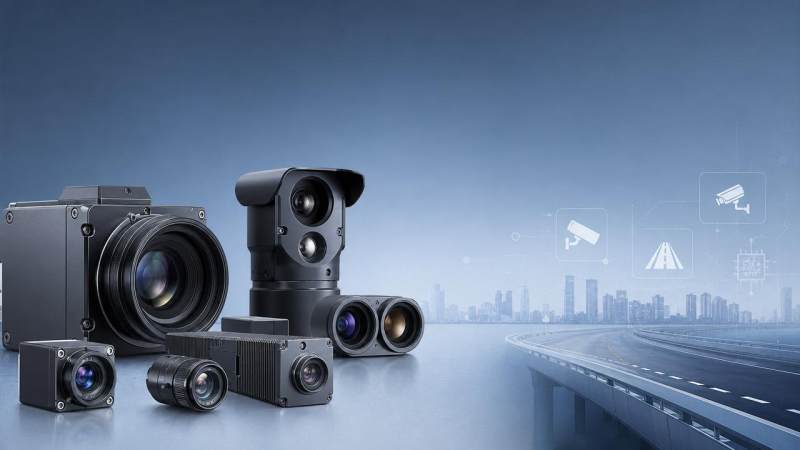
As modern detection systems evolve across public safety, smart infrastructure, and industrial monitoring, optical applications are becoming central to accuracy, speed, and environmental adaptability. For technical evaluators, understanding where optical applications fit best is essential to balancing compliance, performance, and long-term system value in increasingly complex security and illumination scenarios.
Why a checklist-based approach works best for evaluating optical applications
For technical assessment teams, the challenge is rarely deciding whether optical technology matters. The real task is determining which optical applications deliver measurable value in a specific detection environment, and which ones add cost, integration complexity, or compliance risk without enough operational benefit. A checklist-based method is useful because modern detection systems sit at the intersection of optics, electronics, software analytics, lighting conditions, and procurement constraints.
This is especially relevant in the broader security and infrastructure landscape tracked by GSIM, where public safety upgrades, smart construction, AI-enabled monitoring, and optical environment optimization are moving together. Evaluators need a practical way to compare use cases, test assumptions, and align optical applications with standards, service life, and return on deployment. Instead of starting with theory, it is more efficient to begin with the questions that directly affect performance: what must be detected, under which conditions, at what speed, and with what legal or operational constraints.
First-screen checklist: what to confirm before selecting optical applications
Before reviewing vendors, sensor models, or analytics platforms, technical evaluators should verify a core set of decision points. These checks prevent mismatches between an optical subsystem and the real detection objective.
- Define the target event clearly: Are you detecting presence, motion, identity, shape, heat contrast, distance, surface defects, smoke, glare, occupancy, or abnormal behavior? Different optical applications are optimized for different signal types.
- Map environmental conditions: Confirm lighting variability, weather exposure, vibration, dust, reflective surfaces, fog, backlight, temperature extremes, and electromagnetic coexistence with other devices.
- Set required detection distance and field coverage: Long-range perimeter detection, short-range access control, and close-range industrial inspection require different lenses, illumination strategies, and sensor formats.
- Check response-time requirements: Real-time alerts for intrusion or traffic hazards may need low-latency optical processing, while periodic quality inspection can tolerate slower image handling.
- Confirm compliance and privacy limits: Some optical applications collect identifiable imagery, while others rely on abstracted optical signals or non-visible wavelengths with different legal and ethical implications.
- Review infrastructure compatibility: Power supply, edge compute capability, network bandwidth, mounting conditions, and maintenance access will shape what is practical.
- Estimate lifecycle cost, not just purchase price: Include calibration, cleaning, replacement cycles, analytics licensing, integration testing, and operator training.
If these items are not fixed early, optical applications can be over-specified in low-risk environments or underperform in critical monitoring zones.
Core decision guide: where optical applications fit best in modern detection systems
1. Video-based security detection
One of the strongest fits for optical applications is video-based detection in public safety, facility protection, and urban monitoring. High-resolution cameras, low-light imaging, infrared support, and optical zoom provide scalable visual detection for perimeter control, crowd monitoring, incident review, and AI-assisted event recognition.
Best-fit conditions include mixed human and vehicle traffic, need for visual evidence, and environments where operators must verify alarms quickly. For technical evaluators, the key checks are nighttime performance, dynamic range, motion blur control, lens contamination tolerance, and integration with analytics. In this area, optical applications are most valuable when visual confirmation matters as much as automatic detection.
2. Low-light and night detection environments
Optical applications fit exceptionally well where ambient illumination is poor or inconsistent. This includes transportation corridors, logistics yards, substations, tunnels, ports, and semi-rural infrastructure. Technologies such as near-infrared imaging, active illumination, thermal-assisted optical combinations, and wide dynamic range imaging help maintain detection quality when visible-light conditions fail.
The main evaluation standard here is not image sharpness alone, but detection reliability under degraded optical conditions. Technical teams should compare false alarm rates caused by insects, rain scatter, headlight flare, or shadow movement. GSIM-aligned decision-making also suggests checking whether illumination strategies support both safety objectives and energy optimization goals.
3. Industrial inspection and process monitoring
In industrial settings, optical applications are often the best choice for non-contact detection of defects, alignment errors, contamination, package integrity, fluid levels, and surface anomalies. Compared with purely mechanical or manual inspection, optical detection supports higher speed, repeatability, and data traceability.
This fit is strongest when the object has measurable visual, reflective, geometric, or spectral characteristics. Evaluators should prioritize resolution-to-defect-size ratio, conveyor speed compatibility, calibration stability, and sensitivity to ambient lighting changes. Where uptime is critical, the simpler optical setup may outperform a more advanced system that requires frequent tuning.
4. Smart building occupancy and environmental sensing
Optical applications also fit well in smart buildings where occupancy awareness, entrance monitoring, people flow estimation, and lighting optimization are linked. In these cases, optical sensing helps coordinate security assurance with operational efficiency. It can support adaptive lighting, queue analysis, restricted-area alerts, and energy-saving routines.
The best-fit scenario is one where the system needs spatial awareness rather than only binary presence detection. Technical evaluators should assess privacy-preserving optical modes, edge processing options, and whether the system can distinguish between transient movement and actual occupancy. This is especially relevant for public and commercial facilities facing both compliance pressure and sustainability targets.
5. Transportation and roadside detection
For mobility infrastructure, optical applications are highly effective in lane observation, vehicle classification, incident detection, pedestrian conflict analysis, and tunnel visibility monitoring. Their strength lies in broad-area coverage and rich scene interpretation. When integrated with AI, optical systems can support predictive detection rather than simple event logging.
However, they fit best when site geometry, lighting transitions, and maintenance access are well understood. Glare, occlusion, snow, and lens soiling can undermine performance. As a result, transportation deployments should be judged not only by daytime accuracy but by sustained operation across seasonal and traffic variations.
Quick comparison table: how to judge fit by scenario
Common gaps technical evaluators should not overlook
Many deployment issues do not come from weak optics, but from incomplete evaluation. The following risk reminders are among the most common:
- Testing only under ideal light. Optical applications must be validated at dawn, dusk, nighttime, and during rapid transitions.
- Ignoring lens maintenance burden. Dust, salt, grease, and condensation can reduce detection quality faster than expected.
- Overestimating AI compensation. Analytics can improve interpretation, but they cannot fully recover missing signal quality from poor optics.
- Failing to align illumination and sensing. Security lighting may create glare or shadow zones that reduce sensor reliability.
- Treating all compliance as data compliance. Optical applications may also involve installation, line-of-sight, retention, workplace safety, and sector-specific surveillance rules.
- Skipping long-term procurement analysis. Spare parts, firmware support, and interoperability matter just as much as initial benchmark results.
Execution advice: how to assess optical applications step by step
A practical evaluation process should move from mission fit to environmental validation, then to integration and lifecycle review. For most organizations, the following order works well:
- Start with the failure consequence. If missed detection creates safety or legal exposure, prioritize reliability over feature breadth.
- Create a site condition matrix. Include illumination profile, target movement pattern, obstruction sources, cleaning frequency, and seasonal changes.
- Run scenario-based tests. Evaluate the optical system against actual operational scenes rather than laboratory-only specifications.
- Score integration readiness. Confirm compatibility with video management systems, alert workflows, storage policy, and edge or cloud architecture.
- Review total value. The best optical applications are not the most advanced on paper, but the ones that sustain usable detection quality at acceptable operating cost.
For organizations navigating 2026 digital infrastructure and urban safety upgrades, this disciplined process helps connect technology selection with the broader goals of resilience, transparency, and standards-based deployment. That is also where GSIM’s strategic intelligence perspective becomes useful: technical evaluation should not happen in isolation from regulatory shifts, procurement behavior, and optical environment trends.
FAQ for technical evaluators
Are optical applications always better than non-optical detection methods?
No. Optical applications are strongest when the target event has useful visual, spatial, reflective, or spectral characteristics. In severe occlusion, heavy contamination, or privacy-constrained contexts, they may need to be paired with radar, acoustic, thermal, or access-control signals.
What is the most important metric to compare optical applications?
There is no single universal metric. The best starting point is detection reliability under real operating conditions. Resolution, frame rate, and sensitivity matter, but only in relation to the event you need to detect and the environment where the system will run.
How should teams handle future-proofing?
Prioritize interoperability, firmware support, analytics flexibility, and maintainable optical components. Future-proofing should focus on upgrade paths and standards alignment rather than assuming every advanced feature will be useful later.
Final checklist before moving to supplier discussions
Before requesting proposals or pilot plans, confirm that your team can answer five practical questions: which detection event matters most, what environmental conditions are non-negotiable, which compliance rules apply, what integration architecture is already fixed, and what operating budget is realistic over the system lifecycle. When these answers are clear, optical applications can be matched more accurately to public safety, industrial, commercial, or infrastructure needs.
If you need to move from evaluation to implementation, the next step should be a structured discussion around performance thresholds, optical parameters, installation constraints, maintenance expectations, project timeline, and budget boundaries. For cross-border projects or standards-sensitive deployments, it is also wise to review procurement trends, legal obligations, and optical environment strategy early, so the final solution supports both technical performance and long-term decision confidence.
The VitalSync Intelligence Brief
Receive daily deep-dives into MedTech innovations and regulatory shifts.