
Security
Optical Sensing in Security Solutions Compared
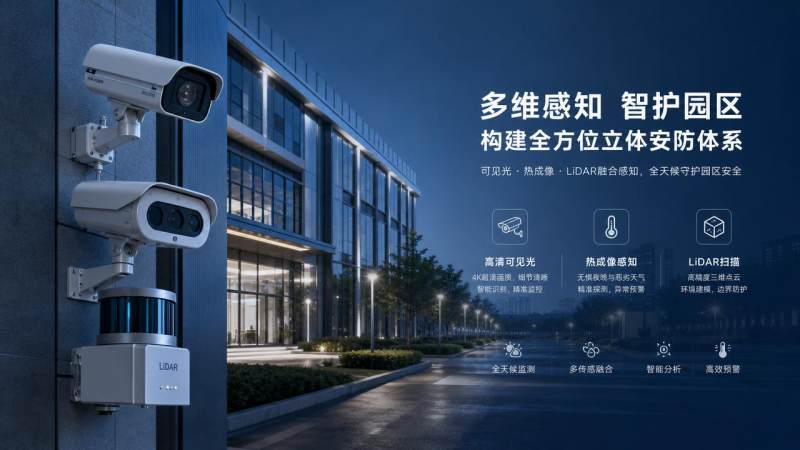
For procurement teams navigating tighter compliance, smarter infrastructure, and rising public safety demands, understanding optical sensing in security solutions is no longer optional. From AI-enabled surveillance to optical environment optimization, the right sensing strategy affects detection accuracy, system integration, and long-term value. This comparison helps buyers evaluate technologies more clearly and make informed sourcing decisions in a fast-evolving global security market.
When buyers search for optical sensing in security solutions, they are usually not looking for theory alone. They want to know which sensing technologies perform best in real environments, what trade-offs exist between cost and capability, and how to avoid buying systems that look advanced on paper but fail in deployment. The short answer is this: there is no single best optical sensing method for every project. The right choice depends on threat profile, lighting conditions, compliance demands, integration needs, and lifecycle economics.
For procurement professionals, the most useful comparison is not simply camera versus sensor. It is a decision framework that connects sensing type, operating conditions, business risk, and supplier credibility. That is especially important in public infrastructure, smart construction, transportation, and commercial facilities, where optical sensing must support both security assurance and reliable performance under changing environmental conditions.
What procurement teams are actually trying to solve
In most buying cycles, the goal is not to purchase “optical sensing” as a category. The goal is to reduce blind spots, improve response quality, meet regulatory expectations, and protect capital investment. Procurement teams are often asked to compare solutions across multiple departments, including security operations, IT, facilities, compliance, and project delivery.
This creates a practical evaluation challenge. A vendor may emphasize image resolution, another may promote AI analytics, and a third may focus on low-light capability. Yet buyers need to compare all of them against a common set of questions: Will the system detect the events that matter? Will it work in this specific environment? Can it integrate with existing infrastructure? And will it remain compliant and supportable over time?
That is why the most effective procurement process starts with intended outcomes. If the project requires perimeter intrusion detection at night, the sensing priorities differ from those of a smart campus needing crowd monitoring, access control verification, and lighting-aware video optimization. Understanding intended use cases is the foundation of any meaningful comparison.
What “optical sensing” includes in modern security systems
In security applications, optical sensing refers to technologies that detect, measure, or interpret light to identify objects, movement, behaviors, or environmental conditions. The category is broader than standard CCTV. It includes visible-light imaging, infrared sensing, thermal imaging, LiDAR-based perception, photoelectric sensors, multispectral systems, and optical modules used to support automation or machine vision functions.
Visible-light cameras remain the most familiar option because they provide clear scene information, evidence capture, and compatibility with video analytics. However, their effectiveness depends heavily on illumination quality, contrast, weather, and camera placement. In high-glare, low-light, or rapidly changing outdoor environments, standard imaging may not be enough on its own.
Infrared and thermal technologies add critical capability where visible-light systems struggle. Infrared-assisted imaging helps extend performance in darkness, while thermal sensing detects heat signatures and can identify people or vehicles even in low visibility. LiDAR and active optical ranging can improve spatial awareness, object tracking, and zone protection in advanced deployments. Each option has strengths, limitations, and procurement implications.
Comparing the main optical sensing technologies buyers will encounter
Visible-light imaging is usually the baseline for surveillance projects. It is cost-effective, widely available, and useful for identification, forensic review, and general monitoring. Its main weakness is dependence on scene lighting. If illumination is poor or inconsistent, image quality drops and analytics accuracy may decline. For projects with stable lighting and clear line of sight, it offers strong value.
Low-light and near-infrared enhanced cameras improve performance where lighting is limited but not completely absent. These systems can support night operations without requiring excessive visible illumination. They are often a practical step up from standard cameras in parking areas, perimeters, logistics zones, and municipal spaces. Buyers should verify actual scene performance rather than relying on laboratory sensitivity claims.
Thermal imaging is valuable for detection in darkness, fog, smoke, or visually cluttered environments. It is especially relevant for perimeter security, critical infrastructure, utility sites, and transport corridors. Thermal systems are usually better at detecting presence than identifying facial detail. That means they are excellent for early warning but may need to be paired with visible imaging for evidentiary purposes.
LiDAR and optical ranging sensors provide distance and depth information. These systems are useful for advanced intrusion zones, autonomous site monitoring, and environments where three-dimensional scene understanding improves reliability. They can reduce false alarms in some complex applications, but they often involve higher upfront cost, more specialized integration, and stricter calibration needs.
Photoelectric and beam-based optical sensors are common in access points, fencing lines, automatic barriers, and localized intrusion detection. They do not provide rich visual information, but they are highly efficient for defined trigger events. Procurement teams should consider them where a simple, robust, event-driven sensing layer is more appropriate than full video coverage.
Multispectral and hybrid optical platforms combine multiple sensing modalities, such as visible plus thermal or camera plus LiDAR. These systems can deliver stronger detection resilience across variable conditions. They are increasingly attractive for high-value sites and smart city applications, but their success depends on software integration quality and operator workflow design, not just hardware capability.
Which sensing option performs best in real operating conditions?
The answer depends on the environment more than the specification sheet. In bright, controlled indoor spaces, high-quality visible-light systems usually provide the best cost-to-performance ratio. In low-light perimeters, mixed visible and thermal coverage often produces better results than upgrading visible cameras alone. In weather-exposed or industrial settings, ruggedization, optical cleanliness, and calibration stability may matter more than headline resolution.
Procurement teams should also consider how the site changes over time. A construction zone, for example, may experience dust, temporary lighting, moving barriers, and evolving access routes. A sensor that works well on day one may become unreliable after layout changes or environmental degradation. Buyers should ask vendors how the system handles seasonal shifts, glare, rain, airborne particles, and lighting redesign.
False alarms are another real-world issue. A system that is highly sensitive but operationally noisy can increase labor costs and reduce trust from security staff. Optical sensing in security solutions should therefore be judged not only by how much it can detect, but by how consistently it distinguishes meaningful threats from harmless motion, reflections, weather effects, or shadows.
How optical environment optimization affects security outcomes
One procurement mistake is treating sensing hardware as separate from the optical environment. In practice, lighting design, reflection management, contrast control, and placement geometry have a major effect on security performance. A high-end sensor installed in poor lighting conditions may underperform a mid-range system deployed in a well-optimized optical environment.
This is where buyers should think beyond camera lists. Ask whether the solution includes guidance on illumination levels, spectral compatibility, glare reduction, field-of-view planning, and night transition behavior. In urban safety upgrades and smart infrastructure, optical environment optimization is increasingly part of the performance equation, not an optional design detail.
For example, if a site uses LED lighting with specific modulation characteristics, the interaction with image sensors and analytics may affect detection consistency. Similarly, poorly aimed lighting can create hotspots, shadows, and lens flare that reduce usable scene information. Procurement teams that evaluate sensing and illumination together are more likely to achieve stable operational outcomes.
Key buying criteria beyond image quality
Image clarity is important, but procurement decisions should include broader metrics. The first is detection relevance: can the system reliably identify the people, vehicles, or behaviors that create risk? The second is integration fit: does it connect smoothly with video management systems, access control, alarm platforms, edge analytics, and broader command environments?
The third is compliance and governance. Depending on jurisdiction and project type, buyers may need to evaluate data retention rules, privacy controls, auditability, cybersecurity hardening, and product conformity with public procurement standards. A technically strong sensor can still become a poor purchasing decision if it creates legal or certification problems later.
The fourth is total cost of ownership. This includes installation complexity, maintenance frequency, cleaning requirements, calibration needs, firmware support, software licensing, network load, and training demands. Some advanced optical sensing systems appear efficient at the procurement stage but become expensive through servicing, retraining, and integration updates.
The fifth is supplier maturity. Buyers should evaluate the vendor’s track record in comparable environments, support capabilities across regions, roadmap transparency, and responsiveness to standards evolution. In security markets shaped by compliance and digital infrastructure policy, vendor reliability matters as much as sensor performance.
How AI changes the comparison
AI has shifted optical sensing in security solutions from passive observation toward active interpretation. Many systems now combine optics with analytics for object classification, behavior recognition, tracking, occupancy analysis, and anomaly detection. This can improve operational efficiency, but it also complicates procurement.
Buyers should separate sensor capability from analytic capability. A vendor may claim excellent accuracy, but that performance may depend on highly controlled conditions, narrow training data, or ideal placement. Procurement teams should ask how the analytics perform across different lighting conditions, densities, camera angles, and local operating contexts. Independent validation or pilot testing is often more useful than marketing claims.
Another concern is compute architecture. Some AI functions run on the edge, while others depend on centralized processing or cloud resources. This affects latency, bandwidth, cybersecurity posture, and scalability. For larger infrastructure projects, the procurement decision should consider not only detection quality but also how the AI stack fits enterprise architecture and operational resilience goals.
Common sourcing mistakes and how to avoid them
A frequent error is buying based on a single benchmark, such as megapixels, night vision distance, or AI features, without mapping those claims to actual site conditions. Another is treating all environments as equivalent. Optical sensing that works in a retail interior may not perform well in a wet logistics yard, border perimeter, or transit platform.
Buyers also sometimes overlook interoperability. If a sensing platform requires proprietary software layers, restricted APIs, or specialized maintenance tools, the long-term procurement risk increases. Open integration pathways, clear documentation, and lifecycle support commitments should be part of the evaluation process.
Finally, some teams underweight operational usability. If alerts are confusing, dashboards are fragmented, or maintenance tasks are burdensome, overall system value declines. Procurement should involve end users early enough to confirm that the chosen solution supports workflows, not just technical objectives.
A practical evaluation framework for procurement teams
To compare optical sensing options effectively, start with five steps. First, define the operational objective by zone: detection, identification, tracking, counting, access verification, or hazard awareness. Second, map environmental conditions, including light levels, weather, distance, motion patterns, and obstruction risks.
Third, identify regulatory and policy constraints, especially for privacy, data use, surveillance governance, and critical infrastructure assurance. Fourth, compare candidate technologies against measurable criteria: detection reliability, false alarm rate, integration effort, maintenance burden, and lifecycle cost. Fifth, request pilot evidence or scenario-based demonstrations using conditions close to your actual deployment environment.
This approach helps procurement teams move from feature comparison to decision quality. It also makes vendor discussions more transparent. Instead of asking which product is “best,” buyers can ask which sensing architecture best supports the defined security outcome under documented operating conditions.
Where the market is heading
The market is moving toward layered sensing rather than one-device dependence. Hybrid systems that combine visible imaging, thermal data, AI analytics, and optical environment optimization are becoming more common in critical sites and urban safety programs. This trend reflects a broader reality: resilience now matters more than isolated specifications.
There is also growing interest in optical systems that support wider infrastructure intelligence, not just incident detection. Occupancy flows, safety compliance, incident verification, and energy-aware lighting coordination are increasingly part of the value proposition. For procurement teams, this means future-readiness should be assessed alongside immediate security needs.
At the same time, standards, legal expectations, and public scrutiny are increasing. Solutions that can demonstrate transparent governance, explainable performance claims, and alignment with international compliance frameworks will likely hold stronger long-term value in public and enterprise procurement.
Conclusion: how to make a better optical sensing decision
The best approach to optical sensing in security solutions is not to search for the most advanced technology in isolation. It is to match sensing architecture to real operational goals, environmental conditions, compliance obligations, and lifecycle economics. For most procurement teams, the strongest choice will be a balanced solution that combines reliable detection, practical integration, and manageable long-term support.
Visible-light systems remain essential, but they are not sufficient for every risk profile. Thermal, infrared, LiDAR, and hybrid optical systems each offer distinct advantages when used in the right context. Buyers who evaluate them through performance relevance, not product hype, are more likely to secure both operational value and procurement confidence.
In a market shaped by smarter infrastructure and stricter governance, better sourcing decisions come from asking sharper questions. Compare technologies by scenario, validate them in realistic conditions, and assess the supplier as carefully as the sensor. That is how procurement teams can reduce uncertainty, improve security outcomes, and invest with greater clarity.
The VitalSync Intelligence Brief
Receive daily deep-dives into MedTech innovations and regulatory shifts.