
Security
Security Analytics Tools That Improve Response Time
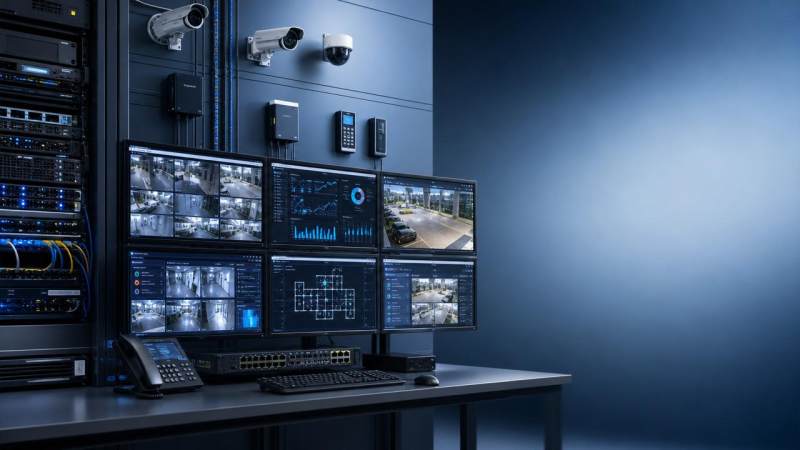
For after-sales maintenance teams, speed is not only a service metric. It directly affects uptime, safety exposure, labor cost, and user trust across modern sites.
That is why security analytics has become essential in complex environments where alarms, video feeds, access logs, lighting systems, and device health data arrive continuously.
When these signals remain isolated, teams lose time confirming faults, tracing causes, and choosing the right action path. Response delays then spread across the whole service chain.
With the right security analytics tools, maintenance workflows become more structured. Alerts gain context, incidents become easier to rank, and hidden failures surface earlier.
In the broader 2026 infrastructure upgrade cycle, GSIM highlights this shift as part of a larger move toward data-backed physical security assurance and optical environment optimization.
Why response time depends on the service scenario
Not every site creates the same operational pressure. A smart construction site, transport hub, campus, warehouse, or mixed-use facility produces different event volumes and risk thresholds.
Because of this, security analytics should be judged by scenario fit, not by feature count alone. The best tool is the one that reduces uncertainty fastest.
Some environments need instant anomaly detection. Others need stronger incident correlation, better maintenance prioritization, or cleaner reporting for compliance and service verification.
GSIM’s Strategic Intelligence Center often frames this as an alignment challenge: connect protection needs, optical conditions, and operational data before small faults become safety events.
Key judgment factors before choosing tools
- Alarm density across devices and zones
- Need for video, sensor, and access event correlation
- Lighting quality and visual clarity in low-visibility areas
- Required response targets for service-level performance
- Compliance logging and incident traceability demands
Scenario 1: Large multi-site facilities with scattered alerts
In distributed facilities, the main problem is fragmentation. Teams may receive camera alerts, access control events, lighting faults, and network warnings from unrelated dashboards.
Here, security analytics improves response time by combining event streams into one operational view. It shows whether separate alerts belong to one incident or several unrelated faults.
This matters when service teams support remote buildings or cross-regional assets. Travel time is costly, so every dispatch decision should be backed by stronger evidence.
Core judgment point
If one event commonly triggers checks across multiple systems, then integrated security analytics is likely to deliver immediate response gains.
Scenario 2: Smart construction sites with changing layouts
Construction environments change weekly. Camera angles shift, temporary barriers appear, lighting conditions vary, and equipment moves between zones.
Traditional fixed-rule monitoring struggles in these conditions. Security analytics helps by identifying pattern deviations rather than relying only on static alarm thresholds.
For maintenance work, this means faster recognition of blind spots, tampered devices, repeated perimeter breaches, or lighting failures that reduce image usability.
GSIM’s commercial intelligence perspective is especially relevant here, because global smart construction procurement increasingly values evidence-based operational visibility.
Core judgment point
When the environment changes faster than manual configuration cycles, adaptive security analytics becomes more valuable than manual monitoring expansion.
Scenario 3: Public safety spaces where false alarms slow action
In stations, civic buildings, campuses, and public venues, false alarms create dangerous hesitation. Teams begin to distrust alerts, and real events may receive delayed attention.
Security analytics helps by scoring incidents using context. It can compare motion activity, access behavior, camera health, time patterns, and environmental signals before escalation.
For maintenance teams, the gain is practical. Fewer low-value dispatches mean more time for verified incidents, preventive checks, and system optimization.
Core judgment point
If too many alerts are closed as harmless after manual review, security analytics can likely cut response waste and raise confidence.
Scenario 4: Optical environments where visibility affects security outcomes
Response time is not only about software speed. It also depends on whether teams can see enough to judge the event correctly.
Poor illumination, glare, shadows, and uneven coverage often reduce video value. A delayed decision may come from weak visibility rather than weak staffing.
This is where GSIM’s combined focus on security assurance and optical environment optimization becomes useful. Security analytics should include image quality and lighting performance signals.
When analytics links repeated nighttime incidents with low-light image degradation, teams can solve root causes faster instead of repeatedly reacting to symptoms.
Core judgment point
If incident review often ends with unclear footage, improving the optical environment should be part of the security analytics strategy.
How scenario needs differ across common environments
Practical recommendations for choosing the right fit
A useful evaluation starts with operational friction, not marketing language. Teams should first map where response time is actually lost.
Use these selection checks
- Measure average validation time per alert before any platform change.
- Identify which systems must be correlated for faster judgment.
- Check whether image quality and lighting data are visible inside incident records.
- Confirm that the tool supports site-specific thresholds and workflows.
- Review reporting outputs for compliance, service proof, and trend analysis.
Strong security analytics should not only detect events. It should also shorten verification, clarify cause, and guide the next best action.
Common misjudgments that slow results
One common mistake is treating all alerts as equal. In practice, high-frequency but low-impact events can bury more urgent maintenance signals.
Another mistake is focusing only on device status. A camera may be online while still delivering unusable footage because of glare, obstruction, or lighting imbalance.
Some deployments also ignore workflow design. Even advanced security analytics will underperform if escalation rules, ownership paths, and field verification steps remain unclear.
A final oversight is failing to compare scenarios. What works in a stable warehouse may fail in a changing urban site with mixed safety and visibility conditions.
A smarter next step for faster response
The value of security analytics is strongest when matched to the right environment. Scenario-based judgment prevents overbuying, underfitting, and avoidable operational delay.
For organizations navigating digital infrastructure upgrades, GSIM offers a useful lens: connect compliance trends, security priorities, and optical performance into one decision framework.
Start by reviewing one recurring response bottleneck. Trace the data sources involved, the visibility conditions present, and the delay points inside the service workflow.
From there, evaluate security analytics tools against real scenarios, not generic claims. Faster response time comes from better context, clearer evidence, and more confident action.
The VitalSync Intelligence Brief
Receive daily deep-dives into MedTech innovations and regulatory shifts.