
Security
Digital Lighthouse for Critical Infrastructure: Use Cases
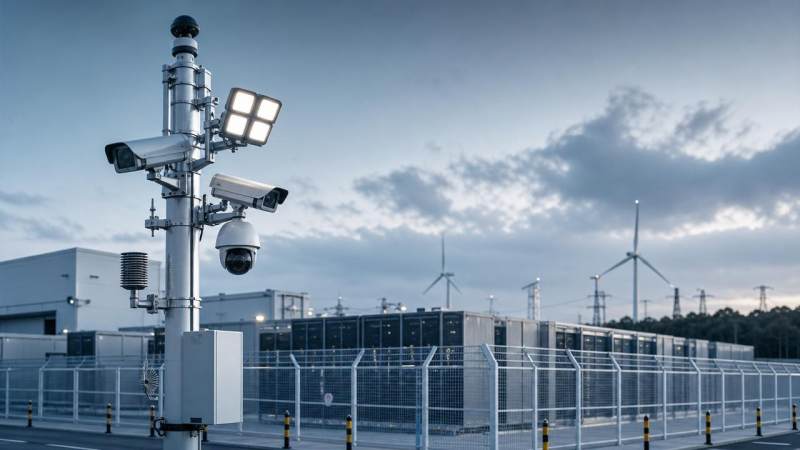
Digital Lighthouse for Critical Infrastructure: Use Cases That Turn Signals into Safer Decisions
As critical infrastructure becomes more connected, technical evaluators need more than isolated product data.
They need actionable intelligence linking security requirements, optical performance, compliance, and deployment realities.
A digital lighthouse for critical infrastructure helps decision-makers navigate this complexity with structured guidance.
It transforms fragmented signals into safer facilities, smarter surveillance, and more resilient public systems.
GSIM supports this mission through intelligence, standards interpretation, technology tracking, and procurement insight.
Why Scenario Judgment Matters Before Technology Selection
Critical infrastructure is not one uniform environment.
A transport hub, power substation, data center, port, hospital, and public square all present different risk patterns.
A digital lighthouse for critical infrastructure starts by separating these scenarios before discussing cameras, lighting, sensors, or analytics.
This prevents expensive mismatches between protection intent and actual operating conditions.
Some sites demand deterrence and visibility.
Others require low-glare optical environments, privacy-aware monitoring, or evidence-grade video under unstable lighting.
GSIM’s Strategic Intelligence Center connects global policy changes with optical technology evolution.
That connection is essential when resilience, compliance, safety, and operational continuity must be evaluated together.
Use Case 1: Transport Hubs Requiring Crowd Visibility and Incident Response
Airports, metro stations, and railway terminals combine high traffic, complex lighting, and fast-changing risk levels.
A digital lighthouse for critical infrastructure helps evaluate where visibility gaps may turn into safety failures.
The core judgment point is not only camera coverage.
It includes glare, backlight, emergency lighting, passenger flow, blind corners, and video analytics reliability.
GSIM intelligence can compare surveillance compliance rules, facial recognition restrictions, and public safety reporting requirements across regions.
This helps infrastructure planners avoid systems that work technically but fail legally or operationally.
For transport hubs, the recommended direction is layered assurance.
Combine optical mapping, event detection, crowd density monitoring, emergency illumination, and incident playback validation.
Use Case 2: Energy Facilities Where Perimeter Security Meets Harsh Environments
Power plants, substations, wind farms, and fuel storage sites often operate under isolated or hazardous conditions.
A digital lighthouse for critical infrastructure supports risk-based evaluation for perimeter intrusion, worker safety, and continuity protection.
The main challenge is environmental variability.
Dust, rain, heat shimmer, snow, corrosion, and vibration can reduce detection accuracy and optical clarity.
Security lighting must deter intrusion without creating unsafe glare for operators or nearby communities.
Video systems must support long-distance recognition while maintaining evidence quality during night operations.
GSIM’s commercial insights are useful when comparing procurement trends for ruggedized surveillance, smart poles, and AI-assisted perimeter solutions.
The best-fit approach prioritizes survivability, maintainability, standards alignment, and verified performance under site-specific stress conditions.
Use Case 3: Data Centers Needing Layered Access Control and Optical Discipline
Data centers are critical nodes for cloud services, finance, healthcare, logistics, and public administration.
A digital lighthouse for critical infrastructure helps assess both physical access security and internal operational visibility.
The central judgment point is controlled transparency.
Facilities need precise monitoring without exposing sensitive layouts, personnel movement patterns, or restricted assets unnecessarily.
Lighting design also affects maintenance efficiency, video capture, and emergency response.
Poor optical conditions can create shadows near racks, cages, loading areas, and mantrap entrances.
GSIM can support benchmark reviews for access control integration, audit trails, surveillance retention, and privacy-sensitive monitoring policies.
Recommended adaptation includes zoning, least-privilege visibility, tamper detection, fail-safe illumination, and documented evidence chains.
Use Case 4: Smart Construction Sites Facing Dynamic Risk Conditions
Construction sites change daily, making static security planning unreliable.
A digital lighthouse for critical infrastructure helps evaluate temporary risks across equipment zones, material storage, worker access, and night work.
The important judgment point is deployment flexibility.
Systems must move with the project while maintaining enough continuity for accountability and insurance documentation.
Optical conditions are especially difficult near cranes, scaffolding, excavation pits, reflective surfaces, and temporary barriers.
AI video analytics may fail if camera angles change without recalibration.
GSIM’s procurement trend analysis can identify which modular towers, lighting systems, and monitoring platforms are gaining practical acceptance.
The suitable strategy combines portable illumination, geofenced alerts, compliance records, and regular scene validation.
Use Case 5: Public Safety Corridors Requiring Trustworthy Urban Visibility
Public streets, bridges, tunnels, waterfronts, and civic zones require a balanced approach to safety and public trust.
A digital lighthouse for critical infrastructure helps compare lighting, surveillance, privacy, and emergency response needs in shared spaces.
The key judgment point is social acceptability.
Technology must reduce risk without appearing invasive, discriminatory, or visually disruptive.
Urban lighting should improve orientation, reduce dark zones, and support camera performance.
However, excessive brightness can create discomfort, light pollution, and contrast problems for drivers or pedestrians.
GSIM’s policy intelligence helps interpret electronic surveillance laws and emerging governance requirements for smart city deployments.
A practical plan should include public-risk mapping, optical audits, signage rules, data governance, and post-deployment performance review.
Different Scenario Needs Across Critical Infrastructure Environments
The same solution can create very different outcomes across infrastructure scenarios.
A digital lighthouse for critical infrastructure clarifies which performance factors deserve priority in each environment.
Scenario Adaptation Advice for Better Deployment Decisions
A digital lighthouse for critical infrastructure should guide practical decisions, not simply describe available technologies.
The following actions help connect scenarios, requirements, and procurement evidence.
- Define the operational risk before selecting surveillance or lighting equipment.
- Map optical conditions during day, night, emergency, and weather-stressed periods.
- Check regional compliance rules for video capture, data retention, and AI analytics.
- Validate performance using realistic scene tests, not only laboratory specifications.
- Compare total lifecycle requirements, including maintenance, calibration, upgrades, and audit support.
- Use procurement intelligence to identify proven patterns across similar infrastructure projects.
GSIM strengthens this process by linking global security policies with optical technology development.
Its digital lighthouse for critical infrastructure approach supports evidence-based planning across multiple sectors.
Common Misjudgments That Weaken Infrastructure Assurance
Many projects begin with product comparison before scenario confirmation.
This can create systems that look advanced but fail under real operating pressure.
A digital lighthouse for critical infrastructure helps expose these blind spots early.
Misjudgment 1: Treating Illumination as a Separate Facility Issue
Lighting directly affects surveillance accuracy, human safety, deterrence, and emergency navigation.
It should be evaluated with cameras, analytics, signage, and response procedures.
Misjudgment 2: Assuming AI Vision Works Equally Everywhere
AI vision depends on scene stability, angle, lighting quality, occlusion, and training relevance.
A digital lighthouse for critical infrastructure encourages validation against actual field conditions.
Misjudgment 3: Ignoring Compliance Until Late Procurement Stages
Electronic surveillance laws differ across jurisdictions and infrastructure categories.
Late compliance review can force redesign, delay approval, or limit system functionality.
Misjudgment 4: Measuring Success Only at Installation
Critical infrastructure environments evolve through expansion, regulation changes, and emerging threats.
Long-term assurance requires periodic audits, updated intelligence, and performance recalibration.
How GSIM Supports a Digital Lighthouse for Critical Infrastructure
GSIM is designed as a global intelligence portal for physical security assurance and optical environment optimization.
Its Strategic Intelligence Center interprets policies, tracks technology evolution, and analyzes commercial adoption signals.
This gives infrastructure planning a clearer connection between risk, standards, procurement, and deployment outcomes.
In 2026, infrastructure upgrades increasingly depend on integrated judgment rather than isolated hardware selection.
A digital lighthouse for critical infrastructure makes that judgment more transparent, repeatable, and defensible.
GSIM’s mission is to stitch global protection demands with precision manufacturing supplies.
Its slogan, “Visioning Risks, Illuminating the Future,” reflects this combined security and illumination perspective.
Action Path: Turning Scenario Intelligence into Infrastructure Assurance
The next step is to convert broad risk concerns into scenario-specific evaluation criteria.
Start by identifying the facility type, operating constraints, compliance exposure, and optical performance requirements.
Then compare technologies through field relevance, regulatory fit, lifecycle cost, and evidence quality.
A digital lighthouse for critical infrastructure provides the structure for that comparison.
With GSIM, infrastructure teams can move from fragmented market information to practical deployment confidence.
The result is not only better security technology selection.
It is a stronger knowledge system for safer, more resilient, and more trusted critical environments.
- physical security assurance
- optical environment optimization
- global intelligence portal
- strategic intelligence center
- security policies
- optical technology
- electronic surveillance
- AI vision
- procurement trends
- smart construction sites
- precision manufacturing
- knowledge system
- security technology
- global protection demands
- digital lighthouse
- commercial insights
- protection demands
- global security
- digital lighthouse for critical infrastructure
The VitalSync Intelligence Brief
Receive daily deep-dives into MedTech innovations and regulatory shifts.