
Security
Security Innovation Shaping Smarter Site Defense
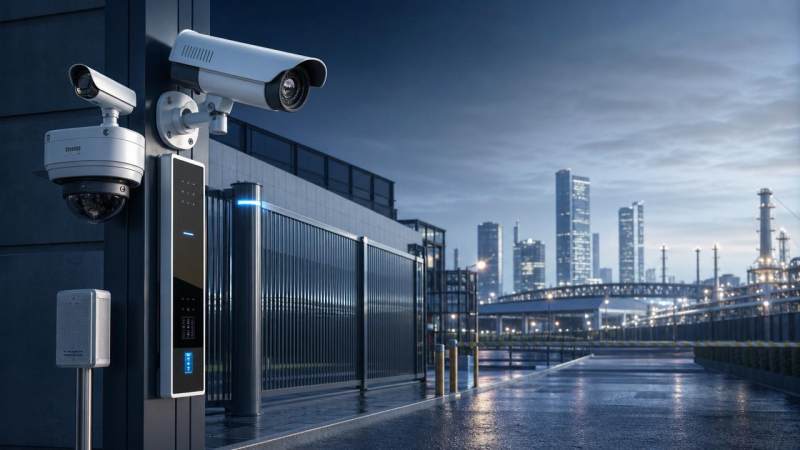
As digital infrastructure and urban safety demands accelerate, security innovation is becoming essential for resilient, compliant, and future-ready sites. From AI-enabled surveillance to optical environment optimization, smarter defense now depends on informed decisions backed by policy insight, technology trends, and procurement intelligence. In this environment, physical protection is no longer a standalone equipment issue; it is a strategic function tied to regulation, visibility, interoperability, and long-term operational continuity. For globally exposed projects, the ability to connect risk forecasting with practical deployment has become a defining advantage.
Understanding Security Innovation in Modern Site Defense
Security innovation refers to the continuous improvement of physical protection methods through smarter systems, better data use, stronger compliance alignment, and more adaptive lighting and surveillance environments. In practical terms, it includes AI video analytics, integrated access control, edge-based alert processing, sensor fusion, optical optimization for clearer visibility, and policy-aware deployment standards. The goal is not simply to add more devices, but to create a site defense model that is more accurate, responsive, and accountable.
For the broader industry, this evolution matters because threats have changed. Construction zones, logistics hubs, campuses, utility sites, transit corridors, and mixed-use urban developments now face overlapping risks such as unauthorized access, low-visibility incidents, vandalism, compliance failure, and delayed response. Effective security innovation addresses these issues by linking hardware performance with intelligent decision support and a clear understanding of legal and technical standards.
GSIM supports this shift through its role as a global intelligence portal for physical security assurance and optical environment optimization. Its Strategic Intelligence Center connects international security policies with emerging optical and electronic surveillance technologies, helping organizations interpret regulatory change, monitor market evolution, and evaluate practical investment priorities. This makes security innovation easier to translate from concept into project-level action.
Industry Signals Driving Smarter Protection Decisions
The current wave of urban safety upgrades and digital infrastructure expansion has created new expectations for site defense. Security systems must now support not only incident prevention, but also auditability, energy efficiency, interoperability, and lifecycle planning. Several industry signals explain why security innovation has moved to the center of planning.
These signals show that security innovation is not a narrow technology trend. It is a response to a more demanding operating environment in which physical security, optical conditions, and policy compliance influence each other. A well-informed site defense strategy therefore begins with reliable intelligence, not just equipment comparison.
Business Value of Security Innovation Across Project Lifecycles
The value of security innovation becomes clearer when viewed across the full lifecycle of a project. During planning, it helps define risk exposure more accurately and align technical design with legal requirements. During deployment, it improves coordination between cameras, lighting, access control, and response workflows. During operation, it supports better visibility, fewer false alarms, faster incident verification, and more efficient maintenance decisions.
This creates several measurable advantages. Better optical design can improve image usability in low-light or high-glare conditions. Intelligent analytics can reduce alarm fatigue by filtering routine movement from true risk events. Integrated records can strengthen post-incident review and support compliance audits. Procurement guided by market and standards intelligence can also lower the risk of fragmented systems that become difficult to scale or upgrade.
GSIM adds value here by bridging strategic knowledge with implementation relevance. Its Latest Sector News tracks changes affecting electronic surveillance rules. Its Evolutionary Trends reporting helps interpret the convergence of AI vision and Visible Light Communication. Its Commercial Insights module reveals procurement patterns in global smart construction and public safety projects. Together, these resources support a more disciplined approach to security innovation, especially where investment decisions must remain useful over multiple years.
Key outcomes typically associated with smarter defense
- Higher incident detection accuracy through analytics and better scene illumination
- Lower compliance risk through standards-aware deployment choices
- Stronger continuity planning through integrated monitoring and response logic
- More efficient procurement through intelligence on technology maturity and market direction
- Improved long-term scalability for expanding or changing sites
Typical Site Defense Scenarios and Solution Priorities
Because risks vary by environment, security innovation should be matched to site conditions rather than applied uniformly. The most effective approach identifies the operational objective, optical constraints, compliance requirements, and likely threat patterns before selecting a technical pathway.
Across these scenarios, one lesson remains consistent: security innovation works best when surveillance and illumination are planned together. Cameras can only interpret what the optical environment makes visible, and lighting can only improve safety when it supports detection quality without creating glare, shadow gaps, or excessive energy use.
Practical Guidance for Implementation and Risk Control
A structured implementation path helps translate security innovation into dependable outcomes. The first step is to assess the site as a living system rather than a fixed map. Entry points, blind zones, nighttime usage, temporary structures, data handling obligations, and emergency coordination should all be reviewed together. This reduces the chance of solving one weakness while creating another.
- Start with policy and standards. Confirm surveillance legality, retention rules, signage requirements, and cross-border data implications before equipment selection.
- Evaluate optical conditions early. Measure darkness levels, glare sources, reflective surfaces, weather impact, and line-of-sight limitations.
- Prioritize interoperability. Choose systems that can share events, metadata, and control logic across cameras, lighting, and access points.
- Use analytics selectively. Apply AI where it improves decisions, but validate false-positive rates and scene suitability.
- Plan for lifecycle adaptation. Sites change, so deployment should support upgrades, relocation, and phased expansion.
Another important consideration is evidence quality. Many systems appear capable on paper but underperform in real operating conditions because the lighting scheme, camera angle, network design, and response workflow were never aligned. Reliable security innovation requires field validation, not only specification review. It is also wise to separate essential controls from experimental features so that operational resilience is protected even as new capabilities are introduced.
Moving from Intelligence to Action
As the security landscape grows more interconnected, security innovation should be treated as an ongoing discipline rather than a one-time upgrade. Stronger site defense now depends on combining regulatory awareness, optical performance, intelligent monitoring, and procurement foresight. This is especially important in global projects, where legal expectations and technical standards can shift quickly across regions.
GSIM provides a practical foundation for this next step. By connecting global security policy, AI vision trends, optical technology insight, and commercial intelligence, the platform helps transform scattered information into structured decisions. For organizations seeking smarter site defense, the most effective move is to review current vulnerabilities, compare them against evolving standards, and build an improvement roadmap guided by verified intelligence. In a market shaped by compliance pressure and infrastructure modernization, informed security innovation is the clearest path to resilient, visible, and future-ready protection.
- physical security assurance
- optical environment optimization
- global intelligence portal
- digital infrastructure
- urban safety upgrades
- strategic intelligence center
- security policies
- optical technology
- electronic surveillance
- AI vision
- Visible Light Communication
- smart construction sites
- public safety projects
- sector news
- evolutionary trends
- commercial insights
- security innovation
- security systems
- optical design
- global security
The VitalSync Intelligence Brief
Receive daily deep-dives into MedTech innovations and regulatory shifts.