
Security
Security Insights Shaping Safer Smart City Deployments
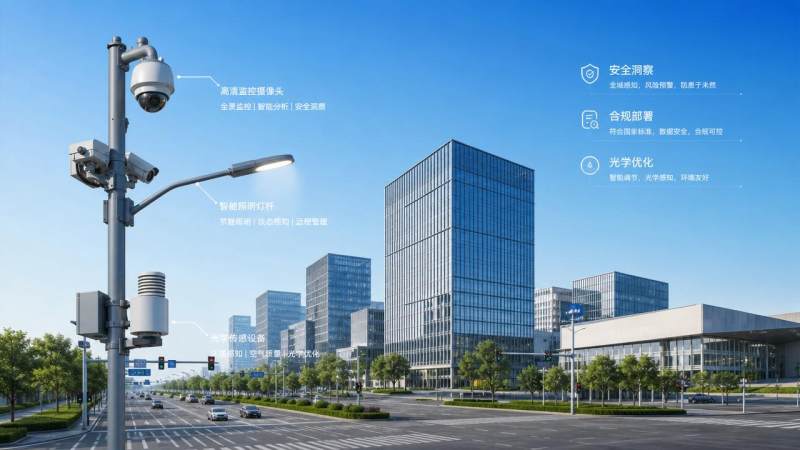
As cities accelerate digital infrastructure upgrades, security insights are becoming essential for decision-makers balancing safety, compliance, and long-term resilience. This article explores how smarter deployment strategies, policy awareness, and optical technology integration can help enterprises and public stakeholders build safer smart city ecosystems with greater confidence, efficiency, and future readiness.
What do security insights really mean in smart city deployments?
In the context of smart cities, security insights are not just reports, alerts, or isolated risk assessments. They are the combination of operational intelligence, regulatory understanding, technology evaluation, and real-world deployment feedback that helps leaders make safer decisions before problems become expensive failures. For enterprise decision-makers, security insights connect physical security assurance with digital infrastructure planning, vendor selection, procurement timing, and long-term compliance management.
This matters because modern urban systems are deeply interconnected. Surveillance networks, public lighting, smart traffic management, access control, emergency communication, optical sensing, and AI-enabled monitoring all influence one another. A weak decision in one layer can create vulnerabilities across the wider environment. Strong security insights help organizations see those hidden dependencies early.
For platforms such as GSIM, the value lies in turning fragmented market signals into actionable knowledge. That includes interpreting global electronic surveillance rules, tracking procurement shifts in public safety projects, and evaluating how optical technology affects visibility, detection reliability, and urban resilience. In other words, security insights help leaders understand not only what technology exists, but what is safe, compliant, scalable, and worth investing in.
Why are security insights receiving more attention during smart city upgrades?
The growing interest comes from a simple reality: smart city projects are no longer experimental. They are becoming core infrastructure investments with political, financial, and public trust implications. When cities and enterprises deploy connected security and illumination systems at scale, the consequences of poor planning increase sharply.
There are several reasons why security insights now sit at the center of these decisions. First, regulatory pressure is expanding. Data governance, camera placement, surveillance retention policies, and cross-border technology sourcing are under greater scrutiny. Second, threat models are changing. Urban safety is no longer only about physical intrusion; it includes system downtime, blind spots, sensor manipulation, and inconsistent environmental visibility. Third, budget accountability is higher. Decision-makers must justify not only upfront spending, but lifecycle performance, interoperability, and resilience over time.
At the same time, optical environment optimization has become more strategic. Lighting quality, contrast management, glare control, and visual clarity directly influence how well AI vision systems, operators, and emergency responders perform. Security insights therefore support a broader question: how can a city become more observable, more compliant, and more adaptive without creating fragmented systems that age poorly?
Which organizations benefit most from using security insights before deployment?
Although the phrase may sound broad, security insights are especially useful for organizations making high-impact infrastructure choices under uncertainty. Public agencies, urban developers, transport operators, industrial park managers, large campuses, healthcare networks, utilities, and multinational contractors all face similar questions: which systems should be prioritized, which standards must be met, and which risks are likely to emerge after installation?
For municipal stakeholders, security insights support decisions around public surveillance, emergency coordination, road safety, and citizen-facing trust. For private enterprises, they improve site protection, contractor management, perimeter visibility, and integration with existing control systems. For investors and project owners, they reduce the likelihood of stranded assets caused by noncompliance, obsolete technology choices, or poor cross-system compatibility.
The strongest use cases typically involve complex environments where safety, visibility, and regulation intersect. Examples include smart construction sites, logistics hubs, transit terminals, mixed-use urban developments, public event spaces, and mission-critical facilities. In these settings, security insights provide more than trend awareness. They act as a decision-support layer that can shape technical specifications, procurement criteria, rollout phases, and performance expectations.
What should decision-makers examine first when evaluating safer smart city strategies?
A common mistake is starting with product catalogs instead of decision criteria. Before comparing cameras, sensors, platforms, or lighting systems, leaders should define the operational purpose of the deployment. Is the main goal crime deterrence, real-time incident response, worker safety, asset protection, traffic optimization, or multi-agency coordination? Security insights become useful only when aligned with specific outcomes.
The next step is to review the risk environment. That includes threat exposure, environmental visibility conditions, legal restrictions, maintenance realities, and integration complexity. A technically advanced system may perform poorly if local lighting conditions reduce image quality or if regulations limit data use. This is why security insights should include both policy intelligence and optical performance considerations.
Decision-makers should also ask whether the deployment can scale. A pilot project may succeed in one district, but expansion across multiple sites often reveals weaknesses in bandwidth planning, governance, interoperability, or support capacity. Strategic intelligence platforms help by surfacing commercial insights, trend data, and implementation signals across markets, making it easier to distinguish hype from sustainable practice.
How do optical technologies improve the value of security insights?
Many smart city discussions focus heavily on cameras, analytics, and connectivity, but decision quality improves significantly when optical factors are considered from the start. Security insights become more accurate when they include illumination design, spectral behavior, night visibility, reflection management, and the compatibility between lighting conditions and machine vision systems.
For example, a surveillance system installed in a poorly lit logistics yard may technically meet procurement specifications while still delivering unreliable evidence or weak detection performance. Likewise, a bright but poorly directed lighting system can create glare, reduce contrast, and undermine AI-based identification. This is where optical environment optimization shifts from a secondary design issue to a strategic safety issue.
GSIM’s emphasis on the intersection between security order and optical technology reflects a wider market reality. The fusion of AI vision and emerging communication methods such as Visible Light Communication is changing how urban infrastructure is evaluated. Security insights that ignore lighting intelligence may miss one of the most practical levers for improving public safety, operational efficiency, and infrastructure performance.
What are the most common mistakes enterprises make when interpreting security insights?
One major mistake is treating security insights as static information rather than an evolving decision framework. Regulations, supplier reliability, AI capabilities, and geopolitical sourcing risks change quickly. A report that looked sufficient six months ago may no longer reflect current deployment exposure. Leaders should therefore use security insights as a recurring governance tool, not a one-time approval document.
Another common error is isolating security from procurement and infrastructure planning. In reality, security performance is shaped by contract terms, maintenance models, integration design, energy choices, and environmental conditions. If security insights do not influence these adjacent decisions, the organization may still inherit avoidable risks.
A third issue is overreliance on vendor claims. Product demonstrations are useful, but they rarely reflect the complexity of public spaces, mixed lighting environments, or evolving compliance obligations. Stronger security insights come from comparing technical promises with deployment data, policy constraints, and operational workflows.
- Assuming higher device density automatically means better safety
- Ignoring optical conditions that reduce image or sensor quality
- Treating compliance as a final checkpoint instead of a design input
- Launching citywide deployments before validating interoperability
- Failing to monitor global procurement and standards trends
How can decision-makers compare deployment options with more confidence?
Confidence comes from structured comparison, not intuition. Enterprises should build evaluation criteria that combine technical capability, legal fit, operational usability, supplier credibility, and optical performance. This creates a more realistic basis for deciding between competing smart city approaches.
A practical comparison process usually begins with site segmentation. Not every zone within a city or campus needs the same level of surveillance, illumination, or analytics. High-risk intersections, transit edges, public gathering points, and industrial loading areas often require different design priorities. Security insights help decision-makers tailor solutions by context instead of applying one standard everywhere.
It is also useful to compare options over the full deployment cycle. A lower initial price may lead to higher maintenance complexity, greater compliance burden, or limited future integration. Conversely, a better-aligned system may produce higher long-term value through more reliable detection, lower incident response times, and easier adaptation to policy changes. This is why strategic intelligence, commercial insights, and standards awareness should be reviewed together rather than separately.
A simple evaluation lens for enterprise teams
When comparing vendors, architectures, or rollout plans, ask whether the option improves visibility, supports compliance, integrates with current systems, scales across future sites, and remains supportable under changing regulations. If one of these dimensions is weak, the apparent advantage may not survive real deployment conditions. Good security insights expose those weaknesses before contracts are signed.
Before moving into procurement or implementation, what should be confirmed first?
Before any procurement decision, organizations should confirm five essentials. First, define the security objective in measurable terms. Second, verify the regulatory environment for surveillance, data handling, and infrastructure sourcing. Third, assess optical and environmental conditions that will affect system performance. Fourth, map integration needs with existing platforms, controls, and network architecture. Fifth, establish governance for maintenance, incident response, and future upgrades.
This is where GSIM-style intelligence becomes particularly useful. A decision-support platform that combines latest sector news, compliance interpretation, evolutionary trend reporting, and commercial insight can reduce blind spots across all five areas. It gives enterprise leaders a clearer basis for asking the right questions early, instead of correcting expensive assumptions later.
For organizations preparing the next step, the most productive conversations are rarely about devices alone. They should focus on deployment goals, required standards, site conditions, timeline expectations, data responsibilities, procurement risks, and future expansion logic. If you need to further confirm a specific solution, technical direction, implementation cycle, budget range, or cooperation model, start by clarifying those questions first. That is how security insights move from abstract information to safer, smarter, and more defensible smart city action.
- physical security assurance
- optical environment optimization
- digital infrastructure
- optical technology
- electronic surveillance
- AI vision
- Visible Light Communication
- procurement trends
- smart construction sites
- public safety projects
- risk assessment
- security order
- sector news
- commercial insights
- optical sensing
- security insights
The VitalSync Intelligence Brief
Receive daily deep-dives into MedTech innovations and regulatory shifts.