
Security
Security Integration Mistakes That Delay Multi-Site Projects
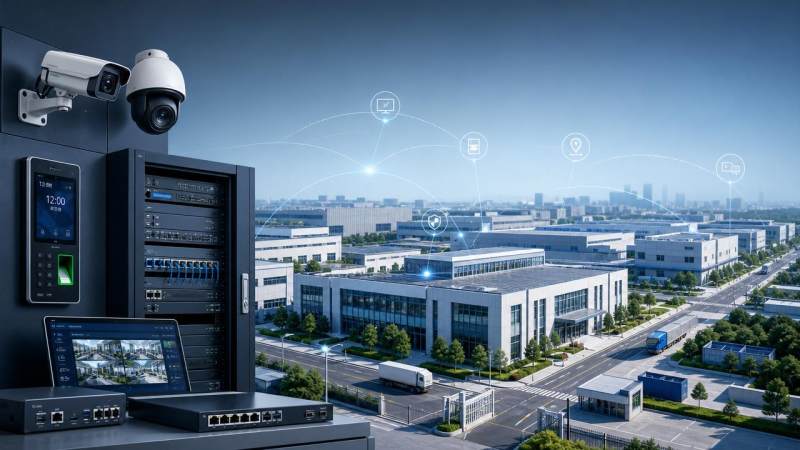
Multi-site deployments often fall behind not because of equipment shortages, but because critical security integration mistakes surface too late in planning and execution. For project managers and engineering leaders, understanding these gaps early can reduce rework, protect compliance, and keep timelines realistic. This article explores the most common causes of delay and how to align security integration decisions with complex, fast-moving project environments.
What Security Integration Means in Multi-Site Project Delivery
In practical terms, security integration is the coordinated design, connection, testing, and governance of systems such as access control, video surveillance, intrusion detection, communications, lighting interfaces, network management, and reporting platforms. In a single building, mistakes may be contained. In a multi-site program, however, one poor assumption can multiply across regions, contractors, standards, and timelines.
For project leaders in public infrastructure, industrial campuses, logistics facilities, construction environments, commercial estates, and urban safety programs, security integration is not just an equipment task. It is a program-level discipline that links technical architecture, regulatory interpretation, procurement sequencing, commissioning readiness, and operational continuity. When these elements are fragmented, delays appear long before final handover.
This is why global intelligence platforms such as GSIM matter in the current wave of digital infrastructure and urban safety upgrades. Teams no longer need only product data; they need visibility into compliance shifts, optical environment requirements, AI-enabled monitoring trends, and procurement behavior across markets. Strong security integration decisions are increasingly shaped by both technical design and strategic intelligence.
Why the Industry Is Paying Closer Attention
Across the comprehensive industry landscape, multi-site projects have become more interconnected. A distribution center may rely on cloud-based video management, a transport hub may require integration with emergency communication systems, and a smart construction program may need temporary and permanent security layers to coexist. At the same time, owners face more rigorous expectations around cyber-physical resilience, data retention, privacy, lighting adequacy, and cross-border compliance.
As a result, security integration failures are no longer viewed as isolated technical glitches. They are seen as schedule risks, budget risks, and governance risks. Delays often emerge because systems were individually specified but never collectively aligned. One site might accept one camera protocol, another might require different retention rules, and a third might have power or illumination constraints that were ignored in the master plan. The integration gap is what slows execution.
This is particularly relevant in 2026-era projects where AI vision, electronic surveillance regulation, optical performance, and decision-support platforms are converging. Security integration now affects not only whether systems connect, but whether they produce dependable evidence, safe operations, and usable data across diverse sites.
The Most Common Security Integration Mistakes That Delay Projects
1. Treating Security as a Late-Stage Package
One of the most frequent mistakes is bringing security integration into the project only after civil, MEP, IT, or architectural decisions are already fixed. By that stage, pathway capacity, equipment rooms, lighting conditions, mounting locations, and network segregation may be difficult or expensive to change. Teams then enter redesign cycles that affect multiple trades.
2. Assuming Standardization Means Uniform Replication
Project teams often try to replicate the same design across every site to save time. Standardization is valuable, but blind replication is not. Site conditions differ in local code requirements, bandwidth quality, environmental exposure, occupancy behavior, and operational risk. Security integration must balance core standards with local adaptation. Otherwise, a design that works in one region can stall approvals or fail performance checks in another.
3. Ignoring the Optical Environment
Many schedules slip because teams focus on camera counts rather than scene usability. Poor illumination planning, glare, shadowing, reflective surfaces, and inconsistent night conditions undermine surveillance performance. Repositioning fixtures, changing lensing, or redesigning power distribution after installation is a classic source of delay. Security integration should always include optical environment assessment, not just device placement.
4. Overlooking Interface Ownership
Access control, fire systems, elevators, visitor management, intercoms, building management systems, and analytics platforms often involve different vendors. When no one clearly owns the interface matrix, each party assumes another contractor will complete the link. The issue may remain invisible until testing, when signals do not pass, event logs do not map correctly, or fail-safe behavior is undefined.
5. Underestimating Compliance Variability
Multi-site security integration can be delayed by local privacy laws, surveillance rules, transmission restrictions, evidence storage requirements, or certification obligations. Teams that rely on one global specification without regional legal review often discover late-stage conflicts during authority submissions or client audits. Compliance should be tracked as a design input, not as a post-design check.
6. Separating IT and Physical Security Planning
Another repeated mistake is treating physical security and network architecture as separate workstreams. Device authentication, VLAN allocation, server location, cloud permissions, firmware policy, and remote access controls directly affect deployment readiness. If the IT side is not synchronized early, hardware can be installed while the system remains unusable.
7. Delaying Commissioning Strategy Until the End
Commissioning is often thought of as a final milestone, but in effective security integration it should be defined at the start. Test scripts, acceptance criteria, time synchronization rules, event priorities, storage verification, and user role validation must be agreed in advance. Without that clarity, teams spend weeks debating what “complete” actually means.
Where Delays Usually Show Up First
Not every mistake creates immediate visible disruption. In many programs, the first signs of trouble appear in coordination meetings, submittal reviews, and pilot-site testing. The table below shows common delay points and their typical root causes.
Why These Mistakes Matter for Project Managers and Engineering Leaders
For project managers, security integration mistakes are rarely isolated to the security budget line. They ripple into site access sequencing, contractor productivity, inspection readiness, and client confidence. A delayed integration package can hold back occupancy, disrupt phased opening, or trigger liquidated damages in milestone-driven contracts.
For engineering leaders, the issue is equally strategic. Weak coordination reduces design credibility, increases variation orders, and creates operational fragility after handover. Systems that are technically installed but poorly integrated often generate nuisance alarms, unreliable video evidence, inconsistent reporting, and avoidable maintenance burdens. In other words, the cost of weak security integration extends well beyond the schedule.
This is where a standards-aware intelligence approach becomes useful. GSIM’s role as a decision-support provider is aligned with this need: teams must understand not only what technologies exist, but how policy, optical performance, market behavior, and evolving AI surveillance practices affect real deployment outcomes.
A Practical Framework for Better Security Integration
To reduce delay risk, project teams should build security integration into the project governance model from the start. The goal is not to overcomplicate delivery, but to make dependencies visible early enough to act on them.
Establish a Cross-Discipline Baseline
Define a baseline that covers security intent, IT architecture, lighting assumptions, code obligations, and operational scenarios. This baseline should be shared across design, procurement, construction, and commissioning teams so that everyone works from the same performance logic.
Create an Interface Matrix Early
List every required system-to-system connection, identify signal directions, define protocol expectations, assign interface ownership, and track dependencies by site. This simple discipline prevents the common problem of invisible gaps between packages.
Validate Local Conditions Before Replication
Use a repeatable site assessment checklist covering network availability, environmental exposure, mounting constraints, illumination quality, local authority expectations, and operational staffing. Replicate the standard only after validating the site.
Tie Procurement to Performance, Not Just Part Numbers
Approved equipment lists are helpful, but they do not guarantee effective security integration. Procurement documents should reference interoperability, firmware support, certification status, analytics compatibility, retention capacity, and serviceability across all project locations.
Plan Commissioning as a Program Activity
Define pilot-site testing, witness procedures, failover scenarios, reporting verification, and operator training requirements early. This allows teams to learn from one site and improve the next, rather than repeating the same integration issue across the full portfolio.
Typical Multi-Site Contexts and Their Integration Priorities
Although the principles of security integration are consistent, the priorities change by environment. Understanding the dominant risk profile helps project leaders allocate attention more effectively.
How to Strengthen Decisions Before Delays Begin
The most effective response is not more meetings, but better decision timing. Project teams should ask a few disciplined questions early: What must be standardized across all sites, and what must remain local? Which compliance obligations affect design choices now? How does the optical environment support surveillance quality? Which interfaces are critical to testing success? What operational workflow must the final system actually support?
When those questions are answered with current intelligence and site-specific evidence, security integration becomes a planning advantage rather than a recovery effort. That is especially important in global programs where regulations evolve, technologies converge, and schedule pressure encourages teams to move faster than their coordination maturity allows.
Conclusion
Security integration delays are rarely caused by a single product failure. More often, they stem from fragmented assumptions across design, compliance, lighting, networking, procurement, and commissioning. For project managers and engineering leaders, the opportunity is clear: treat security integration as a strategic delivery discipline from the earliest planning stage.
A more informed approach reduces rework, improves compliance confidence, and keeps multi-site execution realistic. In a market shaped by digital infrastructure expansion and urban safety modernization, organizations that combine field coordination with decision-support intelligence will be better prepared to foresee risks and deliver reliable outcomes. That is the practical path to stronger security integration and more resilient project delivery.
The VitalSync Intelligence Brief
Receive daily deep-dives into MedTech innovations and regulatory shifts.