
Security
Smart City Security Risks Rising with Connected Infrastructure
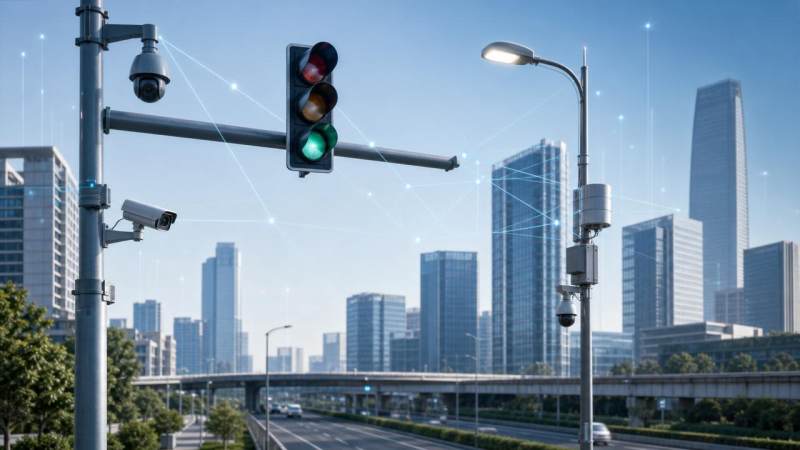
As connected infrastructure expands across transport, lighting, surveillance, and utilities, smart city security is becoming a board-level concern for public and private stakeholders alike. Rising interconnectivity creates new exposure points, making compliance, resilience, and real-time risk visibility essential. For enterprise decision-makers, understanding these emerging threats is key to protecting urban assets, guiding investment, and building safer, future-ready cities.
Understanding Smart City Security in a Connected Infrastructure Era
Smart city security refers to the protection of interconnected urban systems that combine physical assets, digital networks, sensors, cameras, lighting controls, mobility platforms, and utility management tools. Unlike traditional site security, smart city environments depend on constant data exchange across public roads, municipal buildings, transport hubs, industrial zones, and commercial districts. This means a weakness in one connected layer can affect multiple services at once.
The risk profile is broader than cyber intrusion alone. In practical terms, smart city security includes device integrity, network segmentation, access governance, video surveillance compliance, optical visibility conditions, incident response, and supply chain assurance. A connected streetlight, for example, may appear low risk, but if it shares a network with traffic signaling or public monitoring systems, compromise can spread quickly.
This is why the topic now sits at the intersection of public safety, infrastructure resilience, and investment planning. As cities adopt AI-enabled monitoring, cloud-connected command centers, and data-driven mobility controls, smart city security becomes a foundational requirement rather than a supporting feature.
Why Security Risks Are Rising Across Smart City Infrastructure
The growth of smart infrastructure has outpaced security maturity in many regions. Cities and project operators are deploying connected assets to improve efficiency, sustainability, and service visibility, yet these gains often introduce new attack surfaces. The following signals explain why smart city security risks are rising:
These trends show that smart city security is no longer a narrow technical issue. It affects service continuity, regulatory confidence, insurance exposure, public trust, and long-term infrastructure value.
Core Threat Areas Shaping Smart City Security Decisions
A useful way to assess smart city security is to look at the main threat categories influencing connected infrastructure planning and operation.
1. Device and Edge Vulnerabilities
Field devices such as smart poles, cameras, environmental sensors, and access units often operate in exposed locations. Weak authentication, poor firmware management, and inconsistent patch cycles create opportunities for unauthorized access. Once an endpoint is compromised, lateral movement may become possible.
2. Network and Data Flow Exposure
Connected infrastructure depends on stable communications between edge devices, control rooms, cloud services, and partner platforms. If data transmission is not segmented, encrypted, and monitored, attackers may intercept, alter, or disrupt critical operational information.
3. Surveillance and Privacy Compliance Risk
Video analytics, facial recognition, and public monitoring systems are increasingly relevant to smart city security, but they also raise legal and reputational concerns. Poor retention policies, opaque data use, or noncompliant cross-border storage can trigger regulatory action.
4. Optical Environment and Visibility Gaps
Security performance is influenced not only by software and hardware, but also by lighting conditions and visual clarity. In transport corridors, construction zones, parking areas, and public plazas, suboptimal illumination can reduce detection accuracy and incident response efficiency. This is where optical environment optimization becomes directly relevant to urban risk control.
Business Value of Strong Smart City Security Governance
Investing in smart city security delivers value far beyond threat reduction. It supports better capital planning, clearer governance, and more dependable service outcomes. In multi-stakeholder infrastructure environments, security maturity often becomes a practical indicator of project quality.
- Operational continuity: Better protection of transport systems, lighting networks, utility controls, and command platforms reduces unplanned downtime.
- Compliance readiness: Structured controls make it easier to align with surveillance law, procurement rules, critical infrastructure guidance, and data governance frameworks.
- Investment confidence: Strong smart city security lowers uncertainty in long-cycle infrastructure decisions and supports more credible business cases.
- Public trust and service credibility: Resilient systems help maintain confidence when cities adopt advanced monitoring and automation technologies.
- Cross-system visibility: Security governance often improves asset inventories, vendor accountability, and performance measurement across the built environment.
From a strategic perspective, smart city security should be evaluated as a resilience enabler that supports digital transformation without weakening safety or legal defensibility.
Representative Smart City Security Scenarios
Risk exposure differs by environment, but several urban scenarios consistently demand stronger security planning.
Across these scenarios, smart city security works best when physical assurance and optical performance are addressed together rather than as separate workstreams.
Practical Measures to Strengthen Smart City Security
Improvement does not begin with technology alone. It starts with governance, visibility, and disciplined execution. The following actions offer a practical roadmap:
- Create a complete asset inventory covering devices, firmware versions, communication links, and ownership responsibilities.
- Define minimum security and optical performance requirements before procurement, including access control, update policies, illumination standards, and evidence retention rules.
- Separate critical systems from noncritical services through network design, reducing the chance that one intrusion affects multiple urban functions.
- Review surveillance and data practices against applicable international and local compliance obligations on a recurring basis.
- Test incident response using realistic scenarios involving both cyber and physical disruption, such as camera outage during low-visibility conditions or control loss in a public corridor.
- Assess vendors not only on product features, but also on standards alignment, update discipline, documentation quality, and integration transparency.
For organizations navigating fast-changing infrastructure programs, intelligence support is increasingly valuable. GSIM’s Strategic Intelligence Center helps connect global security policy, electronic surveillance compliance, procurement trends, and optical technology evolution into one decision framework. This makes smart city security easier to evaluate in context, especially where AI vision, VLC, and public safety systems are converging.
Next-Step Priorities for Safer Connected Cities
The next phase of digital urban development will reward projects that treat smart city security as a strategic design principle, not a retrofit task. Connected infrastructure can improve safety, sustainability, and operational insight, but only when risk controls are embedded from planning through operation.
A practical next step is to review current infrastructure against three questions: where are the most critical connected dependencies, which systems lack clear compliance and visibility controls, and how do lighting, surveillance, and network design interact under real operating conditions? Those answers often reveal the highest-priority gaps.
For organizations seeking a clearer path forward, GSIM provides a structured lens on global standards, sector news, commercial insights, and the fusion of physical security with optical environment optimization. In an era defined by rising interconnectivity, informed action is the strongest foundation for resilient and future-ready smart city security.
The VitalSync Intelligence Brief
Receive daily deep-dives into MedTech innovations and regulatory shifts.