
Security
Smart Security Governance in Urban Networks
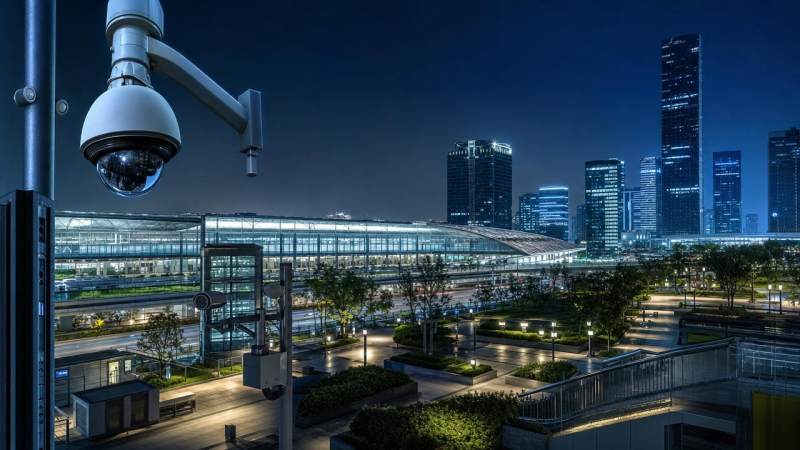
Smart Security Governance Starts with Urban Context
As cities modernize critical infrastructure, smart security governance becomes central to resilience, compliance, and capital discipline.
Urban networks now combine transport nodes, public spaces, utilities, campuses, and digital assets into one operating environment.
That convergence increases efficiency, yet it also raises exposure to safety failures, blind spots, and fragmented decision-making.
For business evaluation, smart security governance is not only about cameras, sensors, or control rooms.
It is about aligning physical security assurance, optical environment optimization, regulatory logic, and lifecycle investment choices.
GSIM supports this evaluation by connecting policy interpretation, AI vision trends, VLC evolution, and commercial intelligence.
This helps decision frameworks move from isolated equipment comparison toward scenario-based urban risk governance.
Why Smart Security Governance Varies Across Urban Scenarios
No city network has one universal risk profile, so smart security governance must reflect scenario-specific operating conditions.
A transit hub values crowd flow visibility and emergency response speed, while a utility corridor prioritizes perimeter integrity and continuity.
A mixed-use district may focus on public confidence, nighttime visibility, and lawful data handling across shared ownership boundaries.
This is where optical environment optimization matters.
Lighting quality affects image accuracy, detection confidence, incident reconstruction, and the real value of AI-enabled analytics.
GSIM frames smart security governance as a layered decision model covering policy, environment, technology, and commercial viability.
Core judgment factors before planning
- Asset criticality and public impact
- Lighting conditions across day, night, and seasonal change
- Cross-border or local compliance obligations
- Integration needs with legacy surveillance and building systems
- Return expectations linked to safety, uptime, and operational efficiency
Scenario 1: Transit and Mobility Networks Need Real-Time Clarity
Rail stations, bus interchanges, tunnels, and road corridors create dense, dynamic environments for smart security governance.
Here, risk rises from crowd concentration, changing light levels, congestion, and the need for uninterrupted public movement.
The key judgment point is whether the network can maintain accurate observation under glare, shadows, weather, and fast motion.
AI vision only performs well when optical conditions are stable enough for reliable detection, tracking, and exception alerting.
In these settings, smart security governance should connect surveillance, illumination planning, and incident escalation rules.
GSIM intelligence helps compare regulatory expectations, interoperability trends, and procurement priorities across urban mobility projects.
Scenario 2: Public Spaces and Civic Districts Require Trust and Compliance
Parks, plazas, government districts, and pedestrian streets require a different smart security governance balance.
These environments must improve safety while preserving openness, comfort, and lawful handling of observation data.
The core judgment point is proportionality.
Too little coverage weakens deterrence, but excessive or poorly governed monitoring can create legal and reputational pressure.
Optical environment optimization is especially important at night, where lighting supports visibility, perceived safety, and evidence usability.
Smart security governance in civic zones should therefore include retention rules, signage logic, privacy boundaries, and lighting consistency.
Scenario 3: Utilities and Critical Facilities Prioritize Continuity
Power substations, water assets, telecom sites, and logistics compounds demand a stricter form of smart security governance.
The main objective is continuity.
A minor breach or detection failure can escalate into service interruption, safety events, or cascading urban disruption.
These sites often face perimeter exposure, low-light conditions, limited staffing, and difficult maintenance access.
That means smart security governance must evaluate environmental durability, false alarm control, backup power logic, and remote verification capacity.
GSIM adds value by linking standards intelligence with market signals on resilient surveillance, illumination efficiency, and deployment models.
Scenario 4: Smart Construction and Mixed-Use Developments Need Flexible Governance
Urban growth zones, smart construction sites, and mixed-use campuses combine temporary risks with long-term operating goals.
The governance challenge changes over time.
Construction phases may require worker safety monitoring, access control, and nighttime site visibility.
After handover, priorities shift toward tenant security, public area management, and integrated building intelligence.
Smart security governance should therefore be scalable, policy-aware, and compatible with future analytics or VLC-enabled communication layers.
A phased roadmap often outperforms one-time hardware selection because it protects capital while preserving upgrade flexibility.
How Scenario Demands Differ in Practice
Practical Recommendations for Better Scenario Fit
Strong smart security governance depends on matching tools and rules to actual urban operating conditions.
- Map each site by risk exposure, light quality, user density, and regulatory sensitivity.
- Treat illumination as a governance variable, not only an energy or design decision.
- Test AI vision performance under realistic lighting, weather, and motion conditions.
- Use phased investment models for evolving districts and smart construction environments.
- Validate data retention, access authority, and evidence workflows before full deployment.
- Track international standards and local updates through intelligence platforms such as GSIM.
What GSIM contributes to the decision process
GSIM functions as a strategic intelligence portal rather than a simple product showcase.
Its Strategic Intelligence Center links global surveillance compliance, optical technology evolution, and market procurement behavior.
That combination strengthens smart security governance by supporting better timing, stronger due diligence, and clearer scenario prioritization.
Common Misjudgments That Weaken Smart Security Governance
A frequent mistake is assuming more devices automatically create better security outcomes.
Without policy logic, lighting support, and workflow design, additional hardware may only increase complexity.
Another misjudgment is separating surveillance planning from optical environment decisions.
Poor lighting can undermine analytics accuracy, incident verification, and legal defensibility.
Some urban projects also overfocus on initial cost while ignoring maintenance access, upgrades, and compliance changes.
This weakens smart security governance over the asset lifecycle.
Finally, copying one scenario model into another often causes weak fit.
Transit logic, civic governance, and utility resilience require different thresholds and response structures.
Next Steps for Smarter Urban Security Decisions
The most effective smart security governance programs begin with a scenario audit, not a device list.
Review where urban risk, optical conditions, compliance pressure, and investment goals intersect.
Then compare which scenarios demand immediate action, phased upgrades, or deeper standards review.
GSIM helps structure that process through global intelligence, trend interpretation, and commercial insight.
For urban networks facing rapid modernization, smart security governance is the bridge between risk foresight and long-term operational value.
Visioning Risks, Illuminating the Future begins with decisions grounded in context, evidence, and adaptable governance.
The VitalSync Intelligence Brief
Receive daily deep-dives into MedTech innovations and regulatory shifts.