
Security
China-Europe Railway Express Hits 130,000 Trains
China-Europe Railway Express Hits 130,000 Trains
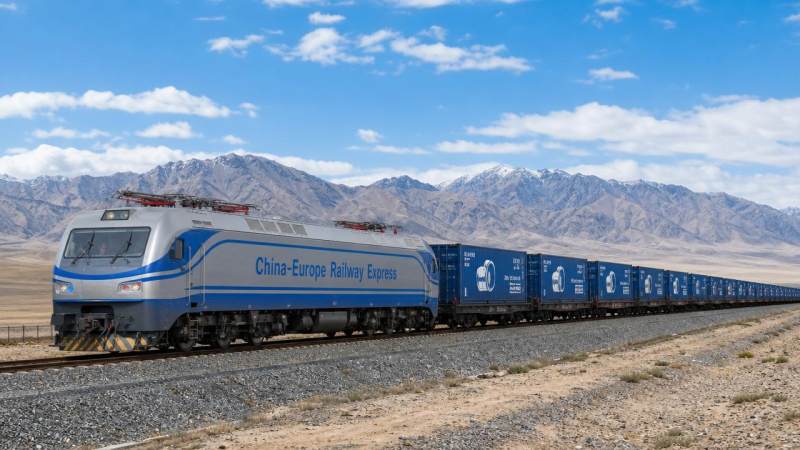
On May 14, 2026, the cumulative number of China-Europe Railway Express trains surpassed 130,000 — a milestone confirmed by China State Railway Group Co., Ltd. This development directly impacts the intelligent security and industrial lighting equipment sectors exporting to Europe, accelerating logistics lead times by 30% compared with maritime shipping and reinforcing rail’s role as a strategic channel for high-value, time-sensitive industrial goods.
Event Overview
According to a notice issued by China State Railway Group on May 16, 2026, the China-Europe Railway Express reached 130,000 total departures on May 14, 2026. The Xi’an, Chengdu, and Chongqing hub centers have increased frequency of dedicated ‘Intelligent Equipment Trains’. Average transit time for high-value cargo — including intelligent surveillance cameras and explosion-proof LED industrial lamps — has shortened to 14 days, representing a 30% improvement over sea freight. This acceleration enhances delivery predictability and reduces inventory holding costs for European importers, particularly those executing public safety upgrades and Industry 4.0 infrastructure projects.
Industries Affected
Direct Exporting Enterprises
Manufacturers and exporters of intelligent security systems and industrial lighting equipment benefit from reduced transit time and improved schedule reliability. Faster delivery cycles enable more responsive order fulfillment, tighter alignment with European project timelines, and enhanced competitiveness against EU-based or Southeast Asian suppliers relying on slower or less predictable modes.
Raw Material Procurement Enterprises
Suppliers of critical components — such as image sensors, thermal modules, or high-grade aluminum housings used in these devices — face revised demand planning horizons. With shorter end-to-end logistics windows, procurement cycles must compress accordingly; just-in-time replenishment becomes more feasible, but also more sensitive to upstream delays or customs bottlenecks at key rail nodes.
Contract Manufacturing Enterprises
OEM/ODM facilities producing for European brands experience tighter integration requirements with rail scheduling. Production planning must now synchronize closely with train departure slots — especially for ‘Intelligent Equipment Trains’ with fixed loading windows and pre-verified customs documentation. This increases operational coordination demands but may reduce finished-goods warehousing duration.
Supply Chain Service Providers
Freight forwarders, customs brokers, and multimodal integrators handling China–Europe rail shipments face intensified service expectations: faster documentation turnaround, real-time tracking across CIS and EU border points, and deeper familiarity with specialized rail protocols (e.g., TIR, CIM/SMGS). Differentiation now hinges less on cost and more on visibility, compliance agility, and technical cargo handling capability.
Key Considerations and Recommended Actions
Align production planning with dedicated train schedules
Enterprises should map their shipment volumes against the published weekly frequencies of ‘Intelligent Equipment Trains’ from Xi’an, Chengdu, and Chongqing — not just general rail capacity — to avoid missed slots and avoid last-minute air freight premiums.
Prioritize product certification harmonization
Since faster transit amplifies the impact of non-compliance, exporters must ensure CE marking, EN standards adherence (e.g., EN 60598 for lighting, EN 62676 for video surveillance), and updated declarations of conformity are embedded early in the export workflow — before cargo reaches the rail yard.
Evaluate inventory strategy recalibration
With average transit cut to 14 days and greater predictability, companies can reassess safety stock levels and regional distribution models. However, this shift is only viable if demand forecasting accuracy matches the improved logistics responsiveness — otherwise, stockouts may increase.
Engage proactively with rail logistics partners
Given the specialized nature of the new dedicated trains (including temperature control, shock monitoring, and priority customs clearance), enterprises should co-develop service-level agreements with rail-forwarding partners — rather than treating rail as a commoditized transport option.
Editorial Insight / Industry Observation
Observably, the 130,000-train milestone reflects not just volume growth, but an institutional shift: rail is evolving from a contingency alternative into a scheduled, specification-aware logistics layer for industrial tech exports. Analysis shows that the 30% speed gain is not merely about distance or speed — it stems from integrated digital documentation (e.g., e-CIM), standardized container handling, and targeted infrastructure upgrades at key intermodal yards. That said, current rail capacity remains concentrated among a few hubs and corridors; geographic diversification — particularly toward Central and Eastern European gateways — remains limited. From an industry perspective, this milestone is better understood as a signal of maturing operational discipline, not just expanded scale.
Conclusion
The 130,000-train threshold marks a structural inflection point: rail is now a credible, performance-defined channel for time-critical industrial hardware. Its growing reliability does not eliminate maritime or air alternatives — rather, it introduces a third, calibrated option where speed, cost, and carbon footprint intersect. For stakeholders, the implication is clear: logistics strategy must now be segmented by product category, destination market maturity, and project delivery cadence — not treated as a one-size-fits-all function.
Source Attribution
Official data sourced from China State Railway Group Co., Ltd., press release dated May 16, 2026, referencing operations through May 14, 2026. Further updates on dedicated train frequency, corridor-specific transit times, and customs facilitation progress are expected in Q3 2026 and remain under observation.
The VitalSync Intelligence Brief
Receive daily deep-dives into MedTech innovations and regulatory shifts.