
Security
EU EN 62471:2026 Tightens LED Export Testing
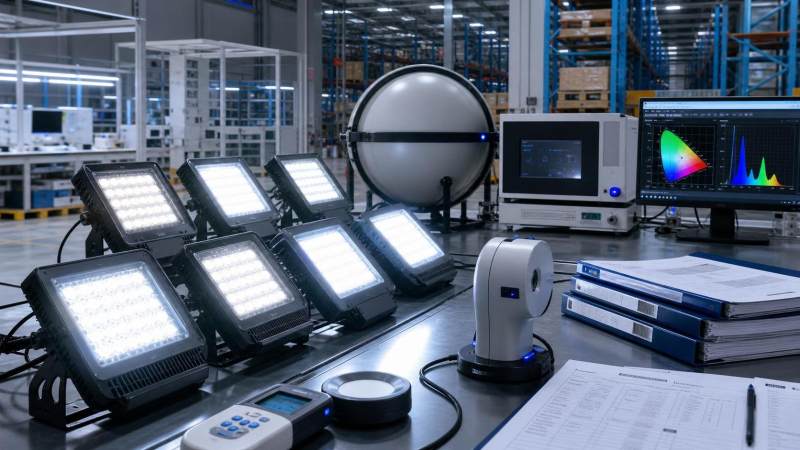
The mandatory application of EN 62471:2026 on December 1, 2026 puts EU-bound LED industrial lighting under closer photobiological safety scrutiny. The immediate point of attention is not only the standard update itself, but the added requirement to assess UV-A radiation and retinal blue light hazard radiance classification for industrial lighting equipment operating in high-brightness continuous mode. For Chinese exporters, testing laboratories, compliance teams, and EU market-facing sales channels, this matters because document readiness and risk classification may now directly affect border clearance and market access.
What the EU update formally changes
The Official Journal of the European Union published the updated EN 62471:2026 on June 19, 2026, with full mandatory enforcement starting on December 1, 2026.
According to the provided information, the updated standard adds radiance classification testing requirements for UV-A radiation and retinal blue light hazard, including RG2 and RG3-related assessment, for industrial lighting equipment under high-brightness continuous operating conditions.
The same information states that Chinese LED industrial lighting exporters need to update their IEC/TR 62778 reports and CIE S 026:2021 declarations of conformity in parallel. Otherwise, EU market surveillance authorities may classify affected products as high-risk and initiate border detention.
Where the impact is likely to appear first
Export-facing product compliance moves to the front line
From an industry perspective, exporters selling LED industrial luminaires into the EU are likely to feel the impact first because the new requirement is tied to testing scope, technical documentation, and market access risk. The pressure point is the export compliance workflow: whether existing reports, declarations, and product files match the new enforcement baseline by the effective date.
Manufacturing and engineering teams may need earlier test coordination
Analysis shows that manufacturers are likely to be affected through product validation and release timing. Where products are designed for high-brightness continuous operation, the added UV-A and blue light radiance grading requirement may shift attention toward how test preparation, technical file updates, and model-specific documentation are sequenced before shipment.
Testing and documentation service providers face tighter execution demands
Laboratories, certification support providers, and compliance consultants may be affected because customers will need upgraded IEC/TR 62778 reports and CIE S 026:2021 conformity declarations. In practical terms, the issue is less about broad market messaging and more about whether the supporting documents are aligned with the new mandatory enforcement date and the product operating mode covered by testing.
EU distributors and buyers may intensify document review
Observably, downstream buyers and channel partners in the EU may pay closer attention to whether industrial lighting products already carry updated test evidence and declarations. The commercial impact may appear in supplier onboarding, shipment acceptance, and pre-delivery review rather than only at the point of sale.
What companies should watch now
Check whether current files still match the new enforcement logic
What deserves closer attention is whether existing EN 62471-related assessments, IEC/TR 62778 reports, and CIE S 026:2021 declarations remain adequate once EN 62471:2026 becomes mandatory. Companies should distinguish between having historical compliance documents and having documents that reflect the updated testing focus.
Identify products exposed by high-brightness continuous operation
The provided information specifically points to industrial lighting equipment in high-brightness continuous working mode. For that reason, businesses should first review which exported models fall into that operating profile, because those products are most directly connected to the added UV-A and retinal blue light radiance classification requirement.
Separate regulatory wording from delivery execution
Analysis shows that the policy signal and operational execution are not the same issue. The rule change is already clear in the provided summary, but the business challenge is whether internal testing schedules, document updates, customer communication, and shipment planning can be aligned before products reach EU border control or market surveillance review.
Prepare for customer and border-side questions in advance
For exporters and supply chain teams, a practical focus is readiness for document checks. That includes confirming which declarations need updating, whether report versions are current, and how to explain product compliance status to EU customers or logistics partners if shipments are questioned.
How this development is best understood at this stage
Analysis shows that this is more than a routine standards refresh, because the provided information links the updated test requirements directly to market surveillance risk and possible border detention. At the same time, it is more appropriate to understand this as an enforceable compliance change rather than a complete reshaping of the industrial lighting market.
Observably, the near-term effect is concentrated on testing scope, technical documentation, and shipment readiness. The longer-term significance is the signal that EU scrutiny of photobiological safety for industrial lighting is becoming more operationally specific, especially where high-output continuous-use products are involved.
Why the market should treat this as an immediate compliance issue
The most grounded conclusion is that December 1, 2026 is not simply a reference date for standards teams; it is a practical deadline for exporters and their EU-facing compliance chain. The update is best understood as an immediate market-access requirement for affected LED industrial lighting products, while the broader commercial impact still depends on how consistently the new testing and documentation expectations are enforced in real transactions.
Basis of this article and points for continued verification
This article is based on the user-provided news title, event date, and event summary regarding the mandatory implementation of EN 62471:2026, the December 1, 2026 effective date, the June 19, 2026 publication in the Official Journal of the European Union, the added UV-A and blue light radiance classification testing requirement, and the stated need to update IEC/TR 62778 reports and CIE S 026:2021 conformity declarations.
For this type of development, commonly relevant source categories include official notices, standardization documents, company compliance disclosures, industry association updates, and reporting by authoritative trade media. A specific official source link was not provided in the input, so the exact underlying document trail should continue to be verified. Follow-up attention should remain on any further official wording, implementation clarifications, and how enforcement is reflected in actual documentation and border review practice.
The VitalSync Intelligence Brief
Receive daily deep-dives into MedTech innovations and regulatory shifts.