
Security
GB 30255-2026 Expands LED Efficiency Scope
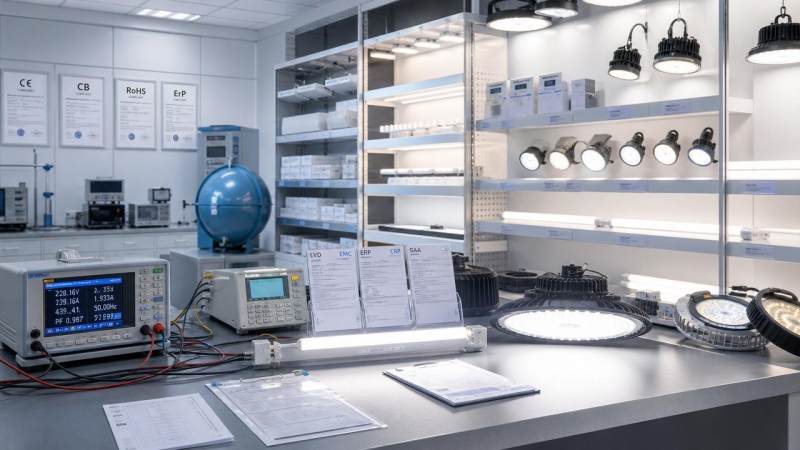
On September 1, 2027, the revised standard for indoor LED product energy efficiency, GB 30255-2026, is set to take effect, bringing additional indoor lighting categories into mandatory efficiency assessment and introducing a full-time efficiency requirement that includes standby power. For manufacturers, distributors, project buyers, and certification-facing supply chain participants in commercial and industrial lighting, the update deserves attention because it shifts the compliance threshold from simple operating performance to a broader view of product behavior, especially for smart and application-specific LED products.
What the new standard now covers
According to the provided information, GB 30255-2026 will be formally implemented on September 1, 2027. The revised standard newly includes LED high-bay luminaires, narrow-beam downlights or spotlights, replacement double-capped LED lamps, and smart indoor LED products with dimming and color-tuning functions within mandatory energy efficiency evaluation.
The update also introduces the concept of full-time energy efficiency. In practical terms, the confirmed requirement provided here is that standby power must not exceed 0.5W.
Where the pressure is likely to appear first
Product makers face a broader compliance boundary
From an industry perspective, manufacturers are likely to feel the most direct impact because the newly covered categories include both functional lighting products and smart indoor LED products. The likely effect is not only on product design, but also on how performance claims, standby behavior, and category definitions are prepared for compliance review and market entry.
Distributors may need to adjust product selection logic
Analysis shows that channel companies and distributors, especially those serving overseas commercial and industrial lighting demand, may need to reassess which SKUs remain suitable for future procurement and resale. The provided information specifically points to likely influence on distributor product selection and certification strategy in Europe, the United States, and Southeast Asia.
Project buyers may tighten technical screening
For procurement teams and end-use buyers, the standard signals that more indoor LED categories will be judged against mandatory efficiency criteria. That can affect specification review, bid comparison, and supplier communication, particularly where smart dimming, color control, or high-bay use cases are involved.
Supply chain service providers may see more documentation demands
Observably, supply chain participants that support compliance, delivery, and export coordination may need to pay closer attention to product files, testing-related documentation, and the timing of qualification readiness. The pressure point is less about logistics alone and more about whether shipments align with the new efficiency expectations after the implementation date.
What companies should watch now
Focus on the newly covered categories first
What deserves closer attention is whether existing product lines overlap with the four categories explicitly mentioned in the provided information. Companies with portfolios in high-bay lighting, narrow-beam spot applications, replacement double-capped lamps, or smart indoor LED products should identify which items may require renewed compliance review.
Do not treat standby power as a secondary issue
The introduction of full-time energy efficiency suggests that energy performance is no longer limited to active-use conditions alone. For businesses involved in product definition, sourcing, or technical communication, the 0.5W standby cap is a practical checkpoint that may affect product positioning and customer-facing documentation.
Separate policy language from business execution
Analysis shows that the implementation date and the standard text are one layer, while procurement conversion, certification handling, and customer acceptance are another. Companies may need to prepare for differences between formal regulatory timing and the pace at which distributors or buyers update their approved product lists and sourcing criteria.
Prepare customer and supplier communication early
For trading firms, OEM suppliers, and channel operators, early communication may matter as much as technical preparation. The immediate concern is whether suppliers can provide consistent compliance materials and whether customers in affected markets understand which product categories now sit under stricter efficiency management.
Why this looks like more than a routine update
In observation, this development is better understood as a directional signal with immediate operational implications. The confirmed facts already show an expansion in product scope and a more comprehensive efficiency concept through standby power control. That combination suggests a higher compliance threshold for indoor LED products used in commercial and industrial contexts.
At the same time, it is more appropriate to understand this as an active industry development rather than a fully settled market outcome. The standard taking effect is a confirmed event; how quickly different markets, channels, and buyers translate that into procurement and certification changes remains something the industry still needs to watch.
How to read the signal at this stage
The immediate significance of GB 30255-2026 is not limited to one product category or one domestic rule update. Based on the provided information, the standard points to a tighter efficiency framework for indoor LED products, especially where smart functions and specialized applications are involved. A neutral reading is that the market now has a clearer compliance signal, while the full commercial effect will depend on how manufacturers, distributors, and buyers respond in sourcing, qualification, and market access decisions.
Basis of this article
This article is generated based on the user-provided news title, event date, and event summary. The analysis relies only on the stated information that GB 30255-2026 will take effect on September 1, 2027, that additional LED product categories are being brought into mandatory energy efficiency assessment, and that a full-time efficiency requirement with standby power not exceeding 0.5W is being introduced.
For this type of industry update, commonly relevant source categories may include official notices, standard organization documents, industry association information, company disclosures, and reporting by authoritative trade media. A specific official source link was not provided in the input, so the exact source document should continue to be verified. Further attention should remain on any subsequent official wording, implementation interpretation, and market-side responses in product selection and certification practice.
The VitalSync Intelligence Brief
Receive daily deep-dives into MedTech innovations and regulatory shifts.