
Security
Intelligent Optical Monitoring in Harsh Industrial Sites
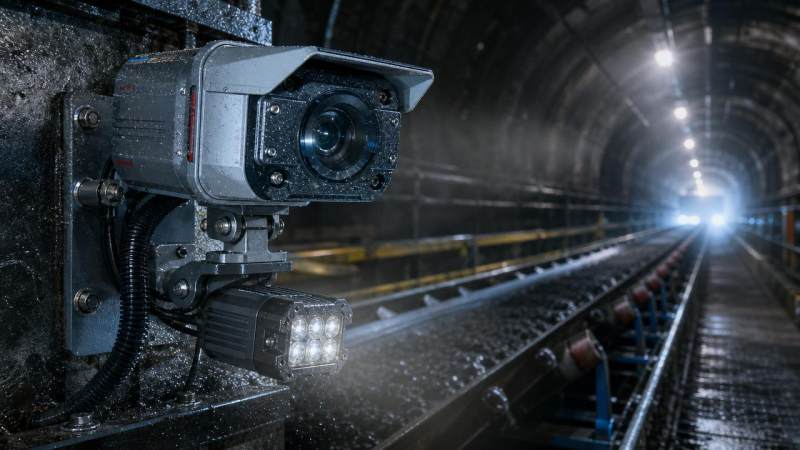
Intelligent Optical Monitoring in Harsh Industrial Sites
In harsh industrial sites, dust, vibration, glare, moisture, and low visibility weaken safety awareness and delay response.
Intelligent optical monitoring transforms these environments into clearer, more controllable workspaces through visual sensing, adaptive illumination, and real-time risk recognition.
As global infrastructure becomes more connected, GSIM examines how optical intelligence supports safer decisions and stronger digital security alignment.
Why Scene Judgment Matters Before Deployment
Harsh sites rarely fail for one reason. Visibility, surface reflection, machinery movement, weather, and human workflow often overlap.
Intelligent optical monitoring should therefore begin with scene judgment, not with camera count or lighting power.
A tunnel entrance, steel mill aisle, offshore platform, and mining conveyor may all require different optical priorities.
Some scenes need glare suppression. Others need low-light recognition, thermal assistance, vibration tolerance, or sealed optical housings.
GSIM treats intelligent optical monitoring as a decision system that connects risk, visibility, compliance, and operational continuity.
Core Questions for Early Assessment
- Which hazards become invisible during dust, steam, night work, or glare?
- Where does delayed detection directly affect shutdown time or rescue response?
- Which lighting conditions change faster than manual supervision can manage?
- What compliance evidence must be retained after incidents or inspections?
These questions turn intelligent optical monitoring from a passive recording layer into an active industrial safety asset.
Scene One: Mining and Tunneling Under Dust and Darkness
Mining roads, underground headings, and tunnel construction zones often suffer from unstable light and airborne particles.
In these sites, intelligent optical monitoring must identify moving equipment, workers, falling objects, and blocked exits.
The main judgment point is whether visual detection remains stable when dust density changes within seconds.
Adaptive illumination can reduce blind spots near entrances, turning zones, and loading points.
AI vision should prioritize object separation, distance estimation, and abnormal motion instead of only recording high-resolution footage.
For this scene, intelligent optical monitoring should integrate rugged lenses, low-light imaging, edge alerts, and redundant power planning.
Scene Two: Metallurgy, Foundries, and High-Glare Production Areas
Molten metal, welding arcs, furnace doors, and reflective surfaces create intense contrast in industrial vision.
Standard cameras may overexpose bright zones while losing detail in darker walkways and maintenance platforms.
Here, intelligent optical monitoring must balance dynamic range, heat tolerance, and safe visual interpretation.
The core judgment point is whether the system can detect people, barriers, and material flow despite extreme glare.
Illumination should not add reflection that confuses vision algorithms or creates discomfort for nearby work areas.
Effective intelligent optical monitoring in these areas often combines high dynamic range imaging with calibrated light distribution.
Scene Three: Ports, Offshore Platforms, and Wet Corrosive Sites
Marine and coastal infrastructure faces salt mist, rain, fog, vibration, and long-distance observation demands.
Cranes, pipelines, berths, and deck areas require reliable visibility across changing weather and shift patterns.
In this scene, intelligent optical monitoring should focus on weather resilience, corrosion protection, and perimeter clarity.
The key judgment point is whether recognition remains useful during rain, spray, fog, and backlit water reflection.
Optical devices should also support secure data transmission, because remote assets depend on centralized situational awareness.
GSIM sees intelligent optical monitoring as essential for linking physical security with operational continuity in marine environments.
Scene Four: Energy, Utilities, and Remote Critical Facilities
Solar farms, substations, pipelines, and wind power sites often cover wide areas with limited onsite presence.
In these facilities, intelligent optical monitoring must detect intrusion, equipment abnormality, fire risk, and perimeter disturbance.
The main judgment point is whether optical coverage supports both safety assurance and asset protection.
Low-light capability, long-range imaging, thermal complement, and smart event filtering reduce false alarms and missed risks.
Adaptive illumination should avoid light pollution while preserving enough detail for verification and compliance evidence.
For remote facilities, intelligent optical monitoring also requires cybersecurity awareness, timestamp integrity, and reliable storage policies.
Scene Five: Smart Construction Sites and Urban Infrastructure Upgrades
Construction zones change constantly as cranes, temporary roads, materials, and access boundaries move across the site.
Urban infrastructure upgrades add public exposure, night work, traffic interaction, and complex safety responsibilities.
In these scenes, intelligent optical monitoring should recognize unsafe proximity, blocked passages, falling-object zones, and unauthorized access.
The key judgment point is whether the system adapts as the site layout changes.
Temporary lighting, mobile sensors, and cloud-connected alerts can support fast deployment without weakening evidence quality.
GSIM highlights intelligent optical monitoring as a bridge between smart construction governance and practical frontline visibility.
How Requirements Differ Across Harsh Industrial Scenes
This comparison shows why intelligent optical monitoring cannot use one universal configuration for every industrial environment.
Practical Adaptation Advice for Safer Deployment
A robust plan should connect optical hardware, illumination design, analytics logic, network resilience, and compliance documentation.
The following steps help intelligent optical monitoring move from concept to reliable site performance.
- Map visibility failure points before choosing devices or illumination levels.
- Test detection under real dust, glare, rain, steam, or night conditions.
- Define event priorities, including intrusion, collision risk, fire signs, and blocked routes.
- Use adaptive lighting where fixed lighting creates shadows or excessive reflection.
- Place edge analytics near critical zones to reduce response delay.
- Align retention, access control, and audit trails with relevant security standards.
These actions make intelligent optical monitoring more measurable, easier to validate, and more defensible during safety reviews.
Common Misjudgments That Reduce Optical Value
Many projects overvalue resolution while undervaluing lighting geometry, lens contamination, and environmental interference.
High resolution cannot compensate for glare, fogged covers, unstable mounting, or poor alert logic.
Another mistake is treating intelligent optical monitoring as surveillance only, rather than a safety and operations layer.
If alarms are too frequent, teams may ignore them. If thresholds are too strict, early warnings disappear.
Ignoring maintenance also weakens performance. Optical windows, housings, cables, and illumination modules need scheduled inspection.
GSIM recommends validating intelligent optical monitoring through scenario drills, not only laboratory specifications or static demonstrations.
Compliance, Data Trust, and GSIM’s Decision Perspective
Industrial optical systems increasingly support compliance evidence, incident reconstruction, and cross-border security governance.
This makes data trust as important as image quality in connected industrial environments.
Intelligent optical monitoring should protect video integrity, event timestamps, access permissions, and retention rules.
GSIM’s Strategic Intelligence Center connects global security policies with optical technology evolution and commercial site requirements.
Its mission is to help protection demand meet precision manufacturing supply through transparent, standards-aware knowledge.
Under the slogan “Visioning Risks, Illuminating the Future,” GSIM positions intelligent optical monitoring as practical infrastructure intelligence.
Action Guide: Turning Harsh-Site Visibility Into Control
The next step is not simply adding more cameras or brighter lighting.
Begin with a scene audit that records visibility limits, risk zones, operating hours, and environmental stress factors.
Then compare each zone against detection needs, response time expectations, and compliance documentation requirements.
Pilot intelligent optical monitoring in the harshest representative area before wider deployment.
Review false alarms, missed events, lighting comfort, network stability, and maintenance effort after the pilot.
This evidence-based path helps convert complex industrial visibility into safer, clearer, and more resilient operations.
For sites facing dust, glare, moisture, darkness, or remote exposure, intelligent optical monitoring offers a practical route toward stronger control.
The VitalSync Intelligence Brief
Receive daily deep-dives into MedTech innovations and regulatory shifts.