
Security
LED Driver Lead Times Hit 26 Weeks
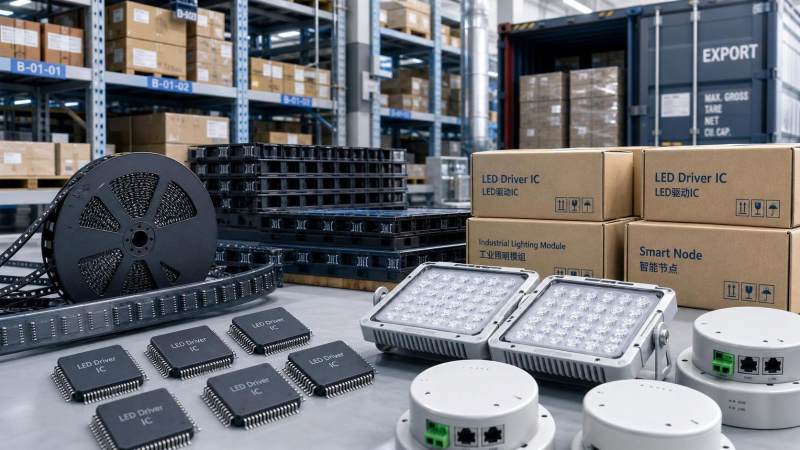
The timing of this development is not clearly specified in the available information, but a TechInsights supply chain update dated July 10, 2026 indicates that extended lead times for mainstream LED driver ICs have become a material execution issue for exporters of Industrial Lights and Smart Nodes. Beyond a supply constraint, this development matters because longer semiconductor delivery cycles can quickly affect procurement terms, delivery commitments, technical document control, and contract performance in export-facing product lines.
What Has Been Confirmed So Far
According to the TechInsights supply chain update dated July 10, 2026, ongoing tight 28nm capacity at TSMC has pushed the average lead time for mainstream LED driver ICs to 26 weeks. The products referenced include Diodes Inc. AL886X and the MPS MPQ442X series. The same update states that BOM costs for two export product categories, Industrial Lights and Smart Nodes, have increased by 12%, and that delivery windows for some orders have been pushed back to Q4.
Where the Pressure Is Likely to Appear First
Export order execution may face tighter delivery risk
From an industry perspective, exporters of Industrial Lights and Smart Nodes are likely to feel the impact first because the reported change directly affects component availability and delivery timing. The most exposed business links are shipment scheduling, customer delivery commitments, and any contract terms tied to confirmed lead times. What deserves closer attention is whether existing order documents, production schedules, and delivery confirmations still match the revised component supply situation.
Procurement teams may need stricter component control
Analysis shows that procurement functions are likely to face pressure in component planning, approved sourcing, and cost control. With average lead times extending to 26 weeks and BOM costs already reported higher, buyers may need to review whether current procurement plans, supplier qualification records, and substitute-part assessments remain usable under longer replenishment cycles. This is especially relevant where technical files or customer specifications are linked to named IC models such as AL886X or MPQ442X series devices.
Manufacturing and fulfillment teams may need to revisit compliance-linked documents
Observably, manufacturers and supply chain service providers may need to pay closer attention to the document side of delivery execution. If build schedules move and component sourcing conditions change, the practical pressure point is not only production continuity but also whether technical documentation, inspection records, product declarations, and shipment files remain consistent with the parts actually used and the delivery windows now being promised. The available information does not confirm any certification change, but the risk of mismatch between documentation and execution becomes more relevant when lead times stretch this far.
Downstream buyers may tighten specification and acceptance review
For procurement-side customers and channel participants, the issue may show up in revised acceptance timing, updated delivery discussions, and closer checks on whether product specifications remain aligned with contracted configurations. Analysis shows that longer IC lead times can become a trigger for more careful review of specification alignment, especially in export transactions where technical schedules, bid documents, or delivery clauses are sensitive to part-number continuity and timing.
What Companies Should Watch in Current Operations
Check whether component-specific files remain aligned
Companies using the affected LED driver IC families should review whether internal BOMs, customer-facing technical documents, and any compliance-related product files still match actual procurement conditions. Where named components appear in submitted materials, any later sourcing adjustment may require careful document consistency checks.
Reassess delivery promises against longer semiconductor cycles
It is more appropriate to understand the reported 26-week lead time as an operational warning for delivery planning rather than as an isolated sourcing update. Businesses with Q4-sensitive orders should pay attention to whether current production and shipment commitments still reflect realistic semiconductor availability, especially where delivery dates are contract-sensitive.
Watch for changes in customer wording and tender requirements
Analysis shows that customers may react to this type of supply pressure by tightening wording in procurement files, technical schedules, or bid documents. Even without a confirmed new rule in the provided information, companies should watch for changes in specification language, substitution acceptance, lead-time disclosure expectations, and after-sales support commitments.
Keep traceability and after-sales records usable
Where delivery windows move and cost pressure rises, exporters and service teams should pay attention to traceability readiness. If product configurations, build timing, or shipment sequencing change, maintaining usable records for quality follow-up and after-sales review becomes more important. The current information does not establish a new compliance requirement, but it does point to a higher need for disciplined execution records.
How This Signal Should Be Read
Observably, this update is better read as an execution signal from the supply chain than as proof of a fully defined regulatory shift. The confirmed facts concern lead-time extension, BOM cost pressure, and delayed order windows. Analysis shows, however, that once those conditions affect export products, the consequences often reach procurement controls, delivery governance, technical file consistency, and customer acceptance procedures. For that reason, the industry should continue watching how market participants translate supply pressure into contract language, specification controls, and delivery management practice.
What This Means for the Market Right Now
The clearest takeaway is that a component lead-time extension has already moved beyond a purchasing issue and into a broader execution issue for Industrial Lights and Smart Nodes. That does not by itself confirm a new formal rule, certification requirement, or trade restriction. It is more appropriate to understand this development as a practical market signal: companies exposed to the affected LED driver IC supply chain should treat delivery planning, document consistency, and customer communication as immediate priorities, while continuing to monitor whether more formal procurement or compliance expectations emerge.
Basis of This Article
This article is generated from the user-provided news title, event timing, and event summary. The specific official source link was not provided in the input and therefore still requires further verification. For developments of this kind, relevant source types typically include official notices, regulator releases, customs or trade authority information, industry association updates, standard-setting documents, and reporting from authoritative industry media. Further observation is still needed on any later policy detail, certification interpretation, tender document change, market feedback, and actual company-side execution response.
The VitalSync Intelligence Brief
Receive daily deep-dives into MedTech innovations and regulatory shifts.