
Security
LED Industrial Light Prices Rise 11.3% in Q2
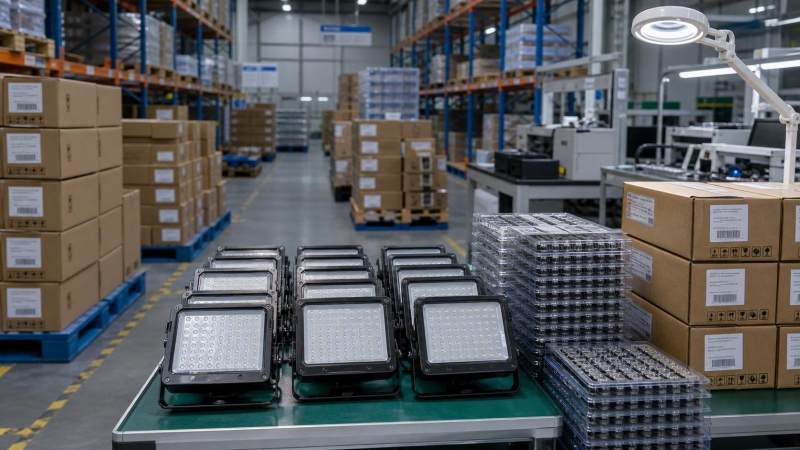
On July 1, 2026, the market signal behind industrial lighting pricing became harder to ignore: export pricing for LED industrial lights moved higher in the second quarter as supply constraints in GaN driver ICs continued to feed into product cost and delivery expectations. For manufacturers, exporters, procurement teams, and downstream buyers, the update matters because it points not only to higher unit prices, but also to pressure building inside component sourcing and production scheduling.
What the latest index confirmed
According to the International Association of Lighting (IAL), which released its Global Industrial Lighting Price Index on July 7, 2026, the average export price of LED industrial lights reached $42.70 per set in the second quarter of 2026. That represented a year-on-year increase of 11.3% and a quarter-on-quarter increase of 2.9%.
The stated driver was continued global capacity constraints in GaN driver ICs. At the same time, lead times at leading module manufacturers in China extended to 16 weeks, pushing up full-luminaire BOM costs and lifting quotation expectations.
Where the pressure is likely to be felt first
Export-facing manufacturers are dealing with cost pass-through pressure
From an industry perspective, manufacturers serving export markets are among the first to feel the impact because the published index tracks export pricing. The immediate pressure is likely to show up in BOM management, quotation updates, and production planning tied to longer component-related lead times.
Procurement teams need to watch timing as much as price
For procurement-side roles, the issue is not limited to whether LED industrial lights are becoming more expensive. Observably, the combination of higher average export prices and a 16-week lead time at leading module suppliers suggests that purchasing cycles, delivery commitments, and stock planning may all require closer attention.
Trading and channel businesses may face wider quoting uncertainty
Direct trading firms and distribution channels may be affected through quotation validity, customer negotiation, and margin management. Analysis shows that when component constraints raise quotation expectations upstream, intermediaries often need to pay closer attention to offer windows, replacement schedules, and delivery communication with buyers.
Downstream users may need to reassess project timing
For end-use buyers and project-based purchasers, the main exposure may lie in procurement timing and delivery coordination rather than in the index figure alone. What deserves closer attention is whether longer upstream lead times start influencing installation schedules, tender execution, or purchasing decisions for industrial lighting projects.
What companies should monitor now
Track whether component tightness continues to shape finished-light quotations
The current update directly links GaN driver IC supply constraints to higher BOM costs and stronger quotation expectations. That makes it important for companies to monitor whether future official industry releases continue to describe the same cost driver, or whether the pressure shifts to another part of the supply chain.
Review lead-time assumptions in contracts and delivery planning
With leading Chinese module manufacturers reported at 16-week lead times, firms should pay close attention to the assumptions built into order confirmation, production scheduling, and delivery commitments. This is especially relevant where pricing and fulfillment are negotiated on different timelines.
Strengthen supplier and customer communication around validity periods
Analysis shows that price movement tied to upstream shortages can quickly become a communication issue as much as a sourcing issue. Companies should therefore pay attention to quotation validity, delivery-date confirmation, and the consistency of supporting documents used in procurement and customer-facing commitments.
Separate published market signals from immediate business execution
The index provides a market reference, but actual execution still depends on supplier availability, order timing, and contract terms. What deserves closer attention is the gap between an industry-wide pricing signal and the specific conditions under which each company is buying, producing, or shipping.
Why this looks more like a supply-chain signal than a standalone price move
As an editorial observation, this update is more meaningful than a simple quarter price increase because the stated cause sits inside a key component bottleneck. Analysis shows that the combination of constrained GaN driver IC capacity, longer module lead times, and rising export prices points to a supply-chain issue feeding directly into finished-product pricing.
At the same time, it would be premature to treat this as a settled long-term pricing direction based on one quarterly reading alone. It is more appropriate to understand this as a clear near-term industry signal that still requires continued observation in later releases and in actual order execution.
How this update is best understood
The current development suggests that the LED industrial lighting market is facing tangible upstream pressure rather than a purely statistical fluctuation. For the industry, the practical significance lies in cost transmission, lead-time management, and pricing discipline across the chain.
Observably, this is best understood as a short-term to medium-term warning signal with operational relevance today, rather than as a final conclusion about the longer-term trajectory of industrial lighting prices. Continued monitoring is warranted because the key issue is not only that prices rose, but that the underlying supply constraint remains unresolved in the information provided.
Basis of this article
This article is based on the user-provided news title, event date, and event summary. The confirmed factual basis includes the IAL release date, the Q2 2026 average export price of LED industrial lights, the reported year-on-year and quarter-on-quarter increases, and the stated role of continuing GaN driver IC capacity constraints and extended lead times at leading Chinese module manufacturers.
For this type of industry update, commonly relevant source categories may include official association releases, company statements, industry association information, authoritative media reporting, and standards-related publications. A specific official source link was not provided in the input, so further verification remains necessary. Continued attention should focus on future IAL releases, any updated wording around component supply constraints, and whether lead-time pressure continues to affect pricing and delivery expectations.
The VitalSync Intelligence Brief
Receive daily deep-dives into MedTech innovations and regulatory shifts.