
Security
Optical Monitoring for Industrial Sites: Common Blind Spots and Fixes
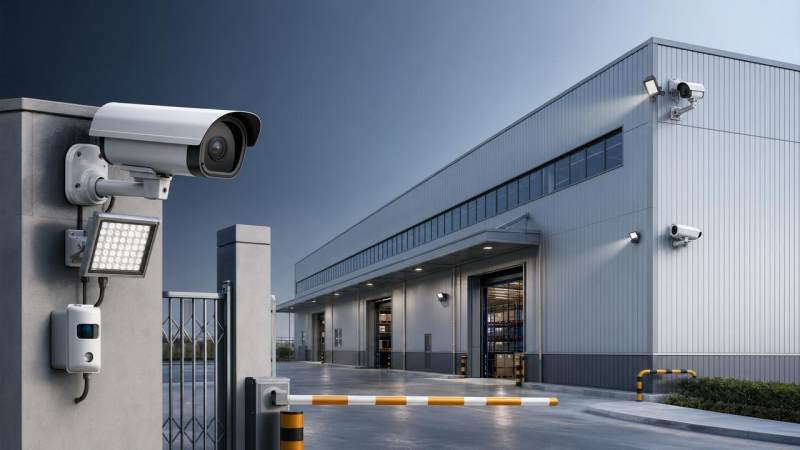
Optical monitoring is critical for industrial sites, yet many after-sales maintenance teams still struggle with hidden blind spots that weaken safety, uptime, and compliance. From poor fixture placement to inconsistent light conditions and camera overlap gaps, these issues can quietly reduce system performance. This article outlines the most common blind spots and practical fixes, helping maintenance professionals improve visibility, support reliable operations, and align with evolving industrial security standards.
Why blind spots in optical monitoring vary by industrial scene
For after-sales maintenance personnel, optical monitoring failures rarely come from one single defect. In most industrial environments, the weak point is the mismatch between the site scene and the monitoring design. A warehouse lane, a perimeter gate, and a processing workshop can all use cameras, illuminators, and optical sensors, but the blind spots they create are different in cause, severity, and fix priority. That is why scene-based diagnosis matters more than generic troubleshooting.
In practice, many industrial sites operate 16 to 24 hours per day, with mixed light conditions, moving equipment, reflective materials, dust, steam, or vibration. Under these conditions, optical monitoring performance can degrade by stages rather than fail outright. A system may still be online, yet lose 15% to 30% of useful visual detail at key moments such as shift changes, loading periods, or night patrol windows. Maintenance teams need to identify those hidden losses before they become incidents.
The most common mistake is to treat coverage as equal to visibility. A camera may technically cover a zone, but if glare, shadows, backlight, or occlusion reduce recognition quality, the area is still a functional blind spot. Effective optical monitoring should therefore be reviewed through three layers: geometric coverage, optical quality, and task suitability. For example, detecting movement at 25 meters is not the same as reading a badge or verifying a valve status at the same distance.
A practical scene-based checklist for maintenance teams
- Confirm the operational task first: intrusion detection, operator safety, process observation, or asset verification.
- Review lighting variation across at least 3 periods: daytime, transition light, and night or low-light shifts.
- Check whether moving machinery, stacked goods, or temporary barriers change the line of sight within a 7-day cycle.
- Compare field performance with the original intent of the optical monitoring layout, not only with installation drawings.
For organizations tracking upgrades through a strategic platform such as GSIM, this scene-based method also supports better alignment between maintenance decisions and broader compliance or site modernization plans. It helps teams understand whether the issue is local repositioning, optical environment optimization, or a larger retrofit need tied to evolving security policies and industrial digitization.
Three high-risk industrial scenes where optical monitoring blind spots often appear
Some industrial scenes generate blind spots more often than others because their visual conditions change quickly or because maintenance access is limited. After-sales teams should prioritize these scenes during routine inspections, quarterly service visits, and incident reviews. In many sites, solving just 3 to 5 recurring scene-level weaknesses can produce a visible improvement in alarm reliability and operator confidence.
The scenes below are common across mixed industrial sectors, including logistics compounds, utilities, fabrication areas, and infrastructure yards. Each one places different demands on optical monitoring, especially when the site must support both security assurance and operational visibility.
Scene comparison: where the blind spots usually hide
Before selecting a fix, it is useful to compare how blind spots emerge in different industrial scenes. The table below helps maintenance staff connect a visible symptom with the likely environmental cause and the first corrective action.
This comparison shows that blind spots are not always fixed by adding more devices. In many cases, the better result comes from adapting the existing optical monitoring setup to the scene: changing beam direction, reclassifying the monitored task, or improving the optical environment around the device.
Perimeter roads and gate lines
Perimeter areas look simple on drawings, but they often fail in the field because visual conditions are highly directional. Vehicle headlights, sunrise angles, rain reflections, and fencing structures can create narrow but critical recognition gaps. A camera that appears effective at noon may become unreliable for 20 to 40 minutes during low-angle light transitions, exactly when access traffic is often higher.
For maintenance teams, the fix begins with task separation. If one device is expected to handle detection, identification, and plate or badge observation at the same point, performance trade-offs are likely. A better approach is to verify whether the field of view matches the security task within the target distance range, often 10 to 30 meters for controlled access points.
Common improvements include narrowing the view for critical checkpoints, adding balanced illumination instead of relying on uncontrolled ambient light, and confirming overlap between neighboring optical monitoring devices. A 10% to 15% overlap margin is often more practical than edge-to-edge coverage because it protects against seasonal vegetation growth, gate hardware changes, and slight mounting shifts.
Warehouses, aisles, and loading bays
In storage and loading zones, blind spots are dynamic. Pallet height changes, temporary cages appear, trailer doors remain open, and forklifts block the line of sight. As a result, the optical monitoring design that worked during commissioning may no longer fit the current operating layout after 6 to 12 months. This is a common source of after-sales callbacks.
One frequent issue is relying on top-down coverage alone. Overhead views support movement tracking, but they may not provide enough side detail for spill confirmation, item verification, or near-collision review. Maintenance staff should inspect whether the monitored task changed over time. If the customer now expects process review in addition to security, the original angle may be insufficient.
Practical fixes include remapping the bay into smaller optical zones, adjusting mounting heights to reduce rack shadowing, and reviewing camera placement after each major storage reconfiguration. In fast-moving logistics areas, a monthly visual audit and a deeper quarterly optical monitoring review can prevent long periods of unnoticed performance decline.
Dusty, humid, or vibration-prone workshops
Processing areas with dust, mist, heat shimmer, or equipment vibration create a different class of blind spot. Here, the image may remain available, but useful detail drops due to lens film, unstable focus, or motion blur. This can be especially problematic when operators rely on optical monitoring to confirm machine status, access safety conditions, or restricted-zone activity.
A common maintenance error is replacing the device before correcting the environment. In many cases, the real cause is not sensor failure but poor enclosure sealing, unsuitable cleaning intervals, or mounting on structures that transmit high-frequency vibration. Reviewing contamination and movement over a 30-day maintenance cycle often reveals the pattern.
Useful fixes include adding protective housings suited to the site condition, moving the bracket away from unstable structures, shortening lens cleaning intervals from quarterly to monthly where needed, and retuning exposure settings to reduce blur. In harsh workshops, optical monitoring should be treated as an environment-sensitive system, not only as an electronic asset.
Common blind spots after-sales teams should test first
When a site reports unclear images or missed events, maintenance teams need a repeatable sequence. Starting with the most common blind spot categories reduces troubleshooting time and helps separate design weakness from wear-related degradation. Across mixed industrial sites, four categories account for a large share of practical optical monitoring issues.
Blind spot category 1: coverage exists, but the task is wrong
This happens when a monitored area is visible, yet not visible enough for the operational purpose. A wide shot can show that a person entered a zone, but it may not allow verification of identity, tool handling, or safety-state confirmation. For after-sales teams, this is often misread as low image quality when it is actually a task-definition mismatch.
The fix is to define the expected output clearly: detect, observe, identify, or inspect. Once the task is defined, the team can confirm whether the field of view, installation distance, and available light support it. This step often avoids unnecessary hardware swaps.
Blind spot category 2: changing light conditions break consistency
Industrial sites may have stable daytime performance and unstable low-light performance, especially in mixed indoor-outdoor transitions. Doors open, skylights change contrast, and temporary floodlights create uneven exposure. In some sites, image usability falls during only 2 or 3 daily transition windows, which makes the issue harder to detect unless maintenance reviews time-specific footage.
The practical response is to inspect footage across at least one full operating cycle. Controlled illumination, glare management, and scene-specific exposure tuning are usually more effective than increasing brightness alone. Better optical monitoring depends on stable contrast, not simply more light.
Blind spot category 3: overlap gaps between neighboring devices
In multi-device systems, many blind spots occur at the edges between coverage zones. This is common at fence corners, cross aisles, stair transitions, and loading interfaces. The issue becomes serious when an event moves quickly through the gap and no single viewpoint captures enough continuous detail for review.
A simple visual map should be created during service checks, especially after any site expansion or equipment relocation. If overlap is under 10% in dynamic transit areas, continuity may be weak. Optical monitoring is strongest when handoff zones are treated as critical spaces, not leftover spaces.
Blind spot category 4: contamination and maintenance drift
Lenses accumulate dust, insects, oil film, or water residue, while mounts drift due to vibration, impact, or thermal movement. These gradual changes can reduce detail without triggering immediate alarms. A site may lose image clarity over 60 to 90 days and only discover it after an incident review.
The best fix is procedural. Build optical monitoring inspections into preventive maintenance rather than waiting for fault tickets. Include physical alignment, cleaning status, enclosure checks, and scene verification against current site conditions.
How to match the fix to the scene instead of applying one generic remedy
Once the blind spot is identified, the next step is choosing the right type of correction. Some issues need repositioning, some require lighting changes, and some need maintenance interval updates. Applying the wrong remedy can increase cost without improving the real performance of optical monitoring.
Fix selection matrix for field teams
The following matrix is useful during service visits because it links symptoms to practical actions. It also helps teams decide whether a customer needs a quick adjustment, a moderate retrofit, or a larger site review.
This kind of matrix is especially valuable for distributed industrial portfolios where maintenance teams support multiple site types. It creates a consistent decision model and reduces the chance of treating every issue as a replacement issue.
When repositioning works best
Repositioning is often the most cost-effective fix when the monitored task is valid but the current angle creates recurring occlusion or edge loss. Typical examples include gate posts blocking facial view, stacked goods blocking aisle depth, or process equipment cutting off a valve line. Even a small adjustment in angle or height can restore useful visibility.
This is usually the preferred option when structural conditions allow modification within one service window and no new power or network routing is required. In many industrial settings, a 0.5 to 1.5 meter mounting change is enough to remove a persistent blind spot.
When lighting optimization matters more than device change
If footage quality swings with time of day or weather, the problem may be optical environment instability rather than imaging hardware limits. In these cases, improving scene illumination, reducing direct glare, or balancing contrast often produces a stronger result than replacing a functioning unit.
For after-sales teams, this means reviewing not only the camera but also surrounding luminaires, reflective surfaces, entry headlights, and temporary work lights. Optical monitoring should be serviced as part of the site’s broader visual environment, which is consistent with the decision-support logic promoted by GSIM in security and illumination planning.
When preventive maintenance is the real fix
If the issue returns repeatedly despite adjustments, the root cause may be maintenance drift. Industrial sites with dust, vibration, or outdoor exposure often need shorter verification cycles. A six-month inspection interval can be too long for harsh environments; in some sites, 30-day checks for critical optical monitoring points are more realistic.
Preventive actions should include lens cleaning, torque checks on mounts, enclosure sealing review, sample footage verification, and comparison against current site layout. This is where maintenance teams create long-term value, because they protect not just uptime but the real operational usefulness of the system.
A field-ready inspection routine for after-sales maintenance personnel
A structured inspection routine helps teams move from reactive troubleshooting to reliable service outcomes. The goal is not only to find a fault but to confirm whether optical monitoring still matches today’s operating scene. This is especially important on sites that have expanded, changed workflow, or added temporary structures since commissioning.
Recommended service sequence
- Review the monitored task for each critical point: intrusion, access verification, process observation, or safety monitoring.
- Inspect the scene during at least 2 light conditions and, where possible, during active operations rather than idle periods.
- Check for occlusion changes caused by racks, parked vehicles, temporary barriers, or new equipment.
- Verify lens condition, bracket stability, housing cleanliness, and environmental stress indicators.
- Capture sample footage from critical zones and compare it with expected task performance, not only with signal status.
- Document whether the required action is immediate adjustment, scheduled retrofit, or cross-team lighting review.
This routine is useful because it connects field service to practical decision-making. It also creates documentation that procurement, facility managers, and security leads can use when planning upgrades. In industrial environments where budgets are phased over 1 to 4 quarters, clear maintenance findings help justify targeted changes instead of broad, less efficient replacements.
Where compliance expectations are rising, teams should also keep general alignment with relevant site rules for surveillance, workplace safety, and illumination practices. The exact local requirements vary, but the principle is stable: optical monitoring should be fit for purpose, consistently maintained, and supported by records of inspection and corrective action.
Why choose us for scene-based optical monitoring support
Industrial sites do not fail in identical ways, and maintenance teams should not be forced into one-size-fits-all answers. GSIM supports organizations that need clearer judgment across security assurance and optical environment optimization, especially as digital infrastructure and urban safety upgrades continue to reshape industrial expectations in 2026 and beyond. Our perspective combines field-level visibility concerns with wider policy, technology, and procurement intelligence.
If you are evaluating optical monitoring performance across gates, workshops, warehouses, or mixed-use industrial compounds, we can help you narrow the next step with practical focus. You can consult us on parameter confirmation, scene-specific product selection, delivery cycle planning, optical environment improvement direction, certification-related considerations, sample support discussions, and quotation communication for tailored solutions.
Contact us when you need a more structured way to assess blind spots, compare scene requirements, or align maintenance action with future upgrade plans. By combining strategic intelligence with practical field judgment, we help maintenance and operations teams see risks earlier, improve monitoring effectiveness, and make more confident decisions for industrial site visibility.
The VitalSync Intelligence Brief
Receive daily deep-dives into MedTech innovations and regulatory shifts.