
Security
Optical Security Technology for Harsh Industrial Sites
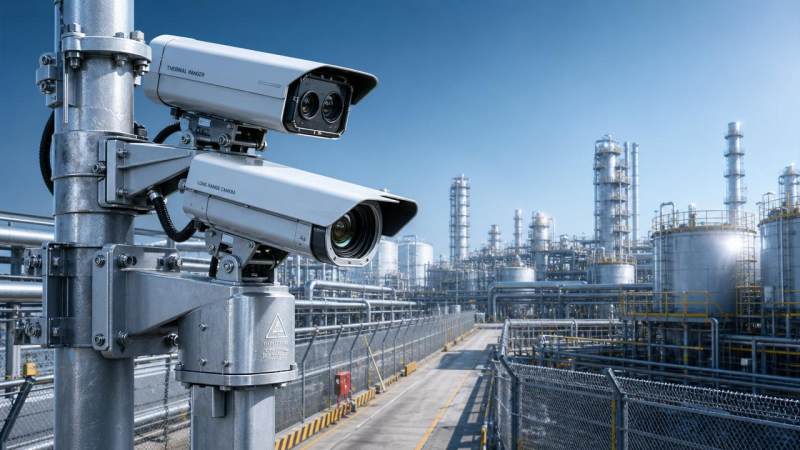
In harsh industrial sites, security gaps often appear when dust, vibration, glare, heat, and blind zones reduce response quality.
That is why optical security technology now matters across construction, energy, logistics, mining, heavy manufacturing, and critical infrastructure environments.
The value is not only better surveillance.
It is also stronger compliance, faster incident verification, safer night operations, and clearer environmental awareness during complex site activity.
For GSIM, this topic connects physical security assurance with optical environment optimization.
The right optical security technology helps align global risk controls, precision equipment choices, and operational decisions under demanding field conditions.
Why harsh industrial sites require scenario-based optical security technology
Not every site fails for the same reason.
A refinery may struggle with explosive risk zones and thermal distortion, while a port may face fog, perimeter scale, and low-light motion tracking.
A tunnel project may need strong visibility under dust and changing illumination.
A remote substation may depend on autonomous alerts because staff presence is limited.
Optical security technology works best when matched to real operational exposure.
This means evaluating atmosphere, lighting variability, distance, object speed, maintenance access, compliance obligations, and data integration needs.
Scenario judgment prevents overbuying, underperforming, and false confidence.
It also supports smarter investment in visible imaging, thermal sensing, smart illumination, edge analytics, and optical communications layers.
Scenario 1: Dust, smoke, and vibration demand resilient optical security technology
Quarries, mines, cement plants, and demolition areas create unstable visual conditions.
Traditional cameras often lose contrast, trigger false alarms, or suffer image blur under constant vibration.
In these sites, optical security technology should prioritize sealed housings, image stabilization, anti-fog protection, and thermal imaging for low-visibility verification.
Short response time matters more than cinematic image quality.
Core judgment points include particle density, cleaning frequency, mounting stability, and the need to identify people, vehicles, or heat anomalies.
Where dust clouds are frequent, layered detection is more reliable than one camera type alone.
Recommended approach for dusty environments
- Use thermal and visible cameras together for event confirmation.
- Choose vibration-resistant mounts and industrial enclosures.
- Add adaptive illumination for loading zones and access roads.
- Deploy edge analytics tuned to dust-related motion noise.
Scenario 2: Extreme temperature and corrosion change optical security technology choices
Steel plants, chemical facilities, offshore platforms, and desert energy sites face severe thermal stress.
Optical security technology in these settings must survive heat cycling, salt exposure, corrosive air, and reflective surfaces.
Thermal cameras are useful, but they must be calibrated for hot backgrounds and equipment emissions.
Visible-light devices need coatings, cooling support, and glare control.
The key question is whether the system must detect intrusion, monitor process risk, or support emergency navigation.
Each purpose affects lens selection, placement height, and alarm logic.
A corrosion-resistant body without optical calibration still underperforms.
True fit depends on environmental endurance and usable visual output together.
Scenario 3: Large perimeters and remote assets need long-range optical security technology
Pipelines, solar farms, substations, ports, and rail yards often cover vast and uneven ground.
These sites cannot rely on dense manpower or short-range surveillance alone.
Optical security technology here should support long-distance detection, target classification, and efficient event filtering.
Pan-tilt-zoom cameras, thermal perimeter units, and intelligent optical sensors can reduce patrol burden.
The strongest systems combine perimeter awareness with lighting logic.
When suspicious motion appears, smart illumination can improve identification while discouraging intrusion.
Integration with command platforms creates audit trails and faster escalation.
Long-range deployment checks
- Map terrain changes, fences, gates, and shadow zones.
- Test range performance in fog, rain, and backlight.
- Separate detection distance from identification distance.
- Confirm network resilience for remote video transmission.
Scenario 4: Night work and mixed lighting call for adaptive optical security technology
Construction zones, logistics hubs, and urban utility projects often operate through the night.
Lighting conditions can shift between floodlights, vehicle headlights, shadows, and temporary work lamps.
This creates a difficult environment for fixed imaging settings.
Optical security technology must adapt to contrast swings without losing scene detail.
Wide dynamic range, low-light sensors, glare suppression, and coordinated illumination design become critical.
In some advanced deployments, Visible Light Communication adds location-aware signaling and operational data support.
That strengthens both safety and site communication quality.
How requirements differ across industrial scenarios
Practical fit recommendations for optical security technology selection
A strong plan starts with site mapping, not product catalogs.
Optical security technology should be evaluated against operational routines, environmental stress, and incident response pathways.
- Define the event types that truly matter, such as intrusion, overheating, collision risk, or unauthorized access.
- Match visible, thermal, and illumination tools to those event types.
- Verify enclosure ratings, maintenance intervals, and spare part access.
- Test performance under real weather, shift patterns, and machinery movement.
- Connect the system with alerts, storage, and compliance reporting workflows.
GSIM’s intelligence approach is especially useful here.
By linking policy interpretation, technology evolution, and procurement insight, deployment decisions become more defensible and future-ready.
Common misjudgments that weaken optical security technology performance
Several recurring mistakes reduce system value in industrial settings.
- Choosing by resolution alone while ignoring contamination, heat, or vibration.
- Assuming thermal imaging replaces visible verification in every event.
- Installing strong cameras with weak lighting design.
- Using generic analytics models that fail in industrial motion patterns.
- Overlooking legal retention, privacy, and audit requirements across jurisdictions.
Another common oversight is failing to review optical security technology after site changes.
Temporary structures, new machinery, altered traffic flow, or expanded fencing can create blind spots and false alarm clusters.
Periodic reassessment protects system relevance.
Next steps for stronger site security and optical decision-making
Optical security technology is no longer a simple camera upgrade.
In harsh industrial sites, it is a strategic layer that supports safety, continuity, compliance, and better environmental intelligence.
The most effective path is to assess each site by scenario, define the actual risks, and select optical tools that fit operating reality.
GSIM supports this process by connecting global standards, security intelligence, and optical innovation into a clearer decision framework.
Review harsh-zone conditions, compare requirement gaps, and build a phased optical security technology plan that remains usable under pressure.
That is how sites move from reactive surveillance to resilient, informed protection.
The VitalSync Intelligence Brief
Receive daily deep-dives into MedTech innovations and regulatory shifts.