
Security
AI Lighting Meets Tender Rules at GILE
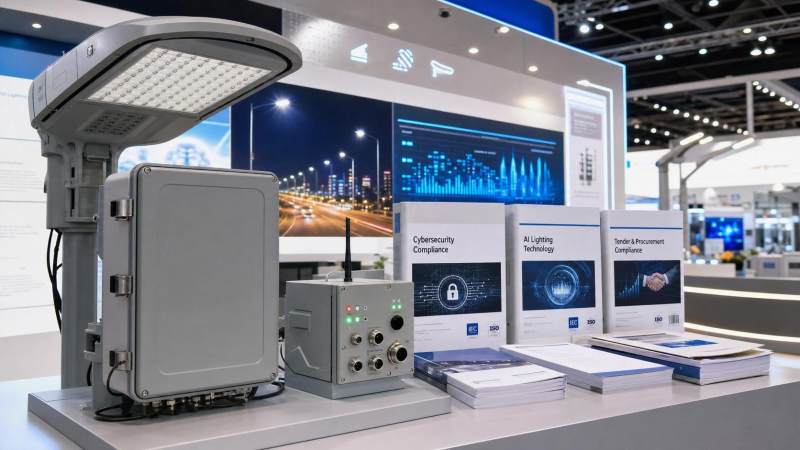
On June 12, 2026, the 31st Guangzhou International Lighting Exhibition closed after introducing a dedicated AI lighting pavilion for the first time, while a city-lighting-specific AI agent solution was released with EU Cybersecurity Act (CSA) basic certification already in place. For lighting manufacturers, smart city suppliers, export teams, procurement units, certification-related service providers, and after-sales operators, the development is worth attention because it links product capability with cybersecurity certification and shows that tender access conditions in some overseas smart city projects are shifting toward compliance-led technical requirements.
A trade-show signal tied to certification access
At the 31st Guangzhou International Lighting Exhibition, an AI lighting-themed hall was set up for the first time.
At the same event, Hapu Yongming released what was described as the first dedicated AI agent for the city lighting industry.
According to the provided information, the solution enables autonomous decision-making for lighting, automatic data return, and self-scheduling for operations and maintenance.
The same information states that the solution has passed EU Cybersecurity Act (CSA) basic certification.
The provided summary also states that this solution is becoming a core technical entry requirement in new smart city tenders in the Middle East and Latin America.
Where the practical pressure points may emerge
Export-facing lighting suppliers may see technical bids change first
Analysis shows that suppliers pursuing overseas smart city projects may be affected because tender participation may increasingly depend not only on lighting performance, but also on whether AI-enabled systems can present relevant cybersecurity certification status and matching technical documentation. The most direct impact would likely appear in technical bid alignment, pre-qualification materials, and delivery-side compliance review.
Procurement and project owners may tighten supplier screening
From an industry perspective, procurement teams and project owners may face a more detailed evaluation process when AI functions are built into city lighting systems. What deserves closer attention is whether procurement documents begin to treat certification, system security claims, and operational control capabilities as part of supplier access conditions rather than optional product advantages.
Certification and testing service providers may face new document demand
Analysis shows that certification-related companies and testing service institutions may be drawn into earlier project stages if buyers or exporters need clearer proof for compliance review. In practice, attention may shift toward how certification scope, technical descriptions, and supporting reports are presented in a form that procurement and tender reviewers can use.
After-sales and O&M teams may need to prepare for traceability expectations
Observably, once autonomous decision-making, data return, and self-scheduling are placed at the center of a city lighting solution, after-sales service providers and operations teams may face closer scrutiny on maintenance records, response logic, and service documentation. The effect may show up less in product shipment itself and more in delivery acceptance, ongoing service commitments, and quality traceability.
What companies should watch now
Review whether certification claims are fully supportable
Analysis shows that companies marketing AI-enabled lighting systems should pay close attention to how certification status is described in brochures, bid files, product sheets, and commercial communications. If a project increasingly treats cybersecurity-related certification as an access condition, unsupported or vague wording could create tender, contract, or delivery risk.
Prepare technical and tender documents for compliance review
What deserves closer attention is the completeness of technical documentation. Exporters, integrators, and system suppliers may need to check whether product descriptions, test-related materials, compliance statements, and bid attachments are internally consistent before they enter procurement review or client evaluation.
Track whether tender language becomes more explicit
Observably, the current information points to a change in market expectations, but not to a fully disclosed set of execution details. Companies should therefore monitor whether future tender files, pre-qualification requirements, or buyer specifications use more direct language around cybersecurity certification, AI system capability, or related compliance thresholds.
Align delivery planning with supplier qualification checks
From an industry perspective, firms should also watch whether procurement planning and supplier qualification reviews begin moving earlier in the sales cycle. If certification status becomes part of gatekeeping for project participation, supplier onboarding, project scheduling, and cross-border delivery preparation may need to start before commercial negotiation is finalized.
Why this looks more like an execution signal than a finished rule set
Analysis shows that the most notable feature of this development is not only the product launch itself, but the way certification and tender access are being mentioned together. It is more appropriate to understand this as an execution signal that market-facing rules are becoming more operational in smart lighting procurement, especially where AI capability is tied to city infrastructure use.
At the same time, observably, the available information does not provide full tender clauses, detailed enforcement language, or broader regulatory interpretation. For that reason, the industry still needs to watch how certification language is applied in procurement practice, how buyers define acceptable evidence, and whether market feedback confirms a sustained shift in entry requirements.
How the market may reasonably read this development
From an industry perspective, this update is best read as an early but concrete sign that AI lighting solutions are being judged not only by automation functions, but also by whether those functions can be positioned within recognizable cybersecurity compliance frameworks. That matters for exporters, procurement teams, certification service providers, and O&M participants because the commercial path may increasingly depend on documentation readiness as much as on system capability.
It is more appropriate to understand this development as a visible market signal with practical compliance implications, rather than as a final and universally settled rule change. The next phase to watch is whether certification wording, tender requirements, and project-side acceptance standards become more detailed and more consistent across actual procurement activity.
Basis of this article and what still needs verification
This article is generated from the user-provided news title, event date, and event summary. For events of this type, commonly relevant source categories may include official announcements, releases from regulatory bodies, information from customs or trade authorities, industry association updates, standards organization documents, and reporting by authoritative media. A specific official source link was not provided in the input, so the precise official basis still requires ongoing verification.
Analysis and observations in this article should therefore be read as structured industry interpretation based only on the supplied facts. What still needs continued monitoring includes any later policy detail, certification enforcement interpretation, changes in tender wording, market feedback, and how companies implement the related requirements in actual export, procurement, and delivery work.
The VitalSync Intelligence Brief
Receive daily deep-dives into MedTech innovations and regulatory shifts.